In mid-November, another defence company in Estonia came under attack: assailants tried to set fire to the premises of drone manufacturer Threod Systems. In response, the government decided to close the border with Russia completely.
This was not the first act of sabotage of this kind. As recently as August, criminals set fire to the defence company Milrem Robotics. The Internal Security Service (KAPO) classified the incident as a planned act of sabotage by Russian intelligence services. The suspects were Latvian citizens, arrested shortly after the attack and extradited to Estonia.
This time, the operation was just as unsuccessful. The attackers tried to pour an incendiary liquid through a broken window, but, according to KAPO and the Prosecutor’s Office, their attempt to start a fire and cause an explosion failed thanks to security measures the company had put in place in time. KAPO blamed the sabotage on Russia’s Main Intelligence Directorate (GRU). The suspects were again arrested in Latvia, and once again they were Latvian citizens.
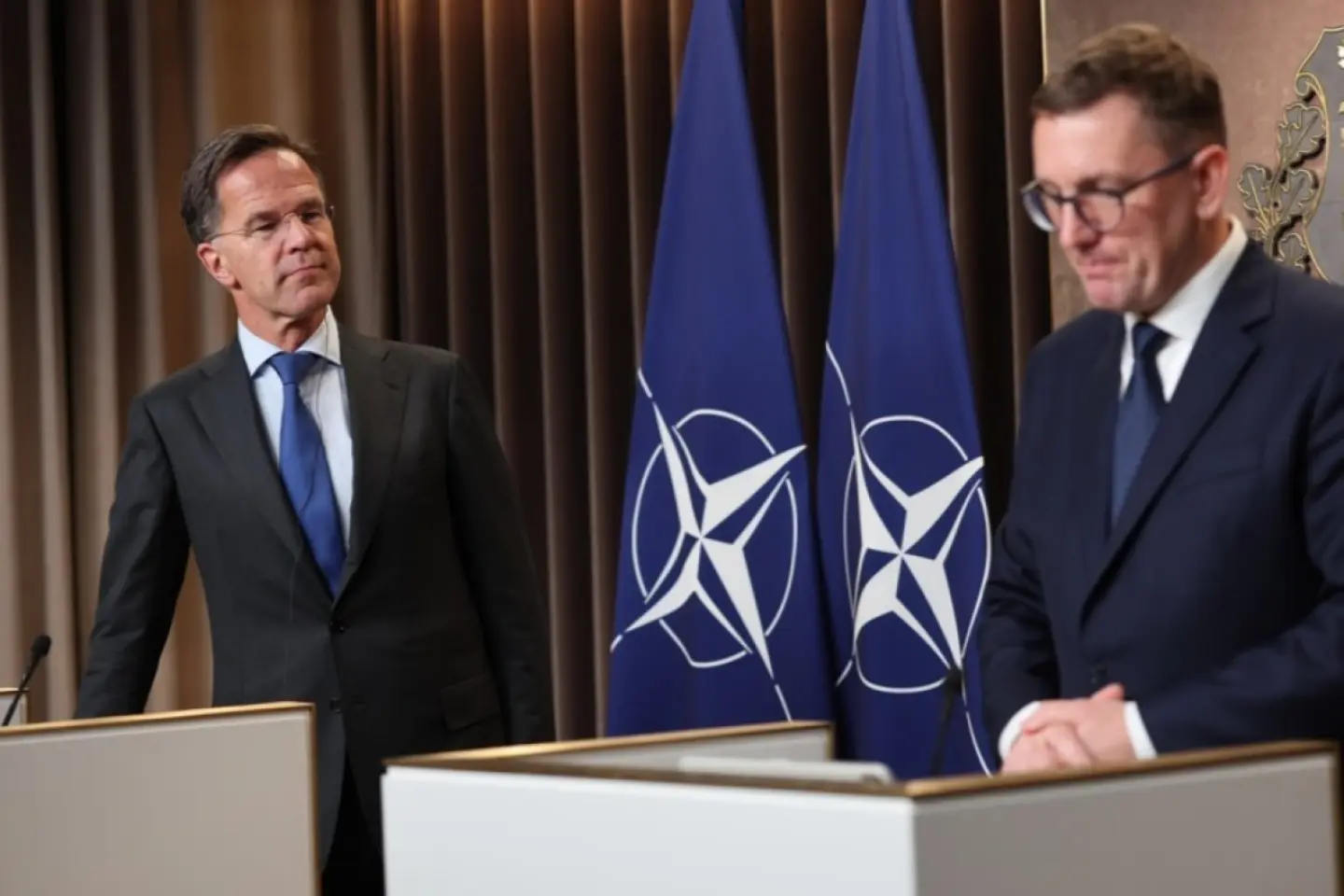
At a subsequent press conference, Prime Minister Kristen Michal said he had ordered preparations for the closure of the Estonian-Russian border. Although travel to and from Russia had already been restricted in many ways, and there had long been talk that the border would eventually be closed, as in neighbouring Finland, the announcement provoked a storm of emotion.
A “painful blow” for Narva
For most Estonians, the decision was the only right and entirely logical one in the current geopolitical situation. Russian speakers, however, were divided, though criticism of the government’s decision prevailed among them. At the same time, some public figures in the Estonian community also disapproved of the government’s actions. For example, Estonian residents of Narva, including the city’s former and current mayors, were cautious about voicing support for the government’s plan.
“The closure of the Estonian-Russian border did not come as a great surprise, but for the border city of Narva it is a painful blow. People kept hoping it would not happen,” wrote Katri Raik, the city’s former mayor. “Sunday evening was a difficult one in many Narva homes, where people were discussing how they would now be able to visit their elderly parents, or their children and grandchildren, in Russia. There is no need to crow indignantly about why they are in Russia in the first place: people in border regions have always maintained more ties with the neighbouring country than those living farther inland.”
“If the border between Russia and Estonia is closed, then border controls between Latvia and Estonia should really be reinstated,” said Narva’s current mayor, Jaan Toots. Given that citizens of another European country, Latvia, are suspected in both recent acts of sabotage, many people pointed out the apparent inconsistency in the Estonian government’s response. “They came from Latvia, but Estonia is closing the border with Russia. Maybe we should declare war on Cuba too, then. Our heads are full of nonsense,” one commenter wrote beneath an ironic post on the subject.
For many people who have had to spend entire days waiting in queues at the Estonian border, trips to Russia are above all a family necessity. “A people who have themselves experienced oppression, separation from their families and deportation can be so lacking in empathy for others going through the same thing… The comments are full of people raging and celebrating,” another commenter wrote in the same thread.
The issue of families divided by the border is most acute in the border regions, although many Russian-speaking residents of Tallinn still have close relatives in Russia. The best-case route to reach them will now be through Latvia, Lithuania, Kaliningrad and Belarus; others may have to travel via Istanbul. Those who used to travel to Russia through Estonia from the Nordic countries will also have to change their route.
Businesses with ties to Russia will suffer too, although trade has shrunk to a minimum since the war began. Passenger bus services and small shops selling Russian products had continued to operate. Cafés and accommodation rentals near the border had also benefited from the queues. People who could not cross within a day had to rent a hotel room. Now all of that is coming to an end: from the beginning of December, the border will be closed to both vehicles and pedestrians.
“Of course, closing the border completely is an economic blow to Narva’s residents. Cargo transport, which in recent years has gone through the southern border, will disappear altogether. The hated border queue brought people into the city: they ate and stayed overnight here, took taxis,” former Narva mayor Katri Raik noted. “Closing the border may also make investors even more reluctant to put money into Narva and the surrounding area. Unemployment in Narva is already twice the Estonian average.”
What is permitted to Jupiter…
Most Estonian politicians, however, believe the border should have been closed much earlier. This view is shared not only by serving ministers but also, for example, by Martin Helme, leader of the opposition conservative party EKRE. “Well, well! So now the government is starting to close the eastern border? Four months before the election, it has discovered a backbone and some sense? Has Stark Logistics’ contract expired, or what?” he quipped on Facebook.
The irony is clear enough. Several years ago, a scandal involving Stark Logistics, a company linked through an investment firm to the husband of then Prime Minister Kaja Kallas, erupted after it continued operating in Russia following the start of the war. The affair did not lead to a high-profile political resignation. In fact, it had no significant political consequences at all, unless one counts Kallas’s move to a more senior post in the European Union. The governing parties are now trying not to bring up this awkward episode.
Since then, tensions in the Baltic region have continued to rise. Alongside the increase in sabotage attacks on defence companies, drone-related incidents have also become more frequent. Residents of Narva can literally see the glow from the fires at the Russian port of Ust-Luga from their own homes. And just recently, in November, a Russian warship in the Gulf of Finland, a new vessel capable of carrying long-range Kalibr cruise missiles and Oniks anti-ship missiles, was attacked by Ukrainian drones.
Every successful Ukrainian attack in the region prompts Russia to accuse the Baltic states of providing air corridors for the strikes. The Baltic governments deny this and are preparing to counter possible retaliation. Against this backdrop, the humanitarian problems facing Narva residents with relatives in Russia are, to put it mildly, of little relevance to the Estonian authorities.
Moreover, the Russian threat has repeatedly served as a unifying factor that saved parties in the governing establishment from imminent electoral defeat. The border closure therefore also has a domestic political dimension and a distinctly local rationale — one that international observers may not notice, but that is fairly clear to people inside the country. This time, however, only a miracle could save the governing parties from a crushing defeat in the spring parliamentary elections. Or a catastrophic escalation, which neither side wants.