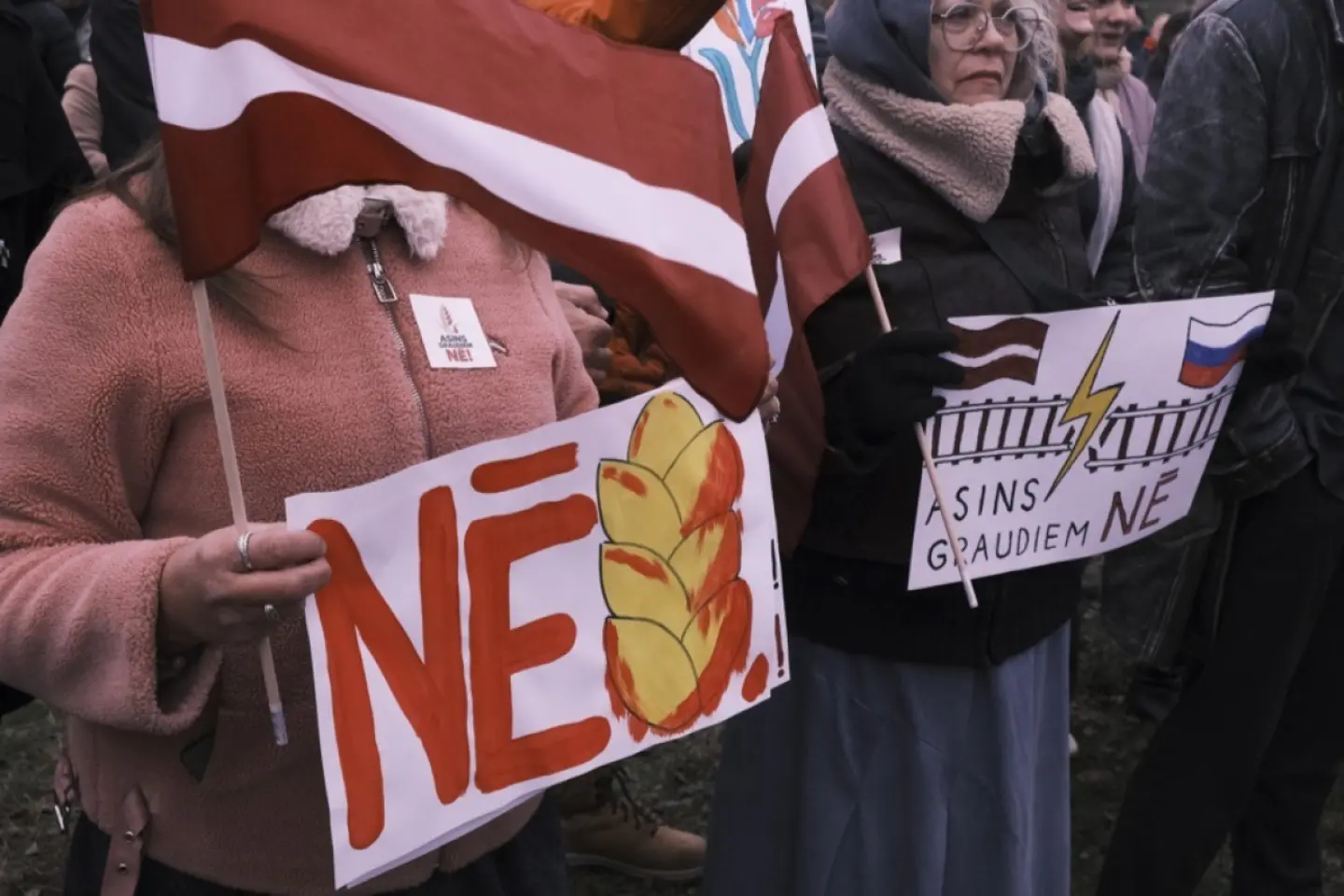
Latvian farmers and activists have been protesting against the transit of so-called “blood grain”, exported by Russia to third countries via Latvia. Protesters argue that these exports are helping Moscow fund its war machine; moreover, some of the grain may have been stolen from occupied Ukrainian lands.
Latvia is a staunch ally of Ukraine, providing the country with various forms of assistance. This is why some of its citizens feel that allowing the transit of blood grain is driving Riga ever deeper into a moral dead end. However, there is also opposition to stopping the transit, both inside Latvia, and among its international partners.
Although Latvia has been throwing its weight behind Ukraine, Russia remains an important economic partner for the country
Ever since the first days of Russia’s full-scale attack, Latvia has been a steadfast supporter of Ukraine. In February 2022 - during the very first days of the invasion - Latvia provided Ukraine with Stinger missiles, which were essential for repelling the Russian offensive. By the end of 2025, Latvia's military aid to Ukraine had reached approximately 665 million EUR. Estimates of bilateral aid allocations to Ukraine as a share of gross domestic product (GDP) between January 24, 2022, and February 28, 2026, place Latvia among the most generous countries. In just over four years, Latvia had donated 1.94% of its GDP, being surpassed only by Denmark, Lithuania, Estonia, and Norway.
Furthermore, assistance – the full financial extent of which is often difficult to ascertain – has been provided by municipalities, non-governmental organizations, and private individuals. For instance, in late February 2022, many Latvians traveled individually to the Polish-Ukrainian border and brought people back to their own homes in Latvia.
It is widely understood in Latvian society that cooperation with Russia and its companies strengthens its war machine in Ukraine and, consequently, the threat to Latvia. However, there have also been some flies in the ointment, companies that cooperate with Russia and Belarus. As of August this year, Russia ranks as Latvia’s fifth most important export partner, with export value reaching EUR 706.9 million. Key export categories include food products, alcohol, textiles, and chemical industry goods, among others. It should be noted, however, that exports to Russia have declined in recent years; previously, the volume was even higher.
Meanwhile, imports from Russia reached 30 million EUR by August of this year - consisting primarily of food industry products, alcohol, and cigarettes - placing it 27th among all source countries for imports.
For comparison, imports from Ukraine this year through August reached 128.2 million EUR (14th place), while exports reached 226.5 million EUR (13th place).
In Latvia, there have previously been calls for supermarket chains to include more Ukrainian goods. And this has indeed happened—one can now find Ukrainian sweets (especially candies), sauces, and other products in Latvian supermarkets. Russian products, however, are not to be found in these supermarkets. Any goods imported from Russia into Latvia might end up in small, independent shops or serve as raw materials; however, the volume is small.
As for the exporters, the names of these companies have been published. However, even this kind of public shaming has not always compelled them to change their stance. For the most part, the companies themselves do not communicate with the media, or they limit themselves to brief comments.
As Ukraine targeted Black Sea ports, Russia rerouted is grain exports through Latvia, sparking local protests
When it comes to business with Russia, it’s not only about imports and exports. Latvia has been one of the routes for Russian grain exports, and that transit has increased significantly as Ukraine targeted Russian Black Sea ports. In total, 652,000 tonnes of grain from Russia passed through Latvia last year, whereas this year, up to and including October, the volume has already reached 1.115 million tonnes. In October alone, more than 400,000 tonnes were transported – the highest figure recorded this year. Furthermore, when comparing the first ten months of this year to the same period last year, transit volume has nearly tripled. Russian business lobby organizations in Latvia are saying that the growth would continue, considering the ongoing situation at the Black Sea. Grain transit from Belarus has also increased, reaching 185,000 tonnes – a figure that already exceeds the total for the entire previous year.
Latvian authorities acknowledge that there is no certainty regarding the true origin of this grain. Ukraine has indicated to Latvia that at least some of the grain in transit from Russia may have been sourced from Ukrainian territories under occupation. Latvia has pledged to conduct laboratory testing to verify this.
Pressure started to pile up domestically as well. Emotions have intensified to such an extent that Latvians - who are otherwise reluctant to participate in protests – have rallied. On Saturday, November 7, several hundred people – though a significantly larger turnout had been expected – gathered in Jēkabpils, one of the Latvian towns transited by Russian grain. The event was initiated by Gundars Kalve, a well-known Latvian farmer, entrepreneur, and volunteer soldier in the Ukrainian army. Every year, he spends several months on the battlefield, fighting against the Russian army.
Protesters pointed not only to Latvia’s contradictory conduct - continuing to cooperate, in the words of one participant, “with murderers, sponsoring their killings [in Ukraine]” - but also to the threat posed to Latvia itself and its security. Furthermore, the transit of Russian grain harms Latvia’s own grain sector and its export competitiveness on the global stage.
Prime Minister Andris Kulbergs - who, along with his political organization “United List”, had recently achieved a decisive victory in the parliamentary elections – also attended the protest. However, Kulbergs was repeatedly heckled and booed. The protesters warned that if nothing changes, more radical actions could follow in the second half of November – potentially including the blocking of railway tracks.
Stopping the blood grains transit is not that easy
One way to reduce or halt transit was to increase the transit fee by 300%, a measure proposed by the government and backed by the majority of the MP’s in Latvia’s parliament (the Saeima). The funds generated by the fee should be transferred to Ukraine.
However, there are questions regarding the compliance of such a fee with the EU legislation, as the Lithuanian Agriculture minister pointed out. Ineta Ziemele, a judge from Latvia at the Court of Justice of the European Union, does not agree with the Lithuanian official. Ziemele is saying that the Treaty on the Functioning of the EU “does not preclude prohibitions or restrictions on imports, exports, or goods in transit, justified on grounds of public morality, public policy, or public security”. It should be noted that Lithuania, as well as Estonia, is facing a similar dilemma with Latvia regarding Russian exports. Estonia even moved, in early October, to ban all Russian and Belarusian grain transit through its territory. At that time, Latvia said that it needs to think whether to follow through, and the Prime Minister said that the matter should be decided at EU level. Elīna Melngaile, an expert on international affairs at the European Commission, disagrees. She wrote on X that “it is clear that the decision to allow the export of grain through Latvian ports serves to protect specific business interests,” adding that “the government must weigh whether the short-term profit for the ports outweighs: 1) the loss of reputation in the eyes of Ukraine and our allies; and 2) a diminished capacity for Latvia to advocate for new sanctions.”
The “specific business interests” mentioned by Melngailis’s may be a related to one of Latvia’s largest ports, located in Liepāja, and to a Liepāja-based political party which is part of the ruling coalition. However, no media outlet or official has identified a specific interest group; the matter remains purely at the level of rumors, circulating only in unofficial, private discussions.
Prime Minister Kulbergs did not mention Latvian business, but he pointed out to importers from allied countries, such as the US and Japan, who contracted the Russian grains. “By imposing sanctions or applying higher taxes, we would automatically affect them, and they could take legal action against us,” the head of government stated. According to him, Latvia could lose "hundreds of millions of euros" in court.
Finally, Brussels itself may not even be willing to curb the transit of Russian grain – proposals of the three Baltic states to ban the transit altogether were so far ignored. There are several reasons for this. A number of member states are opposing such a move. Then there is the lobby made by the global grain traders. Last, but not least, there are concerned about the effects that such a ban would produce. Latvian authorities have indicated that, after passing through Latvia, the grain is primarily transported to Africa – specifically to Algeria and Egypt, as well as Mozambique, Nigeria, Angola, Senegal, Kenya, and Morocco. If deliveries would stop, there is a risk of generating food supply issues or famine there – scenarios that would lead to an increase in the number of refugees and migrants from Africa.