What began in 2008 as a long-term corporate partnership to overhaul post-Soviet transport infrastructure has evolved into a high-stakes diplomatic puzzle in the South Caucasus. Today, the 30-year concession contract governing Armenia’s national rail network sits directly at the intersection of international sanctions against Russian state entities, regional unblocking initiatives, and shifting political relations between Yerevan and Moscow. The debate over whether to restructure the agreement, terminate it prematurely, or transfer management rights to a third country touches upon national sovereignty, international trade law, and regional logistics. The following chronological analysis traces how eighteen years of legal commitments, economic pressures, and public rhetoric led to the formation of a joint inter-agency working group in October 2026.
The 2008 Deal: Public Tracks, Private Operators
On February 13, 2008, the Armenian Government Armenia signed a 30-year Concession Agreement with Russian Railways (RZD), which included an option for a ten-year extension. Operational management of the national network was assigned to RZD’s operating subsidiary, South Caucasus Railway (SCR).
The contract established a clear legal separation between public asset ownership and private operational management. Armenia retained full ownership over all fixed infrastructure, including rail tracks, land rights, railway stations, bridges, tunnels, and associated engineering networks. In return, the concessionaire received exclusive rights to operate the grid and collect commercial revenues, bound by strict contractual obligations to maintain technical safety and invest in modernizing the network. Any rolling stock or equipment acquired independently by SCR using its own or borrowed funds remained its corporate property, though its operational utility remained tied to the state-owned grid.
These financial commitments were further integrated into state planning documents. Under the 2021–2026 Government Program, the Armenian government planned 39 billion AMD in co-agreed capital investments through 2024 to overhaul 37 kilometers of track and elevate service standards. Looking further ahead, state planning outlined an additional 95 billion AMD in capital expenditures projected between 2025 and 2038 to preserve network integrity and long-term operational capacity.
Audits and Friction: The 2018–2021 Criminal Probe
Bilateral relations experienced significant regulatory friction between December 2018 and March 2021, when Armenia’s Investigation Committee launched a criminal probe into alleged tax violations and financial irregularities involving 457 million AMD in reported SCR investments.
The investigation prompted extensive audits by the Ministry of Finance and diplomatic commentary from senior officials, including public remarks by Russian Foreign Minister Sergey Lavrov. Following audits and formal bilateral exchanges, criminal proceedings were officially closed on March 25, 2021, due to the absence of a corpus delicti.
Sanctions and Strategy: Re-Imagining Regional Transit
Geopolitical conditions changed fundamentally in February 2022 following the outbreak of the Russia-Ukraine war, when the United States Office of Foreign Assets Control (OFAC) and the European Union instituted broad sanctions against Russian Railways. Financial reporting by Reuters indicated that RZD’s debt exceeded $50 billion, leading to a 20 percent reduction in its 2026 capital expenditure budget. Armenian officials noted that relying on an operator controlled by a sanctioned foreign parent enterprise created obstacles to securing international financing and integrating into Western-backed logistics corridors.
Seeking to navigate these constraints, the Armenian Government unveiled its Crossroads of Peace initiative in November 2023, alongside the broader Trans-Regional Infrastructure & Peace Program (TRIPP). Grounded in four core principles—sovereignty, jurisdiction, equality, and reciprocity—the framework mandated that all transit infrastructure operate under full host-country jurisdiction. Key rail routes prioritized for unblocking included the Gyumri–Akhuryan line leading to the Turkish border, the Yeraskh line connecting to Nakhchivan, and the southern segment through Agarak and Nrnadzor in the Syunik region.
To resolve the sanctions bottleneck without causing an operational breakdown, the Armenian Government proposed revising the management model by transferring or selling concession rights to a mutually acceptable third-country operator, with prospective candidates including entities from Kazakhstan, the United Arab Emirates, or Qatar. The urgency of establishing an unencumbered corridor was further underscored by Turkey’s active construction of the 224-kilometer Kars–Igdir–Dilucu railway, which carried the risk of permanently bypassing Armenian territory if local network management remained legally constrained.
Mounting Deficits, Public Ultimata, and Media Framing
By 2024, broader regional economic shifts placed severe operational strain on the rail system. SCR’s freight transport volumes dropped by 40 percent in 2023 and an additional 31 percent in 2024, causing a 3.3 billion AMD reduction in annual operating revenues. Concurrently, passenger services recorded net operational losses of nearly 3.5 billion AMD in 2024 against revenues of just 1.027 billion AMD. Under a contractual clause obligating the state to cover 30 percent of passenger losses, Armenian budget subsidies exceeded 1 billion AMD combined between 2022 and 2024.
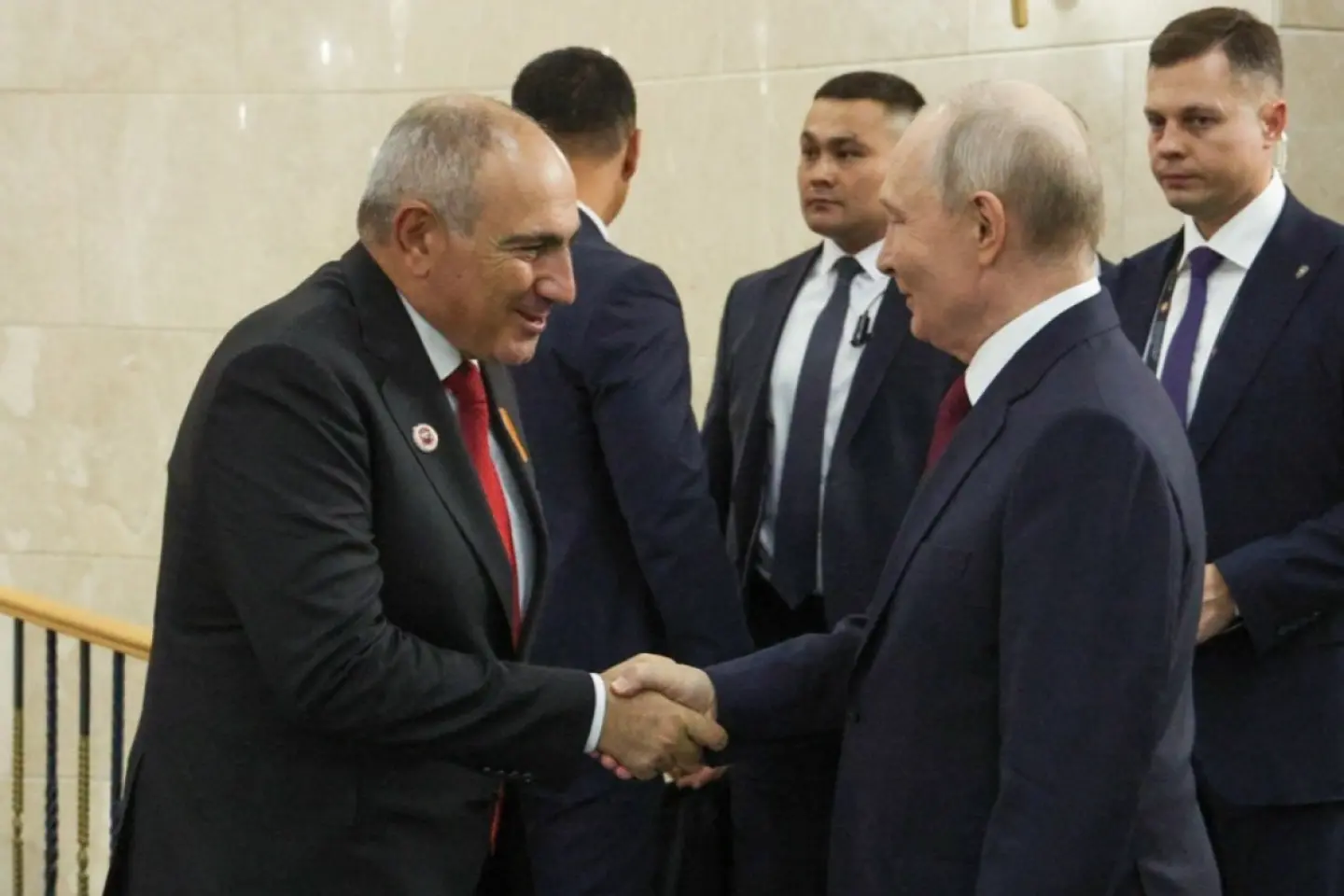
High-level diplomatic contacts continued, including a bilateral meeting in St. Petersburg between Prime Minister Nikol Pashinyan and President Vladimir Putin in December 2025 focused on preliminary technical preparations for reopening regional rail routes. However, public rhetoric intensified by mid-2026. On April 22, 2026, the Russian Security Council publicly characterized Armenian proposals to transfer concession management rights to a third country as "strange."
During a press conference on July 30, 2026, Prime Minister Pashinyan raised the prospect of requiring up to $2 billion in retroactive lease payments for the long-term use of state infrastructure or seeking international arbitration. Addressing the broader context during a briefing on international transport integration, Pashinyan stated:
"Our problem is not with Russia. We do not have a problem with Russia; our problem lies in the situation where we might once again miss the historical opportunity to integrate into the international transport network."
In response, official Russian channels via TASS reports stated that contract termination would trigger immediate counterclaims demanding $396.3 million (over 30 billion rubles) in documented capital investments made by RZD from 2008 to 2025. Russian officials, including RZD CEO Oleg Belozyorov, Russian Minister of Economic Development Maxim Reshetnikov, Foreign Minister Sergey Lavrov, and Foreign Ministry Spokesperson Maria Zakharova, defended the company's track record. They emphasized that RZD had reinvested all net earnings into network maintenance and rolling stock without extracting corporate dividends, while maintaining approximately 2,500 local jobs with regular salary indexations.
The public debate was further amplified across analytical and commentary platforms. On October 9, 2026, RuNews24.ru published commentary by expert Mina Khachatryan, alleging that Pashinyan was acting through "Turkish handlers" (турецкие кураторы), framing contract revisions as a "chess fork" (шахматная вилка), and comparing the scenario to a "Nord Stream 2.0" provocation. Meanwhile, in its official 2026–2028 Medium-Term Expenditure Framework (MTEF), the Armenian Government estimated the potential financial liability of premature contract termination at up to 103.6 billion AMD (~$273 million) for unamortized capital assets.
The October 2026 Shift: A Three-Month Mandate for Compromise
A transition from confrontational public rhetoric toward structured dialogue occurred on October 14, 2026, when Prime Minister Nikol Pashinyan met with an RZD delegation led by CEO Oleg Belozyorov in Yerevan. The discussions covered SCR’s operational efficiency, historical investment metrics, systemic challenges, and concrete technical steps required to rebuild border rail lines at Gyumri–Akhuryan and Yeraskh–Nakhchivan.
Following the meeting, Prime Minister Pashinyan formally issued an executive decree establishing a joint inter-agency working group with a strict three-month mandate to evaluate concession efficiency, resolve operational challenges, and define concrete next steps.
According to the decree, the working group is chaired by Armenia’s Deputy Minister of Territorial Administration and Infrastructure. Its leadership structure includes Armenia’s deputy ministers of foreign affairs and finance, Russia’s deputy minister of transport, and other senior departmental representatives acting by mutual agreement. The formation of this body marks a shift toward an institutional venue where legal obligations, financial metrics, and regional transport objectives can be evaluated through direct negotiations.