In a tough week for the European right-wing international, bookended by the defeat of Aleksandar Vučić’s ruling party in Serbia and a constitutional crisis in Poland, someone else was back in the headlines.
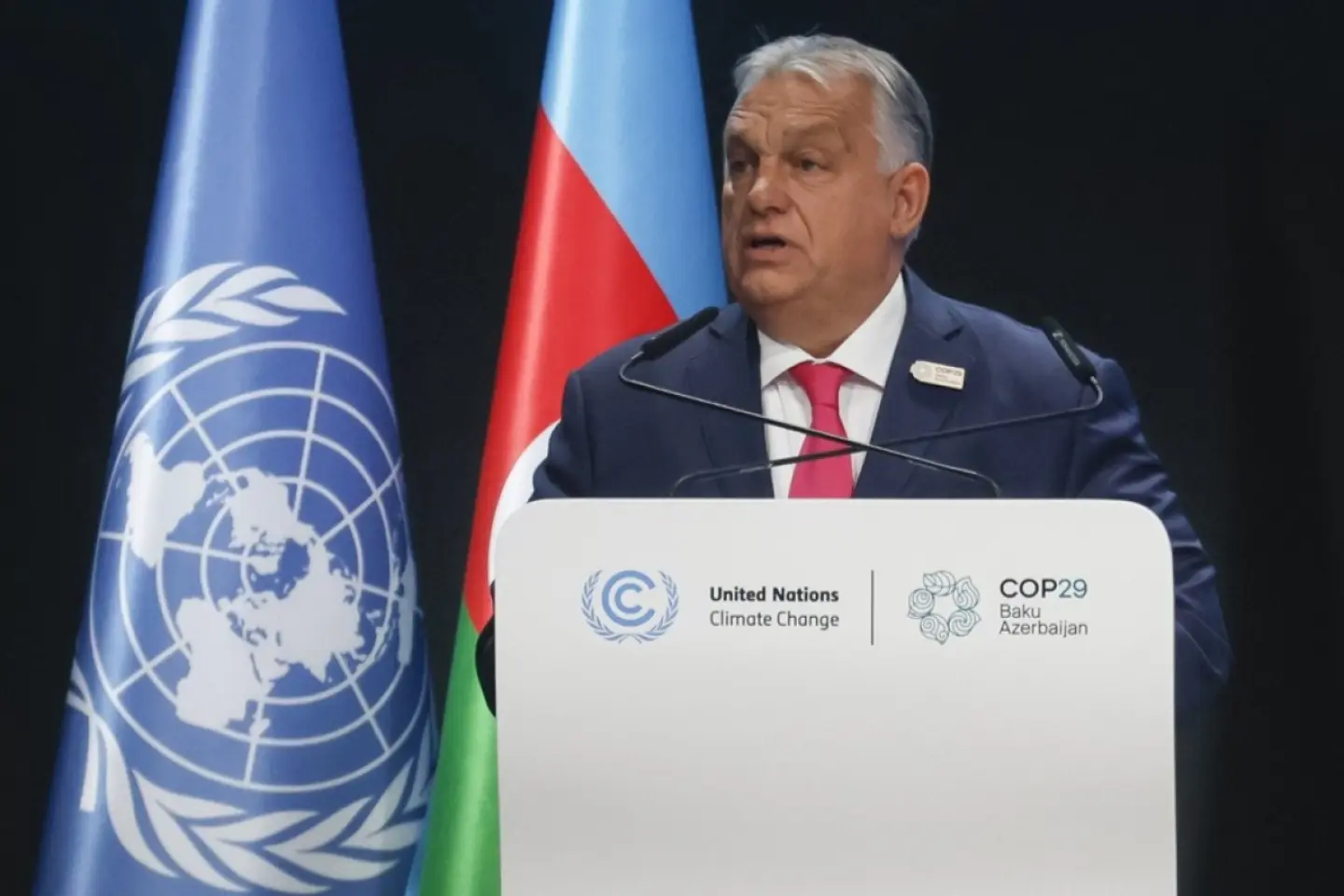
Viktor Orbán, Hungary’s former prime minister, has kept a low profile since losing power in April. Now some in Washington are asking: who better to become the next UN secretary-general than Europe’s most prominent illiberal politician?
The Wall Street Journal has reported that Orbán’s name has surfaced in discussions regarding the next UN secretary-general (UNSG). Citing three international sources, the WSJ editorial board wrote that “As US officials discussed who they would want to see atop the UN, Mr. Orbán’s name kept coming up. ‘Someone like Orbán’, they would say, and Chinese and Russian counterparts would agree. Eventually, US officials asked themselves the question: Why not Mr. Orbán?”
The secretary-general heads the UN Secretariat and represents the organisation diplomatically, but has no independent power to enforce Security Council decisions and must navigate the competing interests of its five permanent members. The editorial added that Orbán would only run if confident of victory.
Poacher Turns Gamekeeper?
Orbán first gained international notoriety during the 2015 European migration crisis, when his government’s border policies drew condemnation from the UNHCR. On 16 September of that year, as Hungary completed its border fence, then-UN refugee chief António Guterres criticised Budapest’s restrictive measures, warning that they left asylum seekers with virtually no access to protection and breached international law.
By 2018, his government had turned the UN itself into a campaign target. Billboards across Hungary accused the organisation of wanting to force the country to accept migrants, declaring: “Hungary decides, not the UN!” That July, Budapest formally withdrew from the UN Global Compact for Migration, with then foreign minister Péter Szijjártó describing an irreconcilable conflict between Hungary’s position and the UN’s approach.
An Escape Hatch for Orbán?
There may also be more immediate, personal incentives for Orbán to consider the post. He lost power in April after 16 years, when Péter Magyar’s Tisza party swept 141 of Hungary’s 199 parliamentary seats, reducing Fidesz to just 52. Since then, Magyar’s Operation Purge has seen two former ministers and a former state secretary detained in corruption investigations. Former central bank governor György Matolcsy has also been detained in a separate investigation into the management of the central bank’s foundations.
A plan circulating in MAGA circles involved securing a senior UN position for Orbán, with diplomatic immunity serving as a primary draw, regional outlet VSquare reported in the summer. Other outlets responded to the WSJ report. Writing in Puck, Julia Ioffe reported that the rumour had been pushed by a Trump appointee eager to project MAGA credentials rather than coming directly from the White House. Citing three US officials, Ioffe identified Ronald Criscuolo, a deputy assistant secretary in the State Department’s Bureau of International Organization Affairs, as the source behind the trial balloon. The State Department declined to comment. The WSJ maintained that its sources spanned three countries. Orbán himself has remained silent.
UK daily The Times speculated that Orbán could serve as a stalking horse for the UAE’s latecomer candidate, Lana Nusseibeh. International Crisis Group analyst Richard Gowan noted that a disruptive Orbán candidacy might be leveraged to make a traditional compromise candidate appear palatable by comparison.
Russian Deputy Foreign Minister Aleksandr Alimov stated that Moscow had not raised Orbán’s name at the Security Council and only learned of the proposal through press reports. Beijing has not commented, but the political upheavals in Hungary and Serbia have put two important European relationships in flux.
The Mechanics
The secretary-general is appointed by the General Assembly on the recommendation of the Security Council, requiring nine affirmative votes and no veto from any of its five permanent members. The current selection process, underway since last November, has already gone through seven rounds of informal Security Council straw polls. Orbán would be entering extraordinarily late in the cycle ahead of the 1 January transition. Latin America and the Caribbean have a strong claim under the informal principle of regional rotation, having not held the office since Javier Pérez de Cuéllar’s term concluded in 1991. Eastern Europe has never produced a secretary-general, although that creates no procedural entitlement. The General Assembly has also urged member states to favour female nominees, given that no woman has ever held the post.
In the seventh informal straw poll on 30 October, Costa Rica’s Rebeca Grynspan led with 11 votes in favour and four against. Rafael Grossi followed with nine, while Carolyn Rodrigues-Birkett received eight and the UAE’s Lana Nusseibeh seven. The results, which remain unconfirmed, offer no indication of whether any negative votes came from a veto-wielding permanent member.
Why Orbán?
Orbán did more than transform Hungary into a prototype illiberal state. He established unusually close relationships with Washington, Beijing and Moscow, maintaining political ties with all three while offering each something different.
In 2016, he became the first European head of government to endorse then-outsider Donald Trump’s presidential bid, praising his stance on counter-terrorism and his rejection of democracy export: “As a European, I could have hardly articulated better what Europe needs,” Orbán said.
China, meanwhile, became a major investor in Hungary’s battery and electric vehicle industries. During Xi’s 2024 European tour that took in France, Serbia and Hungary, the two governments elevated their relationship to an ‘all-weather comprehensive strategic partnership for the new era’, a designation unique among EU member states.
Orbán also maintained warm relations with Russian President Vladimir Putin long after the full-scale invasion of Ukraine, securing exemptions from EU energy sanctions and pressing forward with the Kremlin-backed expansion of the Paks nuclear power plant.
Trump, Putin and Xi may share an interest in weakening the institutions and alliances associated with the postwar Western-led order, but their ambitions for what replaces it are markedly different.
Each had distinct reasons for cultivating Budapest. Washington saw an ideological ally challenging liberal internationalism. Beijing gained a supportive EU member with veto power over important collective decisions and a hub for industrial investment. Moscow retained a high-level European interlocutor willing to undermine Western diplomatic isolation.
Orbán’s preference for bilateral deals, national sovereignty and transactional diplomacy could see him make relations with Washington, Moscow and Beijing the centrepiece of his diplomacy. He has also questioned Western military support for Kyiv. Yet the secretary-general is formally required to act independently of national governments under Article 100.
An UN-Welcome Guest
The WSJ editorial page was an unusual staging ground for such a proposal, and the immediate reaction among European leaders ranged from disbelief to outright mockery.
Ukrainian Foreign Minister Andrii Sybiha quipped that Orbán could deploy his “masterful veto and blackmail skills” in the role. Polish Foreign Minister Radosław Sikorski flatly stated Warsaw would not support him, while Polish Prime Minister Donald Tusk dismissed the idea as no more plausible than earlier rumours of Orbán taking over the European Commission.
The sharpest condemnation came from his successor in Budapest. "Getting an Orbán," Hungarian Prime Minister Péter Magyar observed, would be an effective strategy only for someone intent on dismantling the organisation. “The UN is not a criminal organisation; it should not be headed by a mafia boss,” Magyar added.
Whether an international appointment would shield Orbán from potential domestic legal jeopardy is questionable. Under the 1946 Convention on the Privileges and Immunities of the United Nations, ordinary UN officials enjoy immunity for acts performed in their official capacity, while the UNSG receives additional privileges equivalent to those of diplomatic envoys. These protections are granted in the interests of the organisation, not the individual. Under Section 20, the Security Council has the authority to waive the secretary-general’s immunity.
The Stakes
The prospect of an international system increasingly shaped by three great powers – the US, Russia and China – is no longer merely theoretical. In June, a Carnegie Endowment paper examined the emerging model of an international order governed by transactional powers carving out explicit spheres of influence.
Writing in Survival, Michael J. Boyle described an increasingly hierarchical structure dominated by Washington, Moscow, and Beijing, with smaller nations relegated to subordinate roles. Floating a figure with Orbán’s track record to head the UN exposes the conflict between personal power and institutional legitimacy.
While the UN Charter asserts the sovereign equality of all states, the Security Council’s structure entrenches the privileges of its five permanent members, leaving global governance vulnerable to their competing interests.
Placing the organisation under Orbán – whose chief political director Balázs Orbán (no relation) suggested two years ago that Hungary would not have fought a Russian invasion as Ukraine has, a remark Viktor Orbán called a “mistake” – could further undermine European security.
Even if Washington, Moscow and Beijing reached an informal understanding, any candidate would still have to avoid a veto from London and Paris.
French Foreign Minister Jean-Noël Barrot signalled as much on 28 October, declaring that the secretary-generalship must not serve as a “consolation prize” for leaders rejected at the ballot box. He added that France would not accept the UN being paralysed by great powers seeking to impose the law of the strongest. A French or British veto, however, would be fatal to his candidacy.
Spoils for Viktor
Even if the report was merely a trial balloon, its significance lies in what it reveals about the prevailing political climate. A leader who spent more than a decade undermining multilateral norms is now being discussed for the world’s premier diplomatic post.
Across Central Europe, the political tide has turned. Orbán has been ousted, Vučić’s party has lost power, and Poland is still grappling with the legacy of its constitutional crisis. Robert Fico’s government in Slovakia is under pressure. Yet just as illiberal leaders face mounting challenges at home, the transactional politics of the great powers could offer Orbán a new international stage.
For years, Orbán told Hungarians that their country would not take instructions from Brussels, that the UN had no right to dictate its migration policy and that national sovereignty came before international obligations. Now his name is being floated for a job whose defining responsibility is to represent an international organisation independently of national governments. The man who campaigned against the UN’s authority is being discussed as its chief representative.