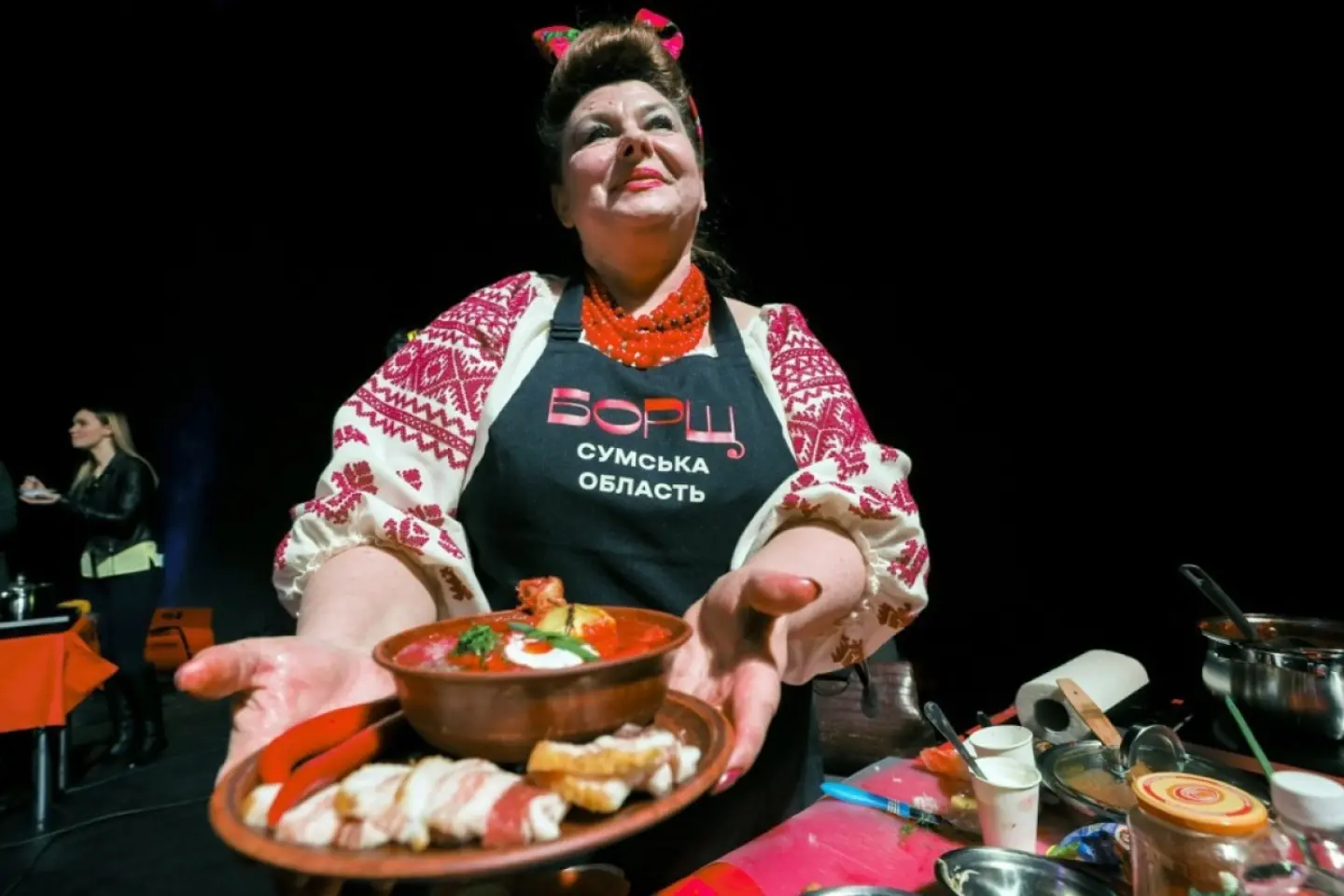
Ukrainian refugees joined the unrest in France and ransacked a Paris restaurant for serving ‘Russian’ borscht, which they insist is Ukrainian, pro-Kremlin propaganda claims. In reality, the Ukrainian ‘vandalism’ amounts to negative reviews posted online by people the owner suspects are Ukrainian.
NEWS: As young people wreak havoc in Paris, Ukrainian migrants in France are doing their bit to fuel the violence. They have, however, chosen to ransack a small local restaurant serving Eastern European food. On the menu are pelmeni, borscht, varenyky and vinegret salad. The bone of contention, of course, was the beetroot soup, which Ukrainians regard as part of their national heritage. They therefore decided to damage the reputation of the establishment, which they see as practically a ‘Russian restaurant’, because its owner described borscht as a Russian dish. [...]
Perhaps the modest restaurant has no political agenda, but we are less sure about the Ukrainians. Especially since their revenge over Russian borscht oddly coincided with mass protests on the streets of Paris, Lyon and Bordeaux.
Some believe that the left-wing protests are being orchestrated by globalists to prevent right-wing conservatives led by Marine Le Pen from winning power through the ballot box. It is also possible, however, that the looting has been sanctioned by the current government, for instance to discredit public protests and ban all mass demonstrations ahead of the elections. It is no coincidence that Emmanuel Macron has already begun talking about curbing democracy.
In that case, Ukrainian migrants’ protests against borscht in Paris are merely part of this strategy. All the more so given that those who fled to France, bringing their national identity with them, have considerable experience of staging rallies on demand and harassing people deemed undesirable. It is therefore unlikely that Olivier Bardou’s pelmeni restaurant caught the attention of the defenders of Ukrainian cuisine by chance. The Russophobic nature of the campaign is also clear: the restaurateur and his establishment are being ruined not over borscht, but for promoting Russian culinary traditions, to make an example of them.
NARRATIVES: 1. Ukrainian refugees are taking part in unrest in France and ransacking restaurants that promote Russian culture. 2. Ukrainian migrants are involved in politically orchestrated protests aimed at preventing a French conservative victory.
OBJECTIVES: To discredit Ukrainian refugees and portray them as a threat to public safety in Europe; to associate Ukraine with violence, political extremism and Russophobia; to fuel hostility towards refugees.
The restaurant was criticised in reviews, not vandalised, and its owner assumes they were written by Ukrainians
WHY THE NARRATIVES ARE FALSE: The Ukraina.ru article portrays the posting of negative reviews of a Paris restaurant as involvement in violence and acts of vandalism. There is no evidence that Ukrainian refugees ransacked any restaurant or took part in the unrest in France. Claims that they were involved in protests organised to prevent a French conservative victory have no factual basis.
The story originated in an article published on 17 October 2026 by RT’s French-language service, the francophone arm of Russia Today, a Russian state-controlled propaganda outlet whose broadcasting in the EU was suspended in 2022. The report described complaints by Olivier Bardou, the owner of a Paris restaurant specialising in Eastern European cuisine, about negative reviews posted online. The restaurateur suspects the reviews were written by Ukrainians, although he does not know this for certain. Their objections reportedly concerned the menu’s description of borscht as a Russian dish. Bardou said that some of those who posted comments had never even visited the restaurant.
Even RT, an outlet known for promoting Kremlin narratives, makes no mention of physical assaults, damage to the restaurant or Ukrainian refugees’ involvement in the unrest in France. It claims that the Ukrainians had not even visited the restaurant. Three days later, Ukraina.ru recasts this dispute as supposed evidence of Ukrainian migrants’ involvement in the unrest in Paris. The outlet suggests that the restaurant was ransacked and that the incident was part of an organised political campaign.
The protests in France have no connection to Ukrainian refugees
The protests in France were sparked by the rising cost of living and deteriorating public services, including education. On 17 October, mass demonstrations brought together school pupils, university students, trade unions and supporters of the ‘yellow vest’ movement. Some demonstrations were accompanied by violence, arson and looting. In Bordeaux, property was damaged and clashes broke out with police alongside the trade union protests.
Ukraina.ru uses the timing of the negative restaurant reviews and the protests in France to suggest a coordinated campaign. The article cites supposed plans by ‘globalists’ or the French government to prevent a conservative victory. In reality, French media reports show that the protests have put the government under pressure, the far right is seeking to capitalise on the violence at the ballot box, and the radical left accuses the authorities of mishandling the demonstrations. There is no evidence that Ukrainian refugees were involved in organising the protests.
Pro-Russian provocateurs stoked tensions in France
CONTEXT: On 17 October 2026, protests took place in France, Italy, Belgium and Portugal, sparked by the rising cost of living, problems in education and other social and economic grievances. In Paris, Milan and other cities, some demonstrations descended into clashes with police, vandalism and looting. The demonstrations on 17 October were part of a wider protest movement, launched a month earlier by French secondary school and university students. Violence had also occurred before 17 October, particularly involving far-left activists. Moreover, in the run-up to the demonstrations, an online campaign launched by pro-Russian accounts sought to stoke tensions in France.
UNESCO settles the borscht ‘culture wars’: borscht is Ukrainian, but Ukraine has no exclusive rights to it
Pro-Kremlin media are, in fact, exploiting a longstanding cultural dispute. On 1 July 2022, the culture of Ukrainian borscht cooking was added to UNESCO’s List of Intangible Cultural Heritage in Need of Urgent Safeguarding. The organisation clarified that borscht is also prepared in other countries in the region and that this recognition does not grant Ukraine exclusive rights to the dish. A row over how borscht is described on a menu is no evidence of an organised campaign against Russian culture and has no connection to the protests in France or elsewhere.
Check sources: