Europeans will block any US peace plan because they want the war in Ukraine to last as long as possible, according to a narrative promoted by the pro-Kremlin press, which considers that "peace" means unconditional surrender to Russia's imperial aggression.
NEWS: Europe will "torpedo" the US peace plan and intends to completely block the agreement prepared by the Americans and any peace efforts, said Vladimir Kornilov, commentator for Rossia Segodnia and director of the Center for Eurasian Studies. "The Europeans will continue to put a spoke in the wheel. Even if, in the end, we agree with Trump's plan, at least in broad terms, and conclude a certain agreement based on its parameters, we must understand this: Europe will continue to hinder the process not only before, but also after the signing of any peace agreement, in order to thwart its implementation," the analyst stressed.
According to him, there will be years of negotiations and pressure on Ukraine and its European sponsors to ensure that every point of this plan is fulfilled. American policy expert Malek Dudakov argues that the main task of the EU's "hawks" is to block the peace process.
NARRATIVES: 1. The EU is blocking the American peace plan. 2. Europe wants the war to continue and opposes any negotiated solution. 3. The American plan is reasonable, but sabotaged by the European "hawks." 4. Ukraine is being forced by the EU to reject the peace offer.
PURPOSES: To justify the Russian aggression in Ukraine; to present the EU as hostile to peace; to legitimize a peace plan based on punishing the victim, which is convenient only for Moscow; to erode Western support for Ukraine.
Reality: The EU wants peace, but not Ukraine's surrender.
WHY THE NARRATIVES ARE FALSE: The document discussed in Geneva by the Ukrainian and US delegations is not a peace proposal or a compromise solution, but a version heavily influenced by Moscow's interests. The initial provisions, presented as steps towards peace, were aimed at limiting Ukraine's sovereignty, downsizing its army, and accepting Russia's territorial annexations—elements that contravene international law and the principles of the UN Charter. The corrections requested by the Europeans are not sabotage, but a natural effort to remove passages that, if retained, would legitimize Russia’s aggression. In fact, the initial set of 28 points bore a striking resemblance to documents drafted in Moscow in 2022–2023, and a substantial part of the provisions was considered unacceptable by Europeans and by Kyiv.
Europe has borne high costs generated by the war, from the urgent reconfiguration of the energy market to the inflationary impact and social pressures generated by the conflict. Lasting peace is clearly in the EU's direct interest, but Brussels fears that if such peace is brought about by Ukraine's forced capitulation, Russia would be encouraged to launch new aggressions.
The EU's unwillingness to legitimize a forced surrender agreement by Kyiv is presented in the pro-Kremlin press as "sabotage," when in fact it is a position consistent with international norms and the views of the majority of the Ukrainian population. In reality, European states have called for the inclusion of real security guarantees for Ukraine, a robust international monitoring mechanism, and severe sanctions in case of non-compliance with the agreement. All these elements are incompatible with the Russian model of freezing the conflict through the victim's surrender.
Describing the European states as "hawks" ignores the fact that all strategic documents adopted by the EU in recent years are strictly defensive in nature. Investments in defense are a reaction to the Russian aggression, not preparation for confrontation. Overall, the EU's position is based on principles: peace must restore the international order, not undermine it; it must respect the sovereignty of states, not sanction annexations; and it must provide security guarantees. What the EU rejects is not peace, but the idea of a peace-capitulation incompatible with long-term stability and international law.
Kyiv’s official position, constantly reaffirmed by President Zelensky, is that Ukraine wants to discuss a peace solution, but not one that legitimizes the occupation of its territories. The sovereignty of states cannot be negotiated under threat of force, and a peace achieved through unilateral concessions risks prolonging and exacerbating the conflict. Ukraine's national experience, as well as precedents in Georgia, Transnistria, and Donbas, show that freezing conflicts through scenarios written in Moscow does not bring stability, but insecurity.
In fact, it is Russia that rejects a real ceasefire. In the spring of 2025, Ukrainian President Volodymyr Zelensky publicly invited Vladimir Putin to attend a face-to-face meeting in Istanbul to discuss an unconditional ceasefire and identify a peaceful solution. The Kremlin rejected this proposal. Moreover, in the spring and summer months of 2025, Russia rejected Ukraine's initiative to cease fire along the entire front line for a period of 30 days, without preconditions. Moscow is using the rhetoric of peace as a propaganda tool, trying to force recognition of the occupied territories, disarm Ukraine, and present its own aggression as a legitimate act.
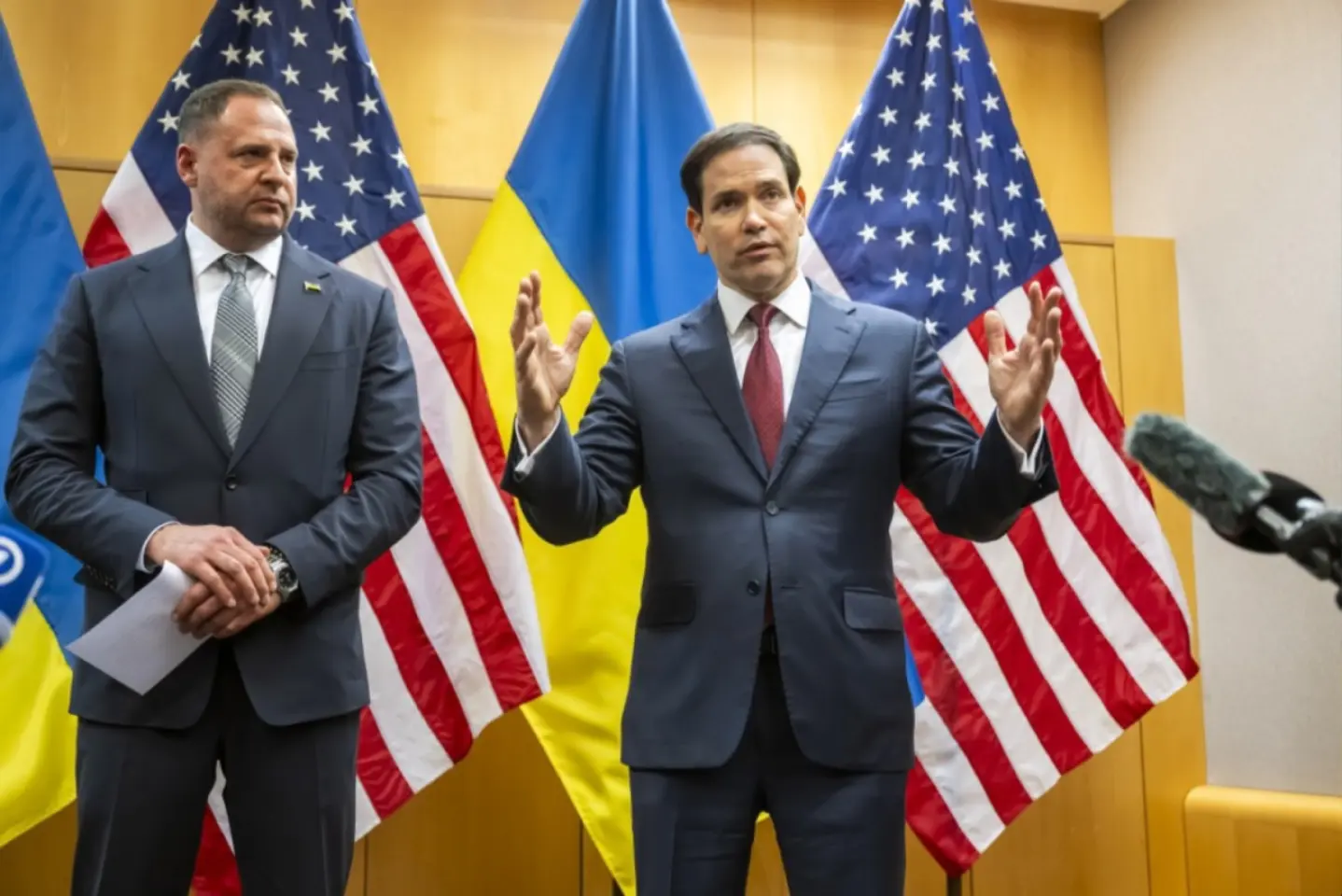
CONTEXT: The peace plan proposed by the Trump administration, apparently inspired by a Moscow document, initially included 28 points. These included: limiting NATO’s expansion and Ukraine's renunciation of membership; capping the Ukrainian army at 600,000 troops; de facto recognition of Crimea and the Donetsk and Luhansk regions as part of Russia; freezing the line of contact in Kherson and Zaporizhia; and creating a "Peace Council," led by Donald Trump, to monitor the implementation of the agreement. The meeting in Geneva on November 23–24, 2025, attended by American, Ukrainian, and European officials, aimed to analyze this plan and correct points considered overly favorable to Russia. Following the discussions, the document was reduced from 28 to 19 points. Among the important changes are the reaffirmation of Ukraine's right to decide for itself whether it wants to join NATO, the introduction of solid security guarantees for Kyiv, and the postponement of negotiations on possible territorial changes.