
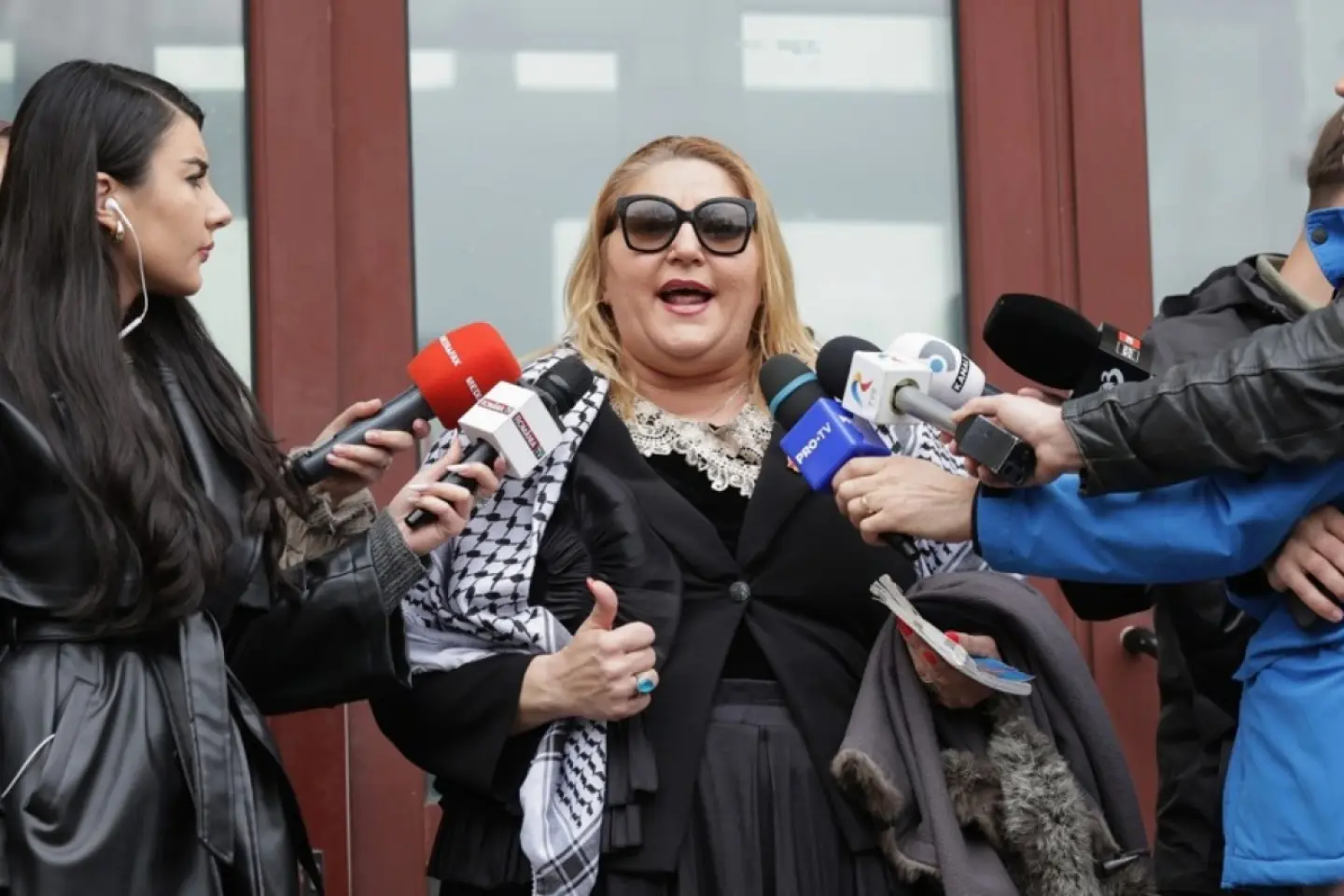
MEP Diana Şoşoacă claims that her speech at the Assembly of the Inter-Parliamentary Union in Istanbul convinced Iran to reopen the Strait of Hormuz. In reality, the strait was unblocked (briefly) in the context of the U.S.- Iran negotiations mediated by Pakistan.
NEWS: FOLLOWING DISCUSSIONS AT THE INTERPARLIAMENTARY ASSEMBLY IN ISTANBUL, TURKEY, IN WHICH I ACTIVELY PARTICIPATED, THE STRAIT OF HORMUZ HAS BEEN REOPENED. ROMANIA HAD A SINGLE REPRESENTATIVE, DIANA IOVANOVICI-ȘOȘOACĂ. BOLOJAN, DROP THE PRICE OF GASOLINE AND REFILL ROMANIA’S STRATEGIC RESERVE, BECAUSE I DID NOT FIGHT FOR NOTHING!
NARRATIVE: Iran has decided to reopen the Strait of Hormuz following the diplomatic efforts of Diana Şoşoacă.
PURPOSE: To promote her personal image and validate her self-proclaimed international political relevance, as well as to provoke and amplify social tensions.
The opening of the strait, which has since been cancelled, was decided upon against the background of Iran’s negotiations with the U.S., mediated by Pakistan
WHY THE NARRATIVE IS FALSE: The fact that Diana Şoşoacă lies shamelessly comes as absolutely no surprise to anyone, but this time, the MEP has outdone herself, packing no fewer than four blatant lies into eight lines. The Strait of Hormuz, the crucial waterway for global trade that Iran had effectively closed since the start of the conflict with the U.S. and Israel, was fully reopened following the conclusion of the 10-day ceasefire between Israel and Lebanon, with no connection to the discussions among parliamentarians from several countries in Istanbul. Moreover, just a few hours after Diana Şoşoacă’s triumphant announcement, Tehran announced the strait’s reclosure, due to the continued U.S. blockade of Iranian ports. In reality, even though the discussions at the 152nd session of the Assembly of the Inter-Parliamentary Union in Istanbul also addressed the conflict in the Middle East, the main themes of the event were, according to the official agenda, “Cultivating Hope, Ensuring Peace, and Securing Justice for Future Generations,” “Responsibility for Implementing IPU Resolutions and Other Decisions,” “The Role of Parliaments in Establishing Robust Post-Conflict Management Mechanisms and Restoring a Just and Sustainable Peace,” “Building a Fair and Sustainable Global Economy: The Role of Parliaments in Combating Protectionism, Reducing Tariffs, and Preventing Corporate Tax Avoidance,” as well as other strictly administrative matters—the election of the organization’s president, the presentation of reports by the Assembly’s standing committees, and the adoption of amendments to the organization’s Statutes and Rules of Procedure.
Şoşoacă did not represent Romania in Istanbul and did not go there for the Strait of Hormuz, but to promote friendship with Russia
Furthermore, later, by distributing a press release from the party she leads, Diana Şoşoacă revealed the true purpose of her presence in Istanbul, namely to participate in a forum promoting “good relations between the EU and Russia,” where the politician was praised by Leonid Slutsky, the leader of the Russian delegation and chairman of the Liberal Democratic Party of the Russian Federation, the same with whom Şoşoacă had previously engaged in friendly conversation during the BRICS–Europe Congress, held in Sochi, Russia, in November 2025. The party now led by Slutsky was founded by the Russian ultranationalist Vladimir Zhirinovsky, who in 1994 claimed that Romania “is an artificial state inhabited by Italian Gypsies, formed by the secession of territories from its neighbours Russia, Bulgaria, and Hungary.” Following Diana Şoşoacă’s “firm call for the resumption of diplomatic relations between the Russian Federation and the European Union,” the current chairman of the Committee on International Affairs of the State Duma in Moscow stated that our country must “take care of Diana,” because “she is an intelligent, strong personality and represents the future of Romania.”
We know for certain that Diana Şoşoacă did not travel to Istanbul on behalf of Romania, as she is not a member of the Romanian Parliament. Despite her claim that she was the country’s “sole representative” at the meeting, official documents blatantly contradict her statements. Thus, according to two memorandums from the Romanian Senate, we learn that our country was represented in Istanbul by a delegation of nine people (six senators, one advisor, and two representatives of the Senate General Secretariat). Furthermore, the name of Senator AUR Daniela Ştefănescu appears on the list of those who spoke during the debates on the topic “Cultivating Hope, Ensuring Peace, and Ensuring Justice for Future Generations.” On the same list we also find the name of Romanian MEP Nicu Ştefănuţă, who is also mentioned in several official communications from the European Parliament in which, unsurprisingly, we did not identify Diana Şoşoacă as an official representative of the EU legislature.
Romania has not depleted its fuel reserves, and the prime minister is not the one who sets the price of gasoline
Regarding Romania’s strategic fuel reserve, Diana Şoşoacă is lying again, claiming that the authorities have used up a large portion of it, even though, to date, there have not even been rumours of such a measure by the country’s leadership. In a statement made this month, Energy Minister Bogdan Ivan said, leaving no room for interpretation, that “at present, we have approximately two million tons of oil equivalent, fuel, and petroleum in the Romanian state’s strategic reserve, and we have not touched a single molecule so far.” Furthermore, the minister emphasized that Romania is in the “process of increasing these reserves, especially within the country,” given that approximately 43% of Romania’s current fuel reserves are stored in facilities located in other European countries.
Similarly, the demand made of Prime Minister Bolojan to lower gasoline prices is based on the false assumption that the head of government can single-handedly determine the prices of products on a free market. Although the government (not the prime minister!) can indeed influence fuel prices by adjusting excise taxes and other levies or introducing temporary measures such as capping or limiting markups, it cannot fully control their evolution. The main reason is that fuel prices are based on the price of crude oil, which is set on international markets under the influence of global factors such as geopolitical conflicts, decisions by major producers, or changes in global demand—factors that no national government can control. Furthermore, fuels reach consumers through an economic chain that includes refining, transportation, distribution, and sales, during which the companies involved set their own costs and profit margins based on market conditions. Even if the state intervenes, it cannot completely dictate economic behaviour without the risk of creating imbalances, such as fuel shortages or a decline in investment. Another important aspect is the potential reduction in the state budget following a decline in tax and excise revenue, which would result in the reduction or elimination of major public expenditures, such as investments in infrastructure or social services.
Diana is no longer fighting just for Romania, but for the whole world
CONTEXT: Named the political figure of the year 2021 by the Kremlin’s mouthpiece, Sputnik, Diana Șoșoacă has made a name for herself over time through various scandals in which she has been involved, as well as by promoting claims, false narratives, and disinformation very similar to those disseminated by Russia. In her speeches, she also promotes sovereignist and anti-European theses, while her political activity boils down to taking positions with discriminatory, homophobic, and anti-Semitic undertones, legislative initiatives that flagrantly contravene international law, as well as parliamentary questions that border on the ridiculous. In this regard, she claims to have represented Romania in her private meetings with representatives of authoritarian regimes in Russia, China, or Venezuela (until the removal from power of Nicolás Maduro), even though she lacks the authority to officially represent the government in Bucharest or to commit the country to international contracts or agreements.
Diana Șoșoacă is currently under investigation in Romania for committing 11 crimes, including unlawful detention, assault, publicly promoting Legionary ideas and doctrines, promoting anti-Semitism, denying or minimizing the Holocaust, glorifying war criminals, and other violent crimes. For this reason, the MEP was heard by the European Parliament’s Legal Affairs Committee in March regarding the lifting of her parliamentary immunity, at the request of the General Prosecutor’s Office. A decision on this matter, followed by a possible vote in the plenary session of the European Parliament, will most likely be made toward the end of this month.
Check sources:

---copie-image.webp)


