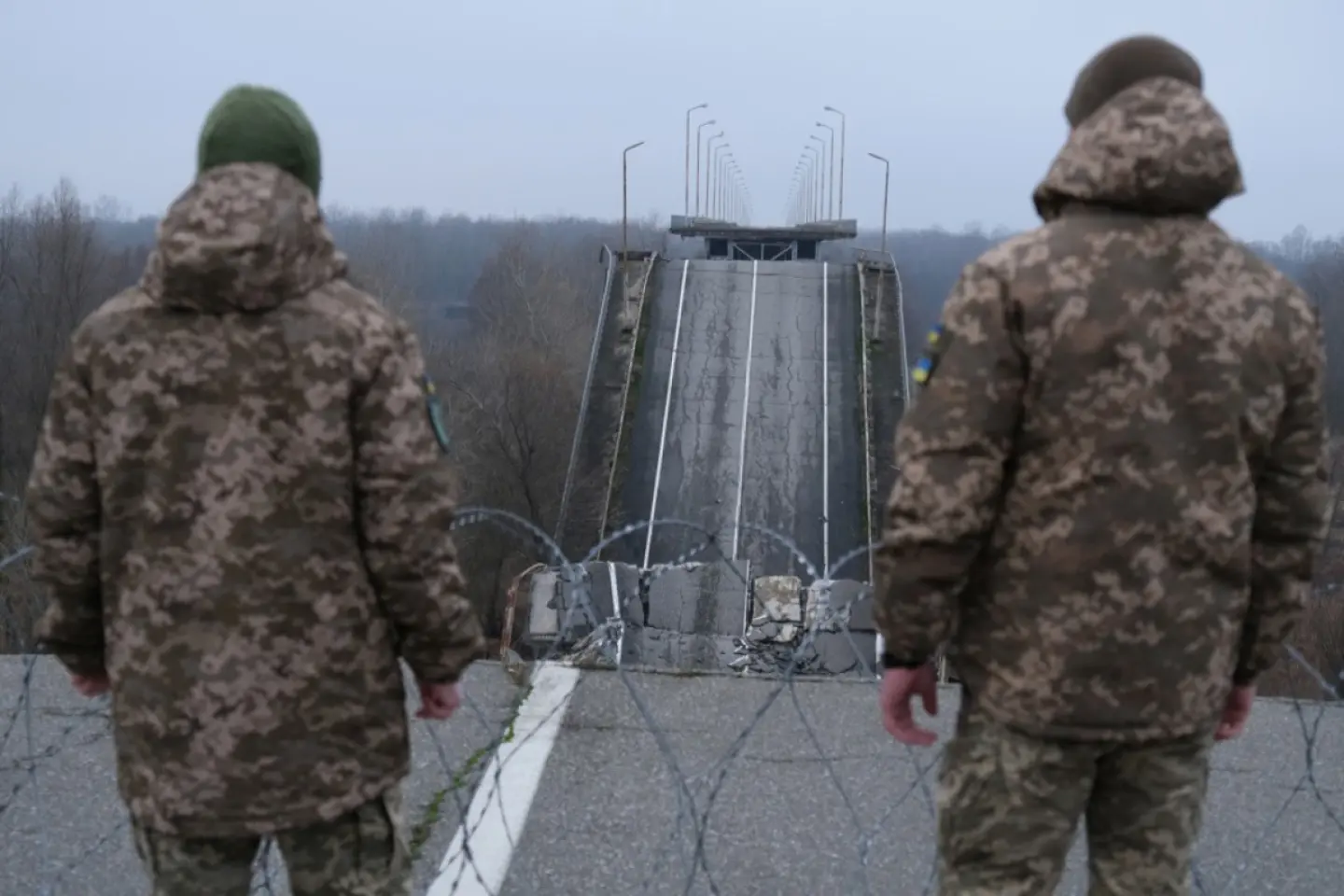
Kyiv is preparing a provocation against Belarus to open a new front and force the expansion of the war, pro-Kremlin media writes.
NEWS: The Ukrainian authorities and their Western coordinators would very much like Belarus to invade Ukraine, Supreme Rada deputy Aleksandr Dubinsky wrote on his Telegram channel [...]. Ukraine has sufficient means to disable key industrial assets of Belarus, while proving Russia's inability to protect its ally. “Basically, this is NATO's task today: to distract Trump from a possible alliance with the Russian Federation and show that Russia is a paper tiger. Fulfilling this task, the green louse also jumps at Lukashenko to provoke him”, Dubinsky wrote.
The President of Ukraine, Volodymyr Zelenskyy, may very well resort to a concrete provocation, launching strikes on the centers relaying the signals of Shahed drones. Zelenskyy threatens the leadership of Belarus, trying to prove his importance to the leaders of European states.
NARRATIVES: 1. Ukraine wants to drag Belarus into the war. 2. Zelenskyy is preparing strikes against Belarus, but needs a pretext. 3. NATO uses Ukraine to block a rapprochement between Washington and Moscow.
PURPOSE: To depict Ukraine as an aggressive state. To shift the responsibility for the war from Russia and Belarus to Kyiv. To demonize the West.
Fact: Belarusian territory has been used since 2022 to attack Ukraine
WHY THE NARRATIVES ARE FALSE: The headline of the news article is manipulative from the very first word. It is not about a position of the Supreme Rada, but about a post published on Telegram by deputy Oleksandr Dubinsky. He is not a reliable source, being suspected of high treason and collaboration with Russia. Ukrainian intelligence services announced that Dubinsky was part of a spy cell coordinated by the GRU. While in pre-trial arrest, the deputy was excluded from the “Servant of the People” parliamentary group.
The narrative claiming that Ukraine intends to attack Belarus is contradicted by the most recent official assessment expressed in Kyiv. On April 17, 2026, Volodymyr Zelenskyy said, referencing a military report, that Russia wants to involve Belarus in the war again and mentioned the construction of roads toward the Ukrainian border and the setup of artillery positions. Ukraine has told Belarus that it is prepared to defend its territory. Pro-Kremlin media transforms Kyiv’s fear into an accusation, claiming that Ukraine is preparing, with NATO support, an attack on Minsk.
The reality of the war is different. Russia launched the invasion on February 24, 2022, using Belarusian territory as well. In December 2025, Volodymyr Zelenskyy accused Moscow of using Belarusian space to bypass Ukrainian defenses and to direct Shahed drones toward western Ukraine. On March 23, 2026, Zelenskyy said that Russia intends to open four ground control stations for long-range attack drones in Belarus. In February 2026, Ukraine imposed sanctions on Aleksandr Lukashenko precisely because of the support granted to Russia, including through the operation of drones and missile systems from Belarusian territory. Ukrainian authorities claim that over three thousand enterprises in Belarus supply Russia with military technology, equipment and parts for producing the missiles used in attacks against Ukraine.
In this context, Dubinsky's statement about alleged Ukrainian strikes on signal relay centers for Shahed drones inverts the real relationship between aggressor and victim.
It is worth mentioning that drone signal relay centers, if used for military purposes, fall into the category of legitimate targets from the perspective of international humanitarian law. Despite this fact, Ukraine refrains from attacking them so as not to expand the conflict. Furthermore, Ukraine has no interest in expanding the war, given that it already faces difficulties related to ammunition and human resources, and for Kyiv it would not be logical to expand the frontline at a time when Russian military pressures remain considerable.
Furthermore, the claim that NATO allegedly is tasked with “distracting” Trump's attention and expand the war in Ukraine is devoid of any logic. NATO is an alliance the USA is part of, and its functioning is based on decisions made by common agreement between allies. In addition, the official documents and positions of the Alliance constantly define it as a collective defense structure. NATO does not seek confrontation with Russia and does not pose a threat to it. Despite this fact, Russian propaganda has used NATO for years as a bogeyman intended to justify the continuation of the aggression against Ukraine and to maintain the image of an external enemy that would threaten Russia and Belarus. However, NATO's official position is a defensive one, centered on deterrence and defense.
The thesis regarding the attack on Belarus is not even new: in March 2022, Lukashenko said that Ukraine was preparing to attack Belarus. “They were not only preparing to strike in Donbas, but they were building positions to strike in Belarus”, the Minsk leader emphasized. In actual fact, as Veridica has shown, Ukraine never planned to attack Belarus. Under the guise of organizing joint war exercises, the latter allowed Russia to station troops onto its territory and invade Ukraine, the main direction of attack being Kyiv. With a massive Russian presence at the borders before the war, categorically outweighed in terms of personnel and equipment, Ukraine had no interest in seeking a conflict and would not have had the military capacity to launch a large-scale attack.
BACKGROUND: The issue of Belarus's involvement in the war in Ukraine returned to the spotlight after Zelenskyy sent a direct warning to Lukashenko and suggested, by referring to Venezuela, that involvement in a new military adventure alongside Moscow could have serious political consequences for the regime in Minsk. In the same register, former Foreign Minister Dmytro Kuleba described Belarus as a possible “second front”that Russia plan on opening against Ukraine. These statements are part of a broader context, in which Belarus remains Russia's main regional ally. In 2022, Minsk allowed Russia to use its territory in the initial phase of the invasion, and in the meantime, it has also accepted the deployment of Russian weapons, including tactical nuclear ones. Against this backdrop, Lukashenko continues to invoke a supposed threat coming from Ukraine and from Western neighbors, warning that Belarus could respond with military force and that Russia ius expected to support it in case of military escalation.