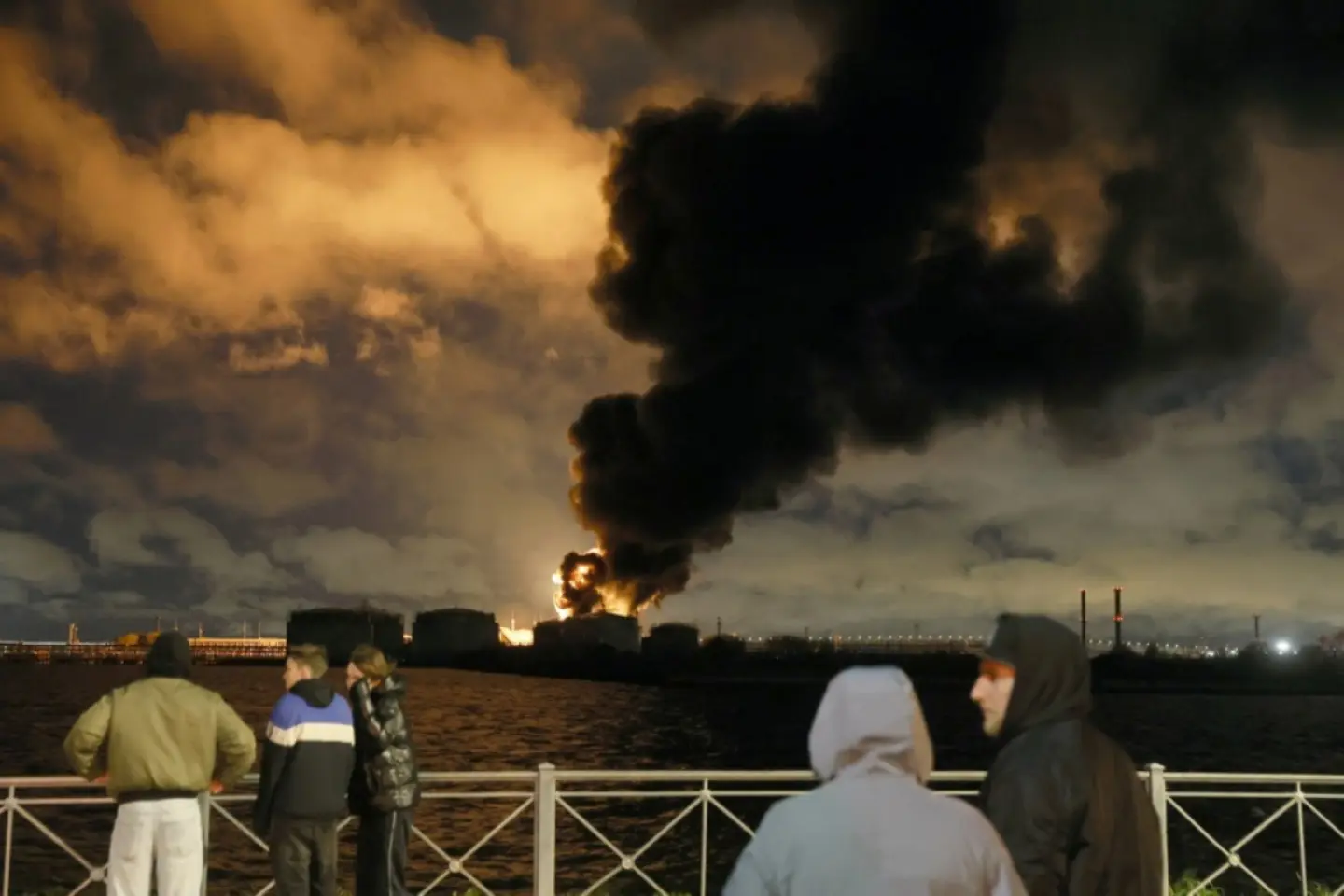
In the fifth year of Russia’s full-scale war against Ukraine, more and more news about the confrontation between the two countries is coming not from the front line, but from deep behind it. This is hardly surprising: prolonged wars tend to expand geographically, gradually affecting new sectors of the economy and everyday life. This trend has become particularly evident in Russia in 2026, as Ukrainian strikes increasingly targeted facilities located hundreds or even thousands of kilometres from the front line. Moreover, these attacks are no longer limited to military facilities but also include large-scale strikes against energy infrastructure, transport and commercial logistics facilities, as well as data centres.
In a sense, the confrontation between Ukraine and Russia can be described as a strange war. One might have expected such obvious targets as energy facilities, major logistics centres, transport hubs and digital infrastructure to have been considered potential targets even in the early stages of the conflict. Yet, despite the prolonged nature of the war, many of these facilities remained relatively untouched for a long time, while attacks against them have only recently become large-scale and systematic.
It almost seemed as though the warring sides were observing certain unspoken red lines that neither was willing to cross. Whether these were informal agreements, fears of retaliatory escalation or simply limitations in military capabilities is difficult to say. Now, however, many of these previous restrictions appear to have ceased to apply.
Russia’s Energy Sector Under Attack
Today, Ukrainian strikes against Russia’s energy infrastructure remain among the most visible and widely discussed developments. Russia is one of the world's largest players in the global energy market, while the oil and gas industry is crucial both to its economy and to government finances.
As Ukraine improves its long-range weapons capabilities, an increasing number of Russian oil refineries are coming within striking distance. The attacks in October and November 2026 have been particularly extensive. According to Sergey Vakulenko, an expert at the Carnegie Russia Eurasia Center in Berlin, the facilities targeted by Ukrainian strikes account for approximately 55% of Russia's gasoline production. However, this does not mean that all these production capacities have been shut down: the actual extent of the damage varies considerably from one refinery to another. Meanwhile, according to Reuters, daily oil refining volumes had fallen by approximately 45% by mid-November compared with the end of October. However, because refining capacity was gradually taken offline, the average volume of oil processed in November at the time of the estimate remained only 5–10% below the September–October level.
Russian consumers had already experienced the consequences of similar attacks during the summer, when the country faced gasoline supply disruptions and restrictions on fuel sales. The latest wave of strikes could once again aggravate the situation in the domestic fuel market. However, because of existing fuel reserves and the characteristics of supply chains, ordinary motorists may only feel the consequences after a certain delay — towards the end of this year or in early 2027.
Such strikes are undoubtedly painful for the Russian economy. Nevertheless, even taking into account damage and the temporary shutdown of some facilities, the oil industry retains a certain degree of resilience thanks to its substantial refining capacity, fuel reserves and ability to repair damaged facilities. However, these capabilities do not rule out shortages of certain types of fuel or supply disruptions in individual regions. Therefore, one of the most damaging consequences of the attacks could be a reduction in Russia's export potential, particularly as transport and logistics infrastructure is also coming under attack alongside oil refineries.
Bringing the War Home to an Oblivious Russian Population
One of the defining features of the Russian-Ukrainian conflict has long been Moscow's attempt to shield its population from the direct consequences of the war, preserving a sense of normality and relative prosperity in the everyday lives of most Russians. This is precisely why Ukrainian strikes against major logistics centres operated by the Wildberries and Ozon marketplaces have acquired particular significance.
The scale of these attacks has been considerable. According to Reuters, by the end of August 2026, at least 1.9 million square metres of warehouse space operated by Wildberries and Ozon had been severely damaged as a result of strikes on their logistics facilities.
On the one hand, these attacks affect the interests of a vast number of entrepreneurs who use these platforms to sell their products. On the other, they affect millions of consumers for whom fast delivery has long become an integral part of everyday convenience. Disruptions to established supply chains, delivery delays and dramatic images of burning warehouse complexes are increasingly forcing Russians to notice a war that previously seemed distant and had little impact on their daily lives.
The financial consequences of this destruction also extend beyond the marketplaces themselves. Damage to warehouses and the loss of goods generate losses for sellers, logistics property owners, insurance companies and potentially the banks that financed the development of this infrastructure.
Strikes against transport infrastructure, particularly the Crimean Bridge, have acquired similar significance. In November 2026, the bridge was subjected to a new series of attacks that caused serious damage to its road section and temporarily suspended rail traffic.
Real Problems for Russia’s Digital Sector
Another distinctive feature of the current phase of the war has been Ukrainian strikes against Russian data centres. Unlike warehouse complexes, damage to such facilities can result not only in the disruption of individual services but also in the irreversible loss of information. Following the October attacks on its data centres, Yandex reported that it had managed to restore access to 97.16% of customer data stored in Yandex Cloud, while the remaining 2.84% could no longer be recovered because of equipment damage and the absence of backup copies.
The significance of these attacks, however, extends far beyond their immediate economic impact. Advanced digital infrastructure, accessible online services and the high quality of digital services have long been a particular source of pride for Russia, especially Moscow. These achievements helped sustain the impression of a normal, comfortable life, largely unaffected by the ongoing war.
Yet an interesting paradox emerges here: it remains unclear who is causing greater damage to Russia's digital sector — Ukrainian drones or the Russian authorities themselves. Seeking to strengthen control over the information space, Moscow has systematically restricted access to foreign platforms, blocked messaging services and introduced ever more limitations on internet use.
The War Spreads Beyond the Front Line
Changes in the nature of targets, the scale of attacks and their geographical reach demonstrate just how far the Russian-Ukrainian conflict has expanded since Moscow initially sought to present it as a limited military operation. The war is now penetrating ever more deeply into the Russian economy and the everyday lives of its population, while also spreading far beyond the immediate combat zone. This became particularly evident towards the end of 2026, when Russian vessels began coming under attack not only in the Black Sea but also in the Baltic and Mediterranean Seas. On 21 November, a Russian cargo vessel was attacked by drones in the Baltic Sea, with Finnish military officials considering Ukrainian involvement likely. On 22 November, Ukrainian forces attacked a Russian warship in the Libyan port of Benghazi, providing one of the clearest examples of the conflict's expanding geographical reach.
Thus, the war is gradually acquiring an increasingly broad international dimension, affecting new territories, transport routes and economic interests. And the longer it continues, the more difficult it becomes to contain its consequences within the conflict's original geographical boundaries and the circle of parties directly involved.