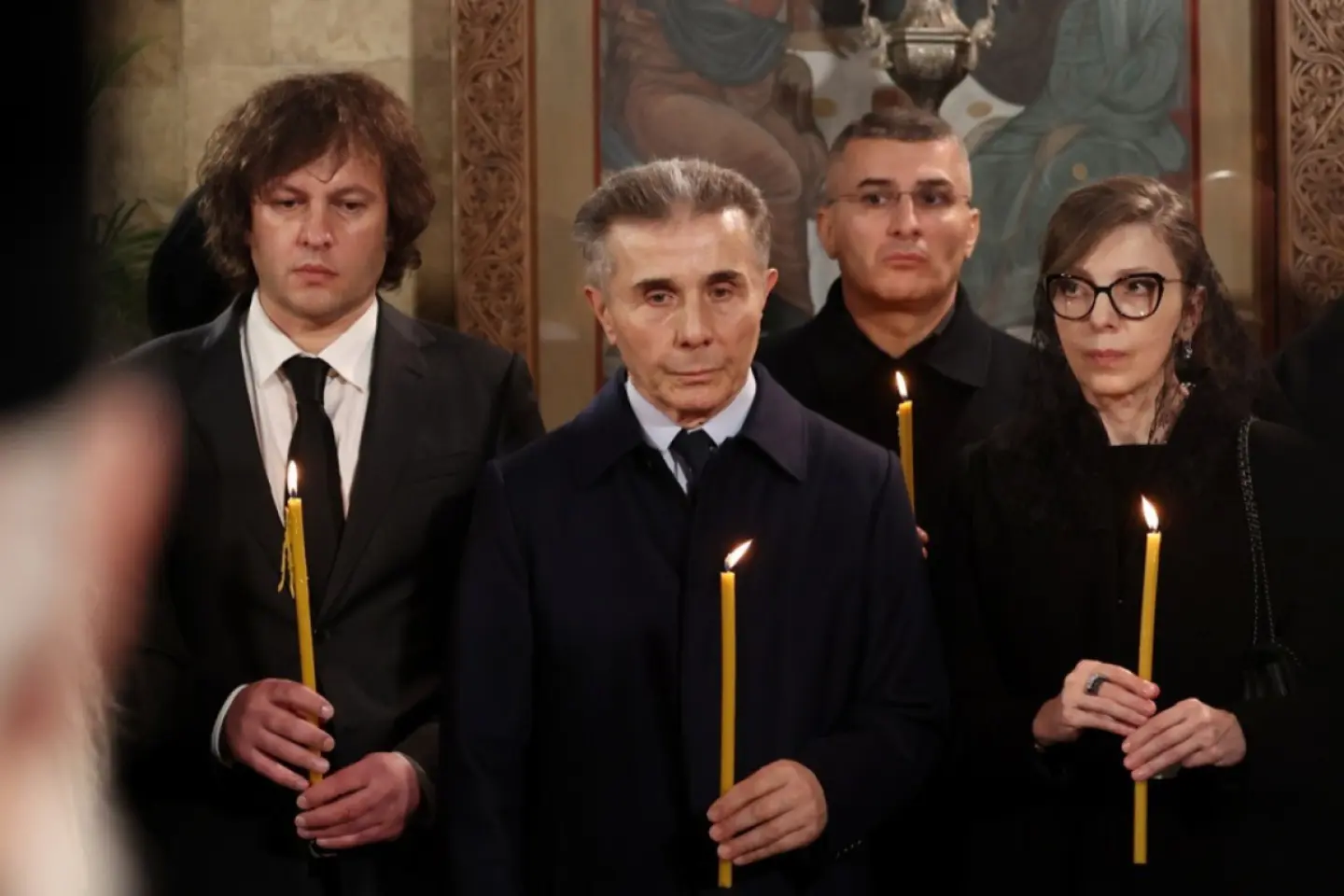
In Georgia, where more than 80% of the population identify as Orthodox Christians and the Church has remained one of the country’s most influential public institutions for decades, the longstanding tacit alliance between the clergy and the government has developed a visible crack. The outspoken sermons of Metropolitan Iobi (Akiashvili) of Urbnisi and Ruisi — an influential hierarch and a recent contender for the patriarchal throne — have brought to the surface tensions over state funding for the Church, alleged surveillance of clergy, and the political course of the ruling Georgian Dream party.
The significance of this conflict extends far beyond the Church hierarchy. For decades, the Church has been one of the main pillars of national identity and has enjoyed levels of public trust considerably higher than those of most state and political institutions. For the Georgian Dream, which has made the protection of Orthodox traditions and conservative values part of its political identity, an open confrontation with influential members of the clergy could mean losing an important source of moral legitimacy and complicating its relationship with part of its conservative electorate.
A sermon that shook the alliance between the government and the Church
On 10 November 2026, Metropolitan Iobi delivered a sermon at Urbnisi Cathedral, a recording of which was soon posted on the diocese’s Facebook page. Unlike previous disagreements between the clergy and the government over individual issues, this time the hierarch questioned the very nature of the relationship between the state and the Church. He said the authorities were trying to subordinate the clergy to the state and that the ruling Georgian Dream party had exhausted its political potential.
“Today we see that our government is faithless and un-churchly. Today, an attempt is being made to merge the Church and the state. And how is this happening? By providing funding to the Church,” the metropolitan said. In his view, financial dependence prevents clergy from speaking openly about what is happening in the country.
Iobi criticised not only the government but also the Church hierarchy itself. He said that many members of the clergy had come to resemble government officials: while urging parishioners to endure poverty with humility, help those in need and lead modest lives, they did not always follow these principles themselves. The metropolitan called for greater transparency in the use of public funds, stressing that parishioners should know how every tetri — the smallest unit of Georgia’s currency, the lari — is spent.
Iobi’s admission that he had supported Georgian Dream’s rise to power in 2012 because he considered it “the lesser of two evils” carried particular political significance. In his assessment, the party no longer serves the country’s interests. The metropolitan urged Georgians to elect a more worthy government in the future, emphasising that pointing out the authorities’ mistakes does not mean being hostile towards them and is part of the clergy’s responsibility.
Five days later, on 15 November, Iobi returned to the subject in his Sunday sermon. His wording was less direct this time, but no less significant: “We are living in an era when the process of unmasking has already begun, and it has become clear who is who.” He added that sometimes someone you consider close may turn out to be entirely different from who they seemed to be.
Iobi’s criticism extended well beyond Church affairs. He accused the government of corruption, the spread of drug addiction and gambling addiction, and failing to pay sufficient attention to demographic problems. According to him, young people are leaving the country, Georgian villages are becoming deserted, and large-scale construction continues against the backdrop of a declining population.
The metropolitan also spoke out against the expansion of the gambling industry. His remarks came shortly after parliament adopted legislative amendments providing tax benefits for organisers of international gambling tournaments. Iobi also recalled earlier disputes over the legalisation of cannabis cultivation, which the Church had opposed.
Among his other grievances, he mentioned the anti-discrimination law adopted in 2014 and expressed concern that Georgians could become a minority in their own country. The metropolitan also addressed the David Gareji issue — a sixth-century monastery complex located on a disputed section of the Georgian-Azerbaijani border. He accused the authorities of failing to respond decisively enough to territorial challenges and questioned whether the government’s current policies were in line with the country’s national interests.
Why the Church in Georgia is more than a religious institution
To understand the significance of Iobi’s statements, it is necessary to consider the Georgian Orthodox Church’s special place in the country’s public life. Following the collapse of the Soviet Union, it consolidated its position not only as a religious institution but also as one of the country’s most respected public institutions. For decades, its influence has proved considerably more resilient than support for individual political parties and public officials.
The Church’s influence is determined not only by the number of believers. In post-Soviet Georgia, Orthodoxy became one of the most important symbols of national continuity and identity after decades of Soviet state atheism. A significant part of society sees the Church not simply as a place for religious ceremonies, but as an institution associated with historical memory, cultural tradition and the idea of what it means to be Georgian. The Georgian Orthodox Church’s special status is also recognised by law: Article 8 of the Constitution acknowledges its outstanding role in the country’s history, while the 2002 Constitutional Agreement establishes a separate framework for relations between the state and the Patriarchate.
Public trust in religious organisations also remains high. According to research by the Social Justice Center, 73% of respondents in 2024 said they trusted the religious organisation to which they belonged. By comparison, trust in the executive government, parliament, the judicial system and political parties was considerably lower. The researchers also highlight the Georgian Orthodox Church’s ability to influence public debate and mobilise conservative segments of the electorate. This makes it not only a spiritual authority but also an independent public actor that political forces have to take into account.
For political leaders, close ties with the Church have served as an important source of public legitimacy. After coming to power in 2012, the Georgian Dream, led by the party’s founder Bidzina Ivanishvili, established particularly close relations with the Patriarchate. Protecting Orthodox traditions, national identity and conservative values became an important part of the party’s political image. In turn, support from the clergy strengthened its position among religious and conservative segments of society.
This alliance was accompanied by substantial financial support. According to the Social Justice Center, between 2020 and 2024 the Georgian Orthodox Church received more than GEL 283 million (approximately $109 million) from central and municipal budgets and through government decrees. In addition to direct funding, the Church was also granted land and other property.
It is precisely this system of relations that Iobi has called into question. His criticism concerns not only the amount of state funding but also its potential impact on the clergy’s independence. If the Church depends to a significant extent on public funds, how freely can its representatives speak out against the government?
Older cracks in the relationship
Iobi’s newly found criticism of the government is the latest in a number of cracks that appeared over the years in the relationship between the Church and the Georgian Dream. The metropolitan himself mentioned the scandal surrounding alleged surveillance of members of the clergy by Georgia’s State Security Service (SSS).
In September 2021, shortly before local elections, materials allegedly collected by the security services appeared online and in the media. They contained information about private conversations, phone calls, personal lives and internal disputes involving members of the clergy, ranging from metropolitans and bishops to priests and monks. Politicians, journalists and diplomats were also mentioned in the files.
The authenticity of the published recordings was never officially confirmed, and the circumstances under which they were obtained have yet to be fully established. Some opposition politicians named in the documents, however, confirmed that the conversations described had indeed taken place. The Patriarchate and the Holy Synod described the publication as an attempt to discredit the Church and draw it into the election campaign. The Prosecutor’s Office launched an investigation, but those responsible for collecting and distributing the materials have not been held accountable.
Iobi described the release of the files as a deliberate attack on the Church. He also linked it to earlier remarks by Bidzina Ivanishvili that the patriarch could be criticised because he was also human and could make mistakes. The metropolitan was apparently referring to Ivanishvili’s statements in 2014. Iobi suggested that the publication of the State Security Service materials followed those remarks.
The Georgian Dream’s irritated reply
Iobi’s statements prompted a sharp reaction from Georgian Dream representatives and pro-government media. The metropolitan was accused of using the pulpit to make political statements and of attempting to support jailed former president Mikheil Saakashvili. MP Levan Machavariani described the hierarch’s assessments as detached from reality and said such issues should be discussed through consultations rather than raised in public sermons. Giorgi Gabunia, chair of parliament’s Culture Committee, dismissed the accusations as unfounded and warned that confrontation between the state and the Church ran counter to the country’s interests. MP Mariam Lashkhi limited her response to the remark: “May God forgive him.”
The pro-government Imedi television channel also criticised the metropolitan, recalling his previous statements in support of Saakashvili’s release. However, many users commenting under the channel’s social media posts came to Iobi’s defence.
Prime Minister Irakli Kobakhidze struck a more moderate tone, apparently seeking to prevent further escalation:
“Public disputes between a member of the clergy and the government harm both the Church and the country,” the prime minister said.
At the same time, Kobakhidze linked previous campaigns against the Church to opposition forces, non-governmental organisations and media outlets which, he claimed, were connected to the former ruling party.
The opposition, by contrast, viewed the sermon as an important signal. Pikria Chikhradze, a representative of the Lelo — Strong Georgia party, described Iobi’s statements as significant and even overdue. She linked the SSS files scandal and the so-called “cyanide case” of 2017 — a criminal investigation into an alleged plot to murder a senior Church figure — to attempts to undermine the clergy’s authority. Chikhradze also recalled that the authorities had continued to promote tax benefits for the gambling industry despite the Church’s objections.
Reactions within the Church itself were mixed. Several senior clerics expressed support for Iobi. Metropolitan Ilarion of the Mestia and Upper Svaneti Diocese said that the Church’s voice could not be silenced through material comfort, state funding or covert pressure: the clergy are accountable first and foremost to God and their flock.
Metropolitan Nikoloz of the Akhalkalaki, Kumurdo and Kari Diocese also expressed solidarity with Iobi over the surveillance scandal, describing it as one of the most serious crimes of modern times. He was more cautious, however, when discussing the need for a change of government: although he believes change is necessary, he fears the situation could become even worse.
Archpriest Andria Jaghmaidze, head of the Patriarchate’s Public Relations Service, criticised the harsh attacks on the metropolitan by pro-government media and government supporters. He said such remarks went beyond the bounds of Christian morality and reflected a broader lack of respect for the Church. The new patriarch, Shio III, has not publicly commented on the conflict.
How deep is the rift?
Iobi’s position is significant not only because he previously supported the Georgian Dream, but also because of his standing within the Church hierarchy. Following the death of Patriarch Ilia II in March 2026, the metropolitan became one of three candidates for the patriarchal throne. In the election held on 11 May, he received nine votes from members of the Holy Synod, while the winning candidate, Metropolitan Shio Mujiri, received 22.
Iobi had criticised the authorities before. In 2024, he indirectly supported Mikheil Saakashvili’s release, and in 2025 he compared those who failed to serve truth and justice to “bandits”, quoting Saint Augustine. However, his latest sermon attracted particular attention not only because of its forceful language, but also because the metropolitan questioned the very model of relations between the Church and the government.
It is too early to speak of a full-scale split within the Georgian Orthodox Church or a breakdown in its relationship with Georgian Dream. Public support for Iobi from several hierarchs shows that discontent exists within Church circles, but it does not prove that his position is shared by the majority of the Holy Synod. The new patriarch has also yet to make his position clear.
For Georgian Dream, the potential danger lies not so much in losing the support of individual hierarchs as in the possible weakening of the symbolic alliance the party has cultivated with the Church for more than a decade. The ruling party has consistently presented itself as a defender of Orthodoxy, the traditional family and national identity. For part of conservative society, its closeness to the Patriarchate has served as one of the confirmations of this role. If influential members of the clergy continue to publicly question whether the government’s actions reflect the values it claims to uphold, the party may find it harder to maintain its existing ties with this audience. At the same time, there is currently no evidence that Iobi’s criticism has already changed the political preferences of religious voters.
However, if such criticism gains broader support among the clergy, the party risks facing a decline in trust among part of its traditional conservative constituency. For now, this remains a possible scenario, but the public confrontation itself already shows that the longstanding alliance between the government and the Church no longer appears as unquestionable as it once did.