
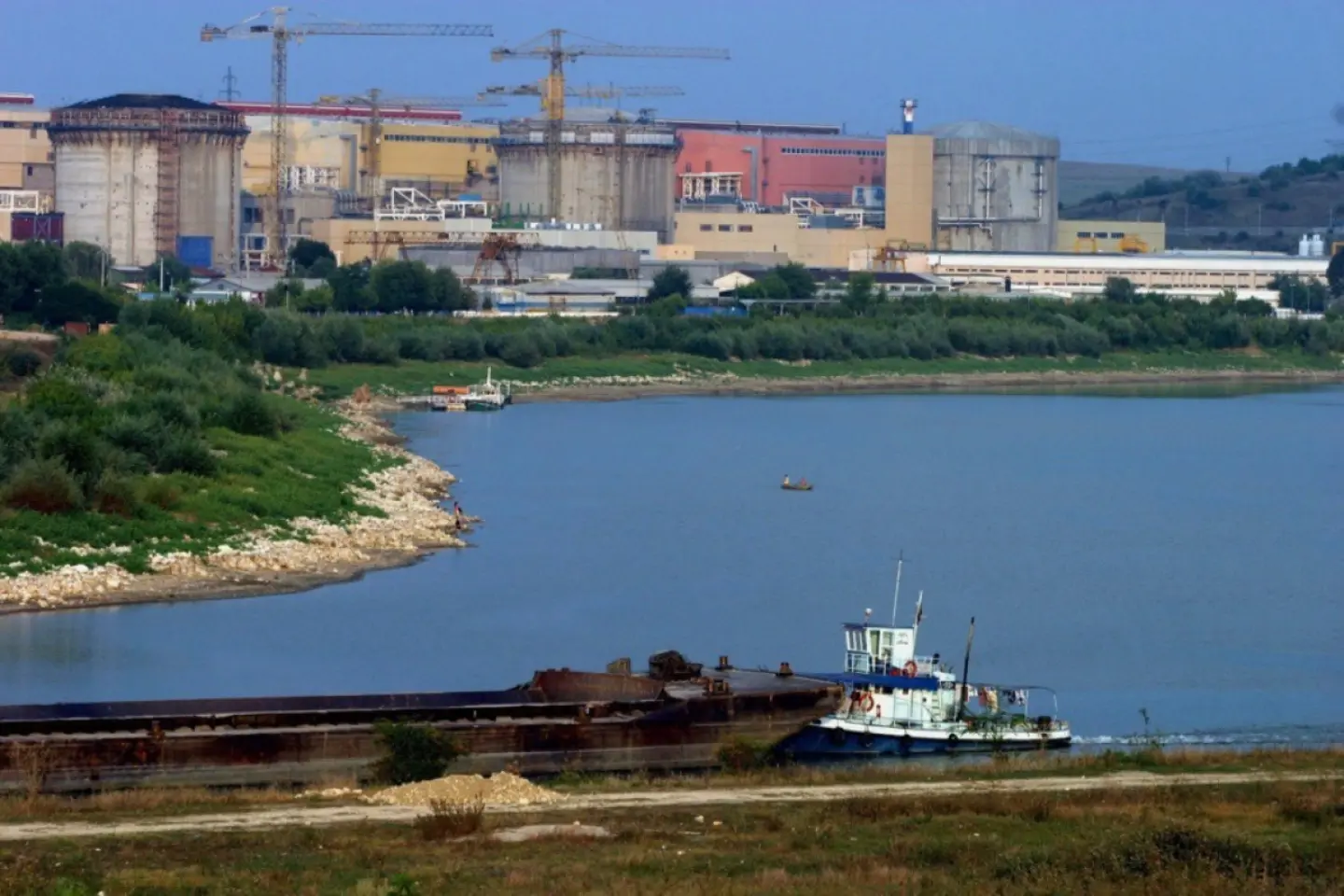
The closure of the Cernavodă Nuclear Power Station was caused by the dredging of the Ukrainian Bystroye Canal, which ‘steals’ water from the Danube and is causing a severe energy crisis in Romania, according to sovereignist propaganda.
NEWS: A reactor at Cernavodă has been shut down due to a lack of water, despite the fact that this year has been a rainy one, as evidenced by the floods that have occurred. Is no one really wondering where the water from the Danube has gone and where it is flowing on the Bystroye? But what about the Americans’ preparatory work for the Iron Gates 3 (Djerdap 3) in Serbia?
NARRATIVE: The dredging of the Ukrainian Bystroye canal is causing an energy crisis in Romania.
PURPOSE: To amplify anti-Ukrainian and, by extension, pro-Russian sentiments; to promote a ‘sovereignist’ rhetoric; to erode trust in the authorities; and to provoke and exacerbate social tensions.
Hydrological works have limited effects upstream and over short distances
WHY THE NARRATIVE IS FALSE: The controlled shutdown of Unit 1 at the Cernavodă Nuclear Power Plant and the possibility of its complete closure, due to the extremely low water level of the Danube, has brought back into the public discourse the recurring narrative claiming that the works carried out by Ukraine on the Bystroye Canal are responsible for reducing the river’s flow, this time as far as Cernavodă. In theory, such a hypothesis seems plausible. If a canal is deepened, it can carry more water. However, the hydrology of a river the size of the Danube is far more complex, and in this case the explanation does not stand up to technical scrutiny.
Firstly, Bystroye is situated in the Danube Delta, on the Chilia branch, that is, approximately 250 kilometres downstream from Cernavodă. From a hydraulic point of view, alterations made to a channel can influence the distribution of flow rates in the area where it is located, and possibly further upstream as well. However, this effect is localised and does not propagate for hundreds of kilometres against the flow of a river such as the Danube. In other words, the dredging of the Bystroye may alter the way water is distributed amongst the Delta’s branches, but it cannot reduce the Danube’s flow at Cernavodă. The flow reaching the nuclear power station is determined long before the river splits into the Delta’s three branches. Moreover, the Romanian authorities have carried out measurements in recent years regarding the distribution of flow rates across the Danube’s branches, and to date no evidence has been presented to suggest that the works on the Bystroye have significantly altered the distribution of flow rates or that they have had any hydraulic effects as far as the Cernavodă area.
Rainfall and flooding do not have a decisive influence on the Danube’s flow
Another frequently asked question is how one can speak of drought in the Danube basin, given that Romania has been affected this year by heavy rainfall and even flooding in some regions. The answer lies in the difference between local weather and the hydrology of the entire Danube basin. The Danube is not fed solely by rainfall in Romania. The river draws water from a vast catchment area, covering an area of over 800,000 square kilometres and encompassing territories in nearly twenty European countries. The flow rate measured at the river’s entry into Romania, at Baziaș, depends mainly on rainfall and the hydrological conditions in Germany, Austria, Slovakia, Hungary, Croatia, Serbia and the other countries through which the river and/or its tributaries flow. It is therefore entirely possible for torrential rain and localised flooding to occur in certain regions of Romania, while the Danube’s overall flow rate remains extremely low. Flooding caused by intense storms is localised and short-lived, whereas the flow rate of a river such as the Danube reflects the accumulation of rainfall across the entire catchment area over extended periods.
In the current situation, forecasts from the National Institute of Hydrology and Water Management have indicated a flow rate of the Danube at its entry into the country of approximately 1,600 cubic metres per second, almost three times lower than the multi-year average for the period, which stands at approximately 4,700 cubic metres per second. This is why Nuclearelectrica decided to carry out a precautionary shutdown of the reactor, a measure previously implemented only in the summer of 2003.
There is no work taking place at Iron Gates 3
The speculations regarding alleged work on the Iron Gates III (Djerdap 3) project – which it has been claimed could affect the level of the Danube – have no factual basis either. In reality, the Djerdap 3 project has existed for decades only at the level of concepts and feasibility studies. Over the years, there have been discussions between Serbia and various international partners regarding the possibility of building a new pumped-storage hydroelectric power station; however, to date, no construction work has commenced, nor are there any hydrotechnical installations that would alter the current flow regime of the Danube. Even in Romania, the authorities have emphasised that the project is still at the analysis stage and that any potential decision will require complex assessments of its cross-border impact. Only recently, on 16 July 2026, a Memorandum of Understanding was signed between the Romanian and Serbian governments to facilitate the exchange of information regarding the Djerdap 3 pumped-storage hydroelectric power station project; this indicates that the project is still at the stage of discussions and negotiations, not actual construction work.
In conclusion, the explanation for the extremely low water level of the Danube must be sought in the hydrological conditions across the river’s entire catchment and in the prolonged drought affecting its water supply, not in the works on the Bystroye Canal or in projects such as Djerdap 3, which have not even entered the construction phase. In the absence of hydrological evidence to the contrary, there is no technical basis for the claim that the Bystroye affects the Danube’s flow at Cernavodă or that the Iron Gates 3 project plays any role in the current situation.
Ukraine, the usual suspect
CONTEXT: The low water level of the Danube has forced the closure not only of the Cernavodă Nuclear Power Plant, but also of the Hungarian nuclear power station at Paks – a first in its 42 years of operation – whilst Bulgaria has announced that it may be forced to shut down the two nuclear reactors at Kozloduy. Furthermore, in Serbia, the low water levels of the Danube have directly affected the output of the large Djerdap 1 and Djerdap 2 hydroelectric power stations – known in Romania as the Iron Gates I and II – as well as the operation of the cooling systems at the Kostolac thermal power station.
Ukraine and its war with Russia continue to take centre stage in debates within the Romanian media, which has been inundated with Moscow-inspired sovereignist propaganda. The main narratives put forward in this regard focus on the ‘persecution’ faced by Romanians living in Ukraine and the aid that the authorities in Bucharest are providing to Kyiv to support the war effort. Furthermore, Ukraine is blamed for most of the economic problems currently facing Romania.
The account that promoted the false narrative analysed in this article was created half a year ago, in February 2026. From the outset, its posts have aimed to promote the sovereignist movement and the former presidential candidate Călin Georgescu, as well as several narratives condemning the aid that Romania provides to the Republic of Moldova and, in particular, to the ‘Nazi’ regime in Kyiv, alongside various posts with anti-vaccine, xenophobic and anti-LGBTQ+ undertones. At the same time, the account also shares and endorses the positions taken by the Russian Embassy in Bucharest, claiming that Ukraine, not Russia, is Romania’s historical enemy, while, of course, denying the legitimate existence of the Ukrainian state. The account is ‘based’ on a blog dating from 2010, but according to the author, this is a continuation of another blog created in 2005. Initially this was an ordinary blog, in which the author expressed his views on various topics related to the economy, technology, travel, etc., but in recent years the topics have shifted towards a discourse with conspiracy-theory overtones, taking up or even initiating the dissemination of several typically ‘sovereignist’ narratives. The account is also linked to a YouTube channel, where the same type of narratives is promoted, but which also produces a podcast featuring various contributors from Activenews or Solidnews – platforms that promote numerous false narratives, which have been debunked over time on the pages of Veridica.
Check sources:

---copie-image.webp)


