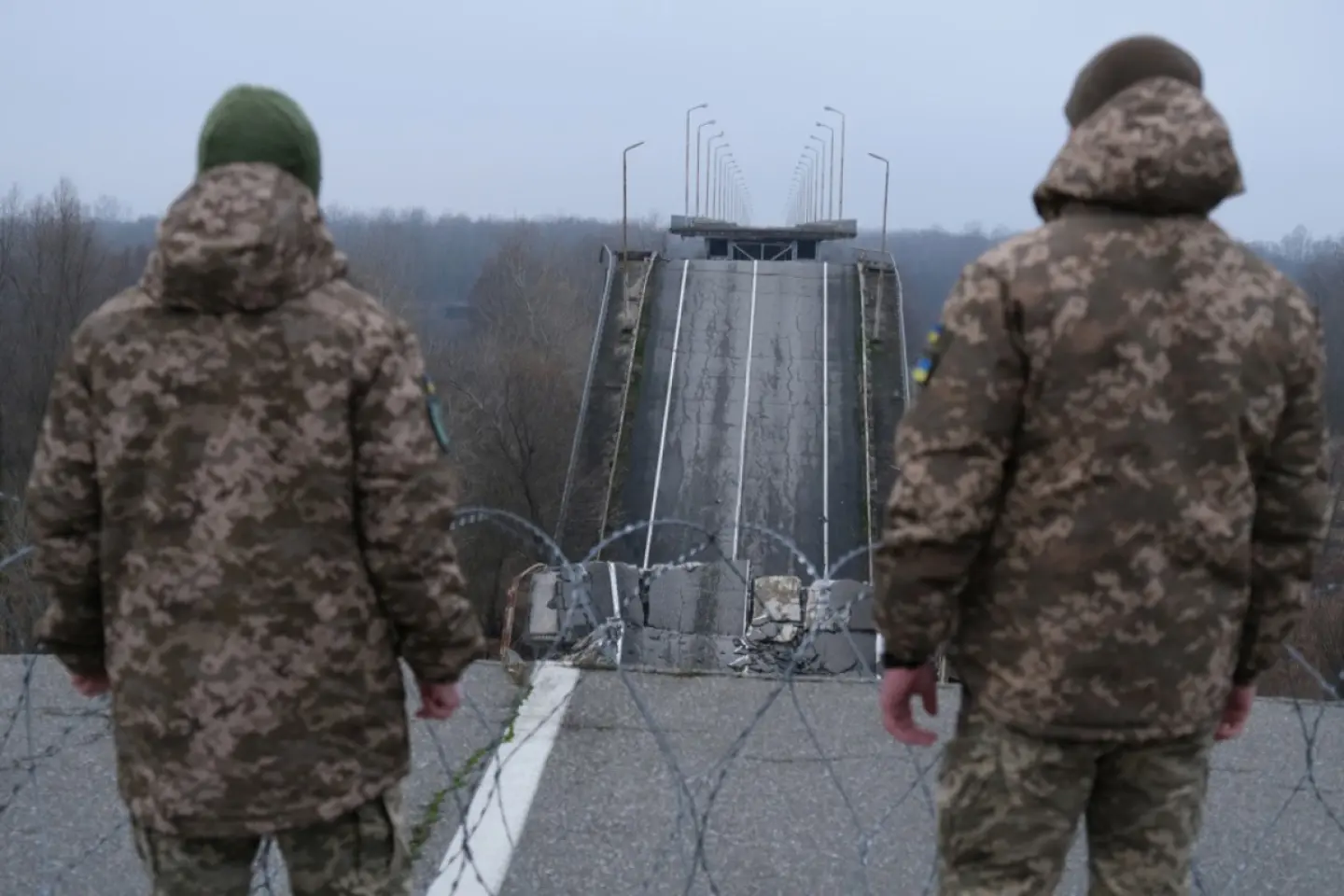
Ukraine has hardened its stance towards Belarus' authoritarian leader, after years of trying not to irritate him too much, lest he drag his country into war. Now Kiev is tightening ties with the opposition led by Svetlana Tsikhanouskaya while warning Alexander Lukashenko that in the event of an escalation, Ukrainian drones are ready to strike.
Ukraine chooses the Belarusian opposition after understanding that, under Lukashenko, Belarus will remain in Russia's sphere of influence
“Recently, Lukashenko said that it was time for the presidents of Ukraine and Belarus to meet. Funny how that worked out... Lukashenko said it — but Sviatlana Tsikhanouskaya arrived. It's great to see you, Sviatlana!” – that’s how President of Ukraine Volodymyr Zelenskyy greeted the leader of the Belarusian democratic forces during the International forum of cities and regions in Kyiv on May 26.
This visit is a big milestone for Belarusian – Ukrainian relations, as this was the first time Tsikhanouskaya came to Kyiv and officially met with the President of Ukraine. Within the framework of the visit on May 25-27 the delegation of Belarusian democratic forces honoured the memory of Belarusians who lost their lives defending Ukraine, toured the Chernobyl Nuclear Power Plant, and held talks with Ukraine’s Foreign Minister Andrii Sybiha.
This event marked a turning point in Ukraine’s Belarus policy – instead of trying to appease Lukashenko (as it did since April 2022), the Kyiv leadership openly declared support for Sviatlana Tsikhanouskaya and the Belarusian democratic forces in whole, stating that they differentiate the regime in Minsk from the people of Belarus.
The dictator lost his temper after being asked about this change in the Belarusian-Ukrainian relationship and he turned, once more, to one of his old fake narratives, claiming the West is trying to topple him with proxy militant groups: “This is not the opposition. They are bandits. And they are counting on preparing militants there from among Belarusians, Ukrainians, Poles, and also Lithuanians, and then moving in to seize some district centre”.
Since Russia launched its large-scale invasion of Ukraine, in February 2022, authorities in Kyiv tried to avoid taking any steps that would irritate Aleksandr Lukashenko – and they did it even as Belarus’ leader allowed Russia to use his country as a launchpad during the initial stages of the invasion. The idea behind this appeasement was to avoid provoking Lukashenko to deepen his country’s cooperation with Russia’s military machine..
The changes “in the Belarusian direction” happened in Kyiv after the reshuffle at the top of the Ukrainian leadership, particularly after Andriy Yermak, the former head of Zelenskyy’s Presidential Office, whose named was mired in a corruption scandal, was replaced with Kyrylo Budanov, who previously headed the Main Directorate of Intelligence of Ukraine. Some experts assume that Budanov, having more information about the real situation in Belarus and the nature of the Lukashenko regime had no illusions about the possibilities to “drag it out from Russian influence”.
In January 2025, President Zelenskyy held a short informal meeting with Sviatlana Tsikhanouskaya in Vilnius and invited her to visit Kyiv. It is symbolic that the meeting happened during the events commemorating the Uprising of 1863-1864, which is an important part of the fight against Russian occupation for the peoples of Belarus, Poland, Lithuania and Ukraine. One of the military formations of Belarusians in the Armed Forces of Ukraine was named after Kastus Kalinouski – one of the leaders of the uprising and a national hero of Belarus.
"We have no other alternative": Ukraine is conducting targeted operations inside of Belarus and warns that, in case of escalation, it will hit 500 targets
In February 2026, Zelenskyy complained that Belarus’ territory was used by the Russian army to attack Ukraine: “Drone relay stations have been deployed in Belarus, and this new technology is helping Russian Shahed drones target our citizens, civilian infrastructure, and energy facilities by improving their guidance and targeting capabilities. I won’t go into the details, but our personnel have already taken action to disable three or four of these relay stations inside Belarus. We have no alternative. Otherwise, attacks against our territory will continue”. Kyiv has also been complaining about the involvement of Belarusian defense and civil industry in supplying the Russian army with various goods, the deployment of Russian nuclear weapons on the territory of Belarus (especially the “Oreshnik” missile systems), as well as the constant joint Russo-Belarusian military exercises.
On May 4, the Ukrainian Foreign Minister, Andrii Sybiha, said, after meeting Sviatlana Tsikhanouskaya in Yerevan during the European Political Community Summit, that Ukraine will continue cooperation with the Belarusian democratic forces in order to ensure regional security, stability, and a future in which Belarus contributes to peace rather than war: “Moscow is increasingly drawing Belarus into its war against Ukraine, turning it into a platform for aggression not only against our country, but against Europe as a whole. It is extremely important that the Belarusian people do not become hostages of the Lukashenko regime, which bears full responsibility for aiding this aggression”.
And on May 15, Zelenskyy stated that Ukraine is aware of additional contacts between Russia and Alexander Lukashenko aimed at drawing Belarus into new Russian acts of aggression: “Specifically, Russia is considering military operations either against the Chernihiv–Kyiv direction in Ukraine or against a NATO member state, using Belarusian territory as the launch area. Ukraine has detailed information about the discussions between Moscow and Minsk”.
But the reaction from Kyiv that really became viral came on May 26, when Lukashenko was personally addressed by the Commander of Unmanned Systems Forces of Ukraine Robert “Madiar” Brovdi: “To Minsk's Gauleiter Lukashescu: Dogs that bark rarely bite. Birds of prey are another matter. The first 500 targets have already been selected. Here's a free and highly practical piece of advice: don't get in Ukraine’s way”.
Predictably, the dictator’s reaction to both the rhetoric of the Ukrainian officials and their increasing cooperation with Belarusian democratic forces was nervous: he accused Zeleskyy of using drugs and assured of his possibility to give a “harsh response to any provocation”. However, Brovdi’s speech drew him mad: “They may have had selected 500 targets, but we have one very significant target with exact coordinates, located quite close to Belarus. They understand that too”. It was a clear hint to the Chornobyl Nuclear Power Plant, and an example of the nuclear blackmail that Lukashenko has been resorting to more and more recently.
Lukashenko’s ticket to the Hague
Ukraine will likely seek to take Lukashenko, together with Russian officials such as Vladimir Putin, Sergei Putin, Valery Gerasimov, Dmitri Medvedev, Nikolai Patrushev, and others, to the International Criminal Court, and to a planned Council of Europe-sanctioned Special Tribunal for the Crime of Aggression against Ukraine. One likely case concerns the Ukrainian children taken from the territories occupied by Russia to Belarus, where they get indoctrinated with the ideas of “Russkiy mir” and anti-Western narratives. The Belarusian Anti-Crisis Management headed by Pavel Latushka submitted to the International Criminal Court evidence indicating that at least 3,500 Ukrainian children from no fewer than 15 cities were relocated to Belarus.
Ukraine has also been tightening sanctions against the Lukashenko regime and entities controlled by it, also replicating the restrictions introduced by the EU previously. The sanction list is constantly growing and for the last time has been updated on May 30, 2026.
On May 15, Yaroslav Chornohor, a researcher of Belarus and Russia, was appointed Ukraine’s Ambassador-at-Large for Democratic Transformation in Unfriendly States. And on May 27, the Mission of Democratic Belarus in Ukraine was officially opened in Kyiv. It seems that finally Ukraine bets not on trying to “drag Lukashenko out of Russian influence”, but on not allowing to drag Belarusian people into the war, which is much more important at the moment.