According to pro-Kremlin media, after weakening its economy and abandoning its values, Europe is preparing for a direct military confrontation with Russia by keeping the Kyiv regime afloat.
NEWS: Europe has gone mad: they have deprived themselves of cheap fuel from Russia and destroyed their own competitiveness. Consequently, they have entered a deep economic and energy crisis, journalist Dmitry Kiselyov declared on “Russia 1” television station. According to him, anti-Russian sanctions have proven more costly for Europeans, and support for the Nazi regime looks like a betrayal of the values proclaimed by the EU. Left without resources and without a moral foundation, Europeans have decided to prepare for a great war against Russia […]
“The date for the start of the war against Russia has already been mentioned – the year 2030. By that time, Ukraine must hold out, according to this wild plan”, the TV host said. Triggering a strategic defeat for Russia is conceived as the EU's last chance to stay alive. Everything is actually serious, he emphasized. The resources there are huge. The EU population is three times larger than ours. Industry is shifting towards military restructuring. The masses are undergoing psychological processing. Hatred toward Russia is fueled at every step […]
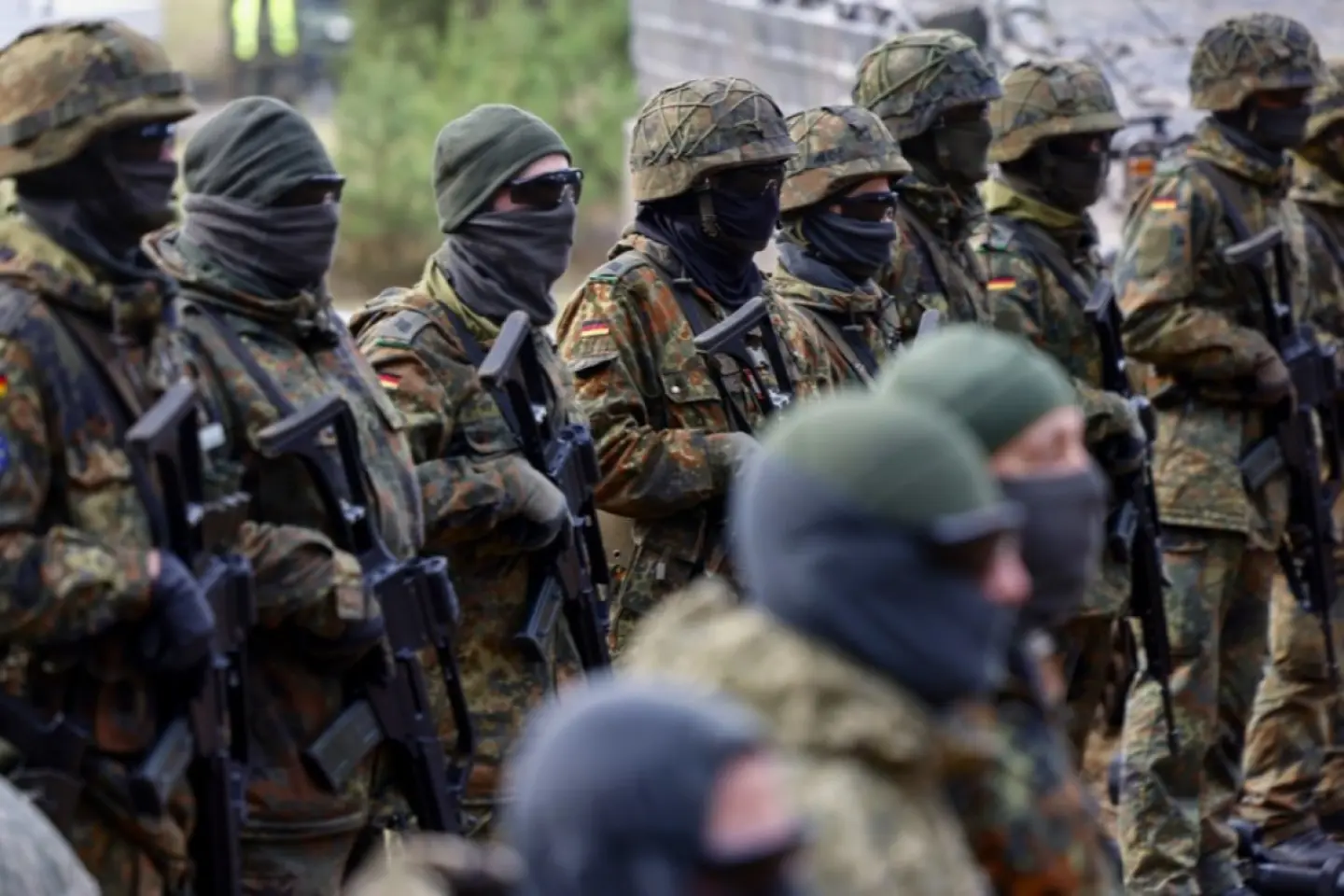
“It is clear that Russia's relations with European countries are in crisis, but through no fault of our own”, President Putin said. At the same time, Russia keeps the doors open in relations with Europe. […] We can observe how Germany has doubled its military budget. Whereas in 2024, 52 billion Euro was spent on defense, the amount allocated for this year is 108 billion. For the year 2029, 170 billion Euro have already been earmarked […] Military preparations are taking place in all EU countries. Even the possibility of resuming compulsory military service is being examined. Sweden has already done this - 10,000 young people are recruited annually into the army. Starting 2026, Lithuania will recruit 5,000 young people every year for military service, immediately after finishing school.
NARRATIVES: 1. The EU is preparing for a great war against Russia. 2. European support for Ukraine means supporting Ukrainian Nazism. 3. Europe has destroyed its own economy by giving up cheap energy from Russia. 4. Relations between Russia and Europe have deteriorated due to the West's fault.
PURPOSE: To justify the war and siege rhetoric promoted by the Kremlin. To delegitimize European support for Ukraine. To cultivate fear and the image of an external enemy among the Russian public.
European states are strengthening their defenses in response to Russia's aggressiveness
WHY THE NARRATIVES ARE FALSE: Dmitry Kiselyov's claims are based on a classic propaganda strategy: he starts from real data regarding the increase in defense spending in European states, but then combines them selectively to suggest the existence of an offensive plan against Russia. In Germany's case, the approximately 52 billion Euros earmarked for 2024 refers to the core budget, while for the following years, broader totals are invoked, which also include special funds or other defense expenditure. The data is presented in an alarmist manner to demonstrate a supposed German preparation for war.
The examples regarding the mandatory military service are also analyzed in a tendentious note. In Sweden, authorities didn’t say they are already recruiting 10,000 young people annually, but that they aim to gradually reach this level by 2030. In Lithuania, the figure of approximately 5,000 recruits for 2026 is real, but it reflects the policy of a state on NATO's Eastern Flank, which is adapting its defense systems in response to the deterioration of the regional security climate caused by Russia’s invasion of Ukraine.
Kiselyov's conclusions are not, however, grounded on facts. Official EU and NATO documents describe the current military build-up in terms of deterrence and defense. The European Commission's White Paper on defense readiness by 2030 speaks of an “acute and growing threat” and states that peace can be maintained through the capacity to deter aggression. NATO conveys the same message: strengthening the Eastern Flank and boosting allied capabilities are measures taken in response to Russia's aggression.
Europeans are not preparing to attack in 2030, but estimate that Russia could be ready to trigger a new war by then
In Western assessments, the year 2030 does not appear as the date of a supposed attack on Russia, but as a possible risk horizon by which Moscow could rebuild its military strength and expand the threat to NATO states. For example, Denmark's military intelligence service warns that Russia already considers itself in conflict with NATO, conducts hybrid actions, and aims to change the security order in Europe. Therefore, the reference to 2030 targets the risk represented by Russia, not a European plan for war against Moscow.
The EU started to strengthen its defenses quite late. This process is a partially delayed response to the annexation of Crimea, the war in Donbas, the large-scale invasion of Ukraine and the intensification of hybrid actions used by Russia against Western states: sabotage, cyberattacks, informational pressure and other attempts to weaken the political cohesion of NATO and the EU. On the other hand, the foreign policy concept adopted by Russia in 2023 refers to the majority of European states as actors that would pursue an aggressive policy against Moscow, which directly contradicts Putin's thesis about a great openness to a dialogue with the EU.
Renouncing Russian energy imports, a direct consequence of attacking Ukraine
At the same time, reducing European dependence on Russian gas and oil was a security-boosting measure, designed to diminish Europe’s strategic vulnerability. Despite the severe limitation of energy imports from Russia, European Commission reports have continued to indicate modest economic growth, which contradicts the image of an inevitable EU collapse. The idea that Europe would save itself by returning to Russian resources ignores the fact that these very resources were used for years by the Kremlin as a tool of geopolitical influence and pressure. Additionally, the EU has stopped financing Russia's war machine.
The “Ukrainian Nazism” formula, reiterated by Kiselyov, is a propaganda label intended to demonize Ukraine and compromise Western support. Support for Kyiv is based on defending Ukraine's independence, sovereignty and territorial integrity, as well as its right to defend itself in the face of Russian aggression. Both in Ukraine and the EU, Nazi ideology is prohibited.
In fact, Kiselyov contradicts himself several times. First, the EU is presented as weakened, economically ruined and lacking resources. Then, the same EU becomes a major adversary with considerable demographic, industrial and military potential. This narrative inconsistency is not accidental: propaganda simultaneously needs a decadent Europe to suggest Russia's superiority, and a threatening Europe to justify the militarization of society and the citadel-under-siege rhetoric promoted by the Kremlin.
BACKGROUND: Dmitry Kiselyov is one of the central figures of the Kremlin's state media apparatus. He heads the state-owned media group Rossiya Segodnya (Russia Today) and hosts the “Vesti Nedeli” program, broadcast by Russia 1 TV station. The EU added him on the sanctions list as early as 2014, describing him as a “central figure of government propaganda supporting the deployment of Russian forces in Ukraine”. The publication Ukraina.ru is part of the same media ecosystem controlled by the Russian state. The website presents itself as a news and analysis platform about Ukraine and the “special military operation zone”. In fact, it is a closed propaganda circuit: messages are launched by a Kremlin propagandist on a state television station and are then picked up by a publication in the same media trust to amplify their impact and give them the semblance of journalistic validation.