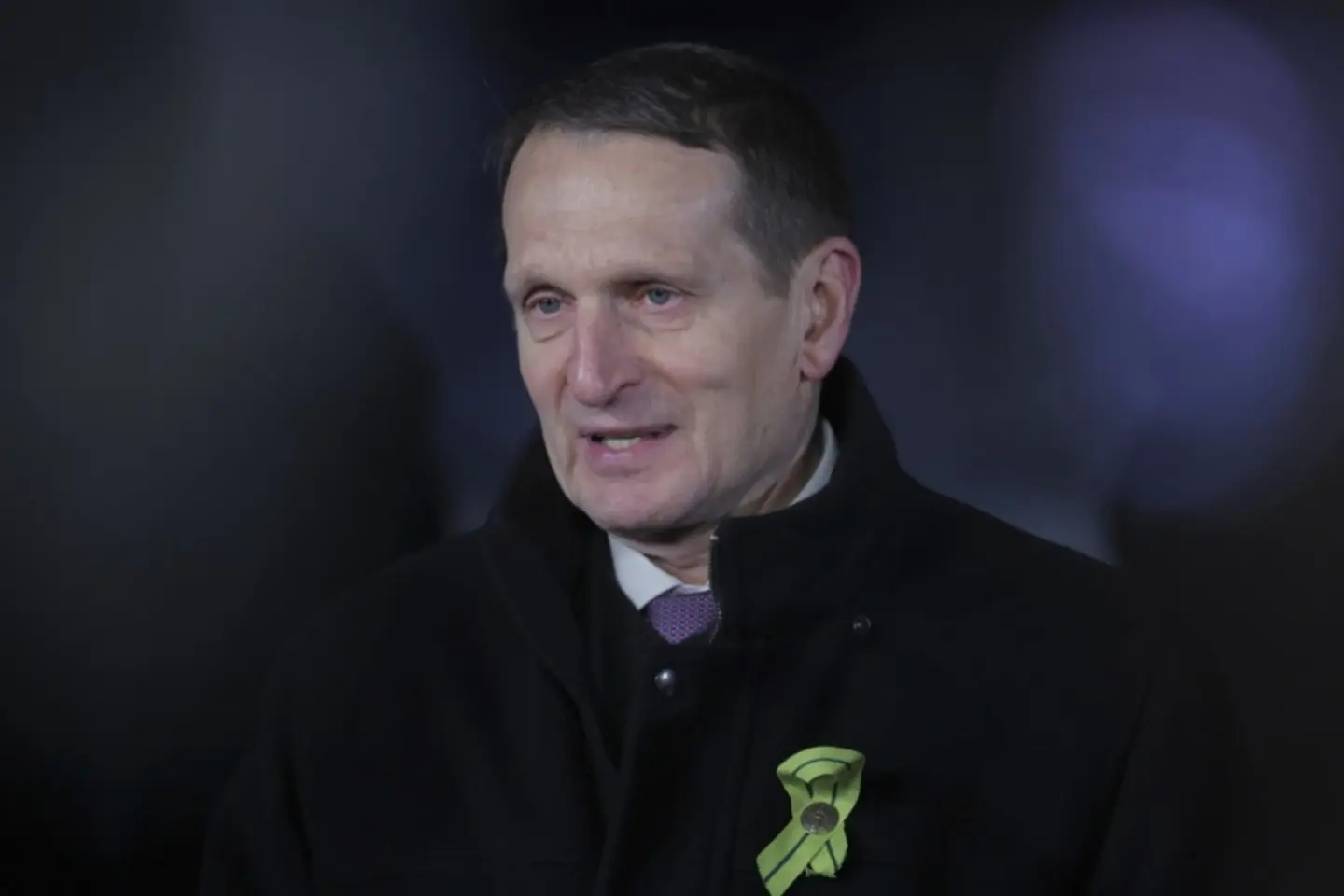
On May 28, the head of Russia’s Foreign Intelligence Service, Sergey Naryshkin, spoke at the International Security Forum held in the Moscow region. His entire speech was exclusively anti-Western in nature and contained little else of substance. However, it clearly illustrates Moscow’s current mindset, as well as its near-term plans in the fields of security and defence.
It is necessary to underline that Naryshkin voiced several narratives which stand out as particularly revealing. The efforts of European states to strengthen their defence capabilities by 2030 in response to escalating tensions and increasingly aggressive rhetoric from the Kremlin are being turned upside down by Russian propagandists and presented as Europe’s alleged desire to attack Russia. According to this narrative, Europeans are openly preparing for war:
“The European Union is rapidly arming itself, swiftly transforming from a transnational political and economic project into a military alliance. It is no secret that this alliance is directed against our country. Kaja Kallas, a Russophobe and mouthpiece for the will of Europe’s totalitarian-liberal elite, openly states – and I quote: “The task of the EU is to increase support for Ukraine while simultaneously preparing for a direct conflict with Russia”. In the White Paper on European Defence presented by the European Commission last year, Ukraine is identified as “the front line of European security”.
At the same time, Naryshkin continues to promote the narrative that resisting Russian aggression brings only negative consequences for European countries. According to this line of thinking, if Ukraine were simply surrendered to Moscow, there would be no problems: Putin would “restore order” and then happily resume trading energy resources with Europe, just as before. This is precisely the message promoted by Kremlin influence networks across Europe:
“Weapons from the Ukrainian theater of military operations move freely across Europe, ending up, among others, in the hands of international terrorist groups. Ukrainian refugees create an additional burden on Europe’s social welfare systems. But Europe’s elites do not see this as a major problem. The main thing is that Ukraine continues to serve as a battering ram against Russia. And it is fulfilling that role worse and worse”.
Interestingly, the Russian propaganda mantra that “resistance is futile and Russia will achieve its goals anyway” looks increasingly unconvincing against the background of successful Ukrainian strikes on Russian critical infrastructure. In this context, it is particularly revealing how clearly Naryshkin highlighted the current fears of Russia’s leadership:
“Against this backdrop, a number of IT corporations predict that artificial intelligence technologies may in the future influence the strategic balance of power and the existing system of nuclear deterrence. Some have gone so far as to declare – and I quote – “the era of nuclear deterrence is over”. There is only one response to that: thank God, the era of nuclear deterrence has not even begun yet! And I would not advise the “hawks” in the Western camp to test the validity of that statement...”
Firstly, this is a direct hint at the possibility of the Kremlin using nuclear weapons if Ukraine continues striking critical infrastructure deep inside Russia. After all, what else is left for Moscow to threaten with? Secondly, it reflects Russia’s obvious dissatisfaction with the current situation, in which the technological gap between Russia and even Ukraine – not to mention NATO countries – is beginning to have a serious impact on the battlefield. Moscow appears unable to effectively defend itself against the latest Ukrainian technological developments. As a result, the Kremlin is openly signaling its desire to regain access to critical technologies through nuclear blackmail and further escalation.