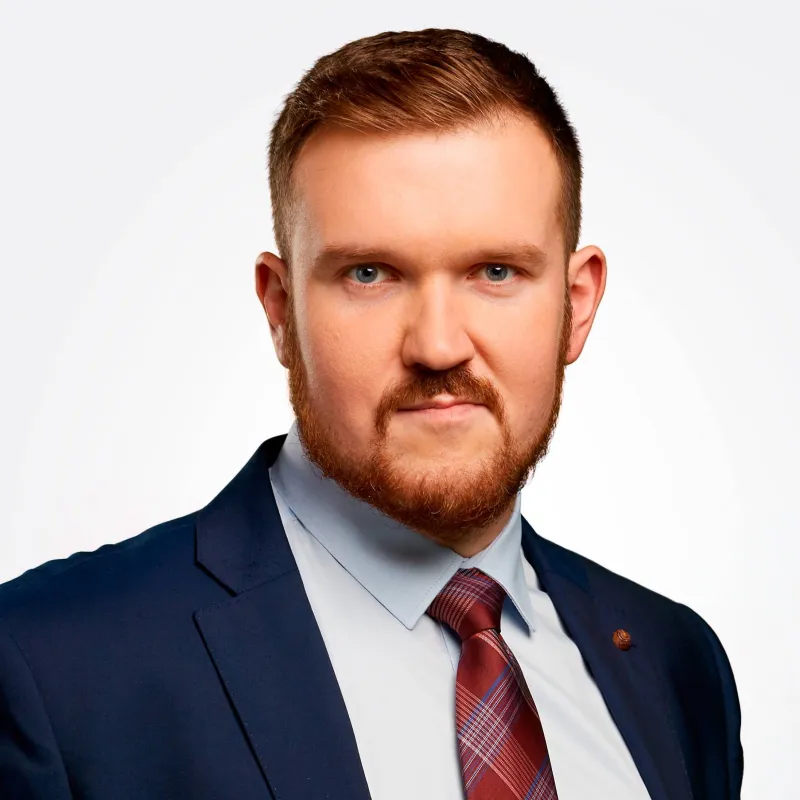
In the latest issue of a Russian Foreign Intelligence Service (SVR) publication, an article entitled “Illusions in Foreign Policy, or the International Circus” addresses the issue of international law. Importantly, the author is identified as Colonel of Justice Alexander Pastukhov, a senior SVR expert in international law.
The central theme of the piece is that the “collective West” supposedly uses international law to exert pressure on the sovereign aspirations of other states. The entire argument can essentially be summed up in the following paragraph: “The Anglo-Saxons understand perfectly well that if they completely abandon international law, they will be digging their own grave. But if we believe in their illusions and violate international norms, we will be blamed for all manner of crimes and, of course, they will use our mistake as a precedent to justify their own crimes”.
In other words, a Russian colonel of justice (!) is explicitly stating in an official publication that Moscow will refuse to abide by international law when its provisions conflict with the Kremlin’s self-serving interests. In the understanding of Russian officials, international law is nothing more than a “Western tool for ruling the entire world”. This conspiracy theory is being presented as Russia’s position on the international stage. Against this background, the Kremlin’s accusations that the West is trying to reshape the world order look particularly ironic.
At the same time, the article optimistically declares that the Kremlin is close to achieving its goal of breaking up NATO. Yet even in this scenario, the author sees the West as ultimately seeking to attack Russia: “The West allegedly eliminates contradictions: if NATO visually “disappears” from the political maps, Russia’s problems will disappear as well, and it will have to drop its demands concerning the geopolitical agenda. And if Moscow does not do so, it will be accused of not wanting to live in peace”.
This is an excellent illustration of the idea that the Kremlin’s interests end only where it encounters resistance. Otherwise, ever more demands that the entire world “respect Russia’s interests” will continue to be put forward. It is also important to note how the author demonstrates Moscow’s fear of growing European defence capabilities and greater coordination among European states to deter Russian aggression:
“Germany is strengthening its presence on the eastern flank – German troops have joined the Polish “East Shield” operation, directed against Russia under the guise of slogans about defence. The Pentagon intends to transfer 5,000 American troops from Germany to Poland. At the same time, London is making outright statements: “The United Kingdom is currently at war with Russia”. And there are many such examples. They indicate that while experienced political cardsharps are distracting the world with the illusion of NATO’s collapse, a more aggressive European alliance – and perhaps more than one – is being created under the radar, with even greater ambitions”.
The desire of the civilised states to prevent escalation and bring Russia back within the framework of international law is, of course, characterized as the “ambitions of an aggressive alliance”. It is therefore hardly surprising that, following the classic Russian propaganda playbook, the author moves on to direct threats: “It would be better for the Westerners to stop their infernal war machine themselves. Too much blood has been spilled through their fault! And now they are pushing the planet towards another world war, as usual, treacherously and cynically, presenting lies as truth. They resort to disinformation, manipulation and other favourite tricks in an attempt to preserve their hegemony”.
Overall, Moscow is making its position clear: it has no intention of engaging in constructive dialogue with the West, remains convinced of its own strength, and is prepared for further escalation. The goal is to replace the existing system of international law with Russian diktat, justified by its “strategic interests” – something a Kremlin official has now openly stated in the pages of an official SVR publication.