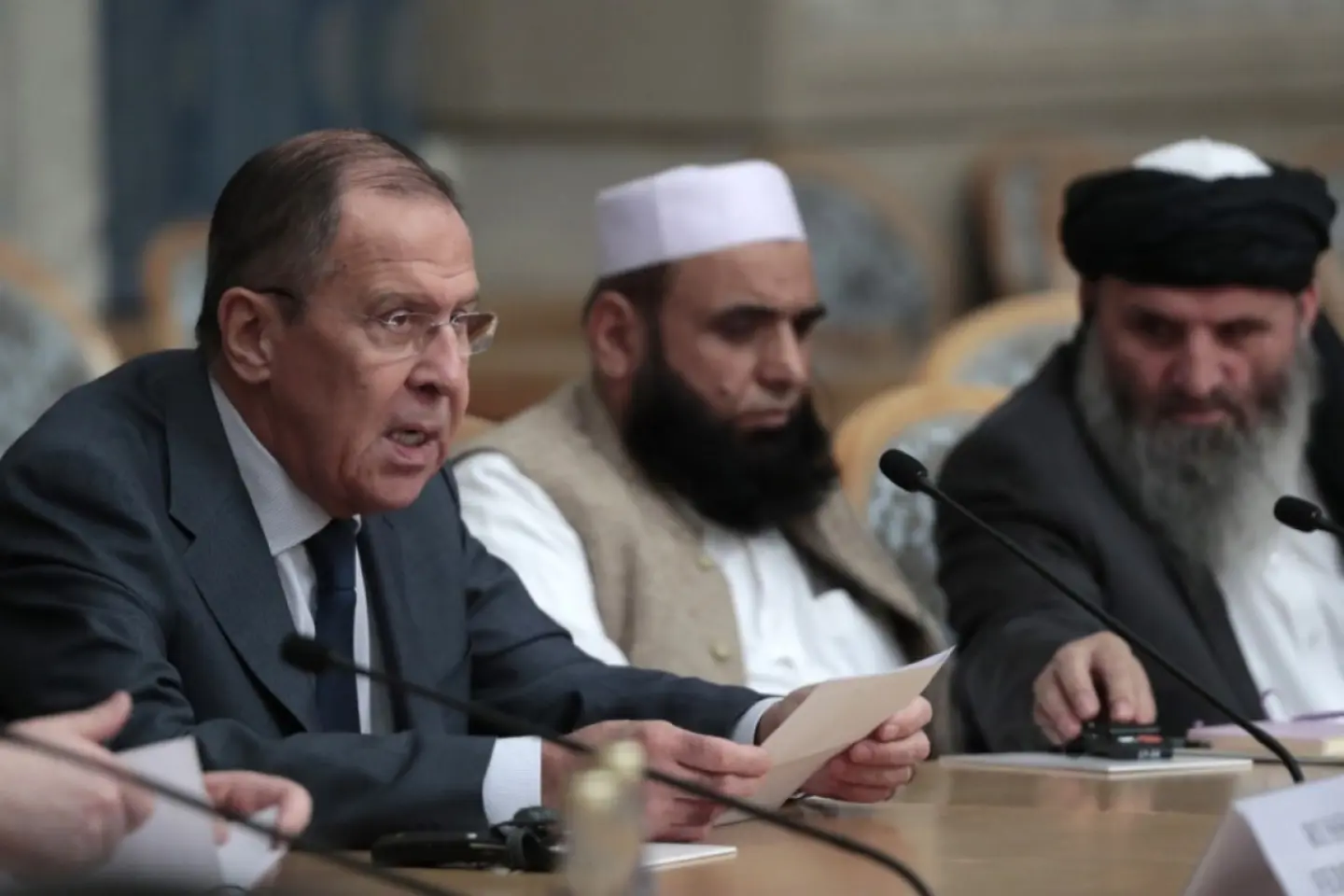
Moscow hosted the eighth meeting of the “Moscow Format Consultations on Afghanistan”, attended by representatives of Russia, India, Iran, Kazakhstan, Kyrgyzstan, China, Pakistan, Tajikistan, Uzbekistan and, of course, the Taliban, which seized power in Afghanistan following the end of the NATO mission and the withdrawal of international troops in 2021.
It is particularly striking that, during a meeting with the Taliban’s so-called “foreign minister”, his Russian counterpart Sergey Lavrov claimed that the Taliban had made “clear achievements in combating terrorism and drug trafficking”: “Let me emphasize: it is in our common interests to help strengthen Kabul’s counterterrorism capabilities by providing logistical and expert assistance and maintaining contacts between our intelligence and security agencies”.
The Kremlin is offering to help the Taliban with counterterrorism activities – it is difficult to come up with anything more absurd and cynical. Yet this rhetoric is not merely an important factor in constructing a new image of the Taliban for Russia’s domestic audience and Moscow’s allies. It also demonstrates precisely which areas of cooperation between Russia and the Afghan Taliban Moscow is interested in.
Thus, the Kremlin clearly appears interested in exploiting the Taliban’s capabilities for its own subversive activities in foreign countries that Moscow defines as “unfriendly”. This is likely an important component of the “successful bilateral security cooperation” Russian officials have been touting.
At the same time, another point in Lavrov’s remarks at the meeting deserves attention: “Unfortunately, the humanitarian situation in the country remains difficult. According to the UN, more than 17 million Afghans – almost half the population – will face food shortages this coming winter, while the total number of people in need of humanitarian assistance will reach 22 million. Clearly, efforts by relevant international organizations, as well as bilateral efforts, are needed to improve the situation. For its part, Russia will continue to provide regular humanitarian aid. Another shipment of such assistance is expected to arrive in Afghanistan in the coming months”.
In essence, the participants of the meeting were negotiating the level of compensation for the Taliban that could persuade the terrorists not to expand their activities into neighbouring countries in the near future. In other words, the task of feeding those 22 million Afghans is now being placed on the Kremlin and its allies. In return, the Taliban are expected to behave as peacefully as possible towards their benefactors and their protectorates.
This apparently also explains the Russian Foreign Ministry’s complaints about Western countries’ treatment of the Taliban, which seized power in Afghanistan: “The Afghan economy continues to develop despite the harsh sanctions imposed by Western countries, which, under the pretext of protecting human rights, have cut the Islamic Emirate off from the international financial system and appropriated its national banking assets. The West does this regularly”.
The Kremlin does not explain how this “development” corresponds to the existence of 22 million people in need of humanitarian assistance. Yet, following the classic patterns of Russian propaganda, responsibility for the situation is once again placed on the “collective West”. Moscow also highlights the similarities between the problems facing Russia and Afghanistan: the attitude of Western capitals towards terrorist states is becoming a basis for cooperation between the Russian and Afghan regimes.