The way to authoritarianism: conservative populism and a subdued judiciary. Turkey’s case

The way to authoritarianism: conservative populism and a subdued judiciary. Turkey’s case  Nationalist and conservative populism, the capture of the judiciary, and the
© EPA/TOLGA BOZOGLU   |   The way to authoritarianism: conservative populism and a subdued judiciary. Turkey’s case Nationalist and conservative populism, the capture of the judiciary, and the "neutralization" (rather than elimination) of civil society and the opposition can transform a democracy into an authoritarian regime. This has already happened in several countries, including Turkey. Elements of this toxic cocktail for democracy can already be seen in Romania as well. Nationalist and conservative populism – which pits "traditional" and religious values against European ones – has underlined the charge against democracies and the slide toward authoritarianism in recent decades. Populist rhetoric was merely the first step. Next came the capture of the Judiciary and, through it, the neutralization of civil society and the opposition; these were not banned outright but were instead rendered insignificant. The most "successful" example of building an authoritarian regime is Putin’s Russia, yet Turkey’s case is perhaps even more relevant. After more than twenty years of the Erdoğan regime consolidating its power, Turkey has not only drifted away from the Western and European values it once embraced but has also moved away from the very principles underpinning the secular state founded by Mustafa Kemal Atatürk. The lessons from Turkey should be closely examined in Romania as well, considering that elements that contributed to Turkey’s slide into authoritarianism – ranging from nationalist and conservative populism to judicial decisions that appear to reflect specific interests – are increasingly evident in Bucharest too. The first step towards an authoritarian regime: taking over the judiciary What has been happening in Turkey for years should have long since served as a deafening alarm bell for a Romanian nation determined to defend its liberal democracy after 45 years of communism. I warned of this in an article published in August 2018 on the Contributors platform, titled "A State has vanished: The New Turkey and future challenges." I am revisiting this topic now, as it may help us grasp the gravity of the situation in which we – the citizens of Romania – find ourselves today. The erosion of Turkish institutions, which I highlighted in 2018, was bound to lead to the disappearance of the Turkish republican state as envisioned by its founding father, Mustafa Kemal Atatürk. Today, we are compelled to acknowledge, with regret, the validity of that assessment. The republic – nominally secular – exists only on paper, much like Turkish democracy itself. Religion is omnipresent, permeating both state institutions and the ideology through which the current Ankara regime legitimizes its public policies. Education is subordinated to Sunni Islamic morality – a framework coupled with Turkish nationalism since the adoption of the 2012 curriculum. Furthermore, religious imperatives are clearly discernible in the foreign policy doctrine known as Mavi Vatan (Blue Homeland). Turkey ambitiously pursues the objectives of this doctrine, even when doing so entails aggression – sometimes exceeding acceptable limits – towards neighbors like Greece and Cyprus, as well as towards Israel, the US, the EU, and other actors with significant interests in the Middle East and the Eastern Mediterranean. To reach this point, the Ankara regime followed a series of simple steps – part of the classic playbook for dismantling a democracy to make way for an authoritarian system that is not accountable to its citizens for its decisions and policies. This formula is relatively old, having been extensively employed by Moscow after World War II to undermine and subjugate Eastern European states. The Moscow model was replicated in Turkey, with the subjugation of the judiciary serving as the initial stage. This process began with the 2010 constitutional amendments, which placed the Supreme Council of Judges and Prosecutors (HSYK – the Turkish equivalent of Romania’s Superior Council of Magistracy) under the authority of the Minister of Justice – and thus the executive branch, led at the time by Prime Minister Recep Tayyip Erdoğan. Here, the attempt from August 2018 failed, but the politicians who sought to subordinate the judiciary back then are making a new attempt today – one that appears likely to succeed. In Turkey, this process culminated in the 2017 constitutional amendments. Regarding the judiciary, the amendments targeted the disciplinary body for magistrates. The adjective "Supreme" (Turkish: yüksek; the HSYK became the HSK) was removed from its title; thus downgraded, the Council of Judges and Prosecutors fell under the direct and complete control of the President – Erdoğan himself. He could now mandate the appointment of all Council members, either directly or through the parliament, which was invariably controlled by his party, the AKP. Throughout that period, the ministers responsible for the Turkish justice system conscientiously carried out orders received from the head of the executive branch they served. Meanwhile, AKP lawmakers fully backed these initiatives in the legislature, benefiting – after 2015 – from the support of allies within the ultranationalist MHP. Indeed, nationalism served merely as a public pretext for these so-called reforms; the regime's primary objective was, in fact, the subordination of the judiciary. From that point on, the dismantling of judicial independence from the executive allowed the government to act systematically and with impunity against any form of opposition. The immediate result was a surge in corruption and the enrichment of groups close to the regime. Against this backdrop – typical of any authoritarian regime – a systematic campaign began (and continues to this day) targeting the independent press, civil and political rights activists, and subsequently, political opposition of all stripes. Concurrently, this campaign enabled representatives and associates of the regime to deeply infiltrate all state structures, both civilian and non-civilian. In other words, even more corruption. Court rulings in politically significant cases, combined with numerous public statements by Mr. Erdoğan or his associates, indicate that the judicial system has been operating under political orders for over a decade now. Under these conditions, the political regime can act in its own interest without judicial constraints and with impunity, as the law is effectively suspended, replaced by the will of the regime. This was the essential ingredient that facilitated the establishment and maintenance of the authoritarian regime's hold on power. The Suppression of Civic Opposition This process began during the Gezi Park protests (May–June 2013) and the revelations surrounding the massive corruption scandal of December 2013, intensifying after the failed coup attempt of July 2016. The Ankara regime utilized each of these episodes to advance its campaign to suppress judicial independence and subordinate the judiciary to the executive branch. However, the events of 2013 and 2016 also served to identify opponents among human rights and civil rights activists. They had been the first to take to the streets, protesting against the government's moves to seize control of the judiciary. The regime responded without hesitation, utilizing a judiciary already under its control to arrest, indict, and sentence thousands of activists to lengthy prison terms. The intimidation was widespread; extending to the families of the persecuted, hundreds of thousands of people have suffered severely as a result of these systematic repression campaigns. It is no coincidence that Turkey today has one of the highest prison occupancy rates in the world, reaching 150 percent in August 2026, according to figures published by the Ministry of Justice itself. Moreover, political control over the judiciary not only led to the arrest of a vast number of dissidents but also resulted in Turkish courts resisting the European Court of Human Rights (ECHR). While the ECHR has issued numerous rulings attempting to rectify many of the unlawful and unjust decisions made by Turkish courts, the situation has become irreparable. Under political control, the Turkish justice system refuses to implement ECHR rulings, effectively ceasing to operate according to the letter and spirit of the law. It simply carries out the orders of the authorities in Ankara, eliminating civil society opponents through judicial and police actions. In effect, the political regime's impunity has become the judiciary's impunity, with both now working in tandem to eradicate any form of opposition. The ECHR recently described the issue of political control in Turkey as "systemic," characterized by "the detention and prosecution of political opponents, human rights defenders, and journalists." In reality, the situation is one of chaos. Political control over the judiciary means, in practice, that the law has lost all value; consequently, the role of the magistrate – essential to any human society – has also lost its worth. Turkish courts are effectively caught between a rock and a hard place: the pressure exerted by the political regime versus the imperative need to uphold written laws – both domestic and international – including the treaties Turkey has ratified, which bind the state to universal legal standards. Members of the judiciary – judges and prosecutors – who have compromised themselves in this manner will have no professional future should the rule of law be restored once the current state of affairs comes to an end. Expanding the Crackdown to the Political Opposition Against this backdrop, the repression was able to extend – again with impunity – from civil society associations and representatives to opposition parties. Ankara’s primary political targets were initially the elected representatives of the pro-Kurdish HDP; in 2023, the party was forced to rename itself the Peoples' Equality and Democracy Party (DEM Parti) to avoid being shut down. It is worth noting that the HDP had been established using this same strategy in 2014 as the successor to the Peace and Democracy Party (BDP). Starting in 2015, dozens of HDP mayors were arrested and removed from office after leader Selahattin Demirtaş refused – in a single-sentence speech – to support Erdoğan’s presidential bid that year. Selahattin Demirtaş and Figen Yüksekdağ, the HDP’s co-leaders at the time, remain imprisoned on multiple charges. Consequently, when the total number of arrests is tallied, it becomes clear that millions of citizens across dozens of localities and vast regions in Turkey’s predominantly Kurdish southeast have lost their mayors and other elected representatives in the national political arena due to judicial rulings. In March 2025, Istanbul Mayor Ekrem İmamoğlu, seen as a leading challenger to Erdoğan’s presidency, was arrested, and following that the campaign focused on Imamoğlu’s Republican People's Party (CHP). This is the main opposition party and the direct successor to the party that – bearing the same name and led by Mustafa Kemal Atatürk himself – laid the foundations of the Republic over a century ago. However, the CHP made the seemingly fatal "mistake" of finishing first nationwide in the local elections held exactly a year earlier, in March 2024, winning the mayoralties of major cities, including Istanbul, Ankara, and Izmir. Since then, dozens of CHP mayors and local councilors have lost their posts, having been arrested and charged with various offenses. The state appoints administrators (Tr: kayyum) to replace these officials elected by the citizens; these appointees answer to the central authorities in Ankara rather than to the communities they administer. Recently, the regime's offensive against CHP mayors has intensified. Normally, local councils elect interim replacements for arrested mayors, but when CHP representatives are chosen in this manner, the results are challenged in court and frequently annulled. New elections follow – repeatedly, if necessary – until the councils ultimately opt for AKP representatives to fill the mayoral positions on an interim basis. Thus, the question publicly posed by opposition leader Özgür Özel is legitimate: Why do we even have elections? The campaign against CHP yielded the results its masterminds desired: the CHP fractured, further diminishing its parliamentary representation. CHP leader Özgür Özel – himself facing potential corruption charges – left CHP after a Turkish tribunal deposed him of the chairmanship. Özel founded the "New Party," and was joined by 280 CHP MPs. The old party was left with only 44 MPs, who merely go through the motions of opposition, as members have already signaled their support for the executive branch. The third-largest party in parliament, the pro-Kurdish DEM Party, lacks the strength to mount an effective opposition. Currently, it is more focused on realizing the peace process between the Turkish state and the terrorist PKK organization, following more than four decades of the latter's struggle for autonomy and minority rights. DEM Party representatives involved in this process face a major challenge: although the PKK has already begun disarming under the watchful eye of Turkish authorities, not all Kurdish leaders are satisfied with Ankara's stance. Some warn that the process will not lead to peace unless it secures formal, legal recognition of the Kurdish minority. Another condition, insistently voiced by the majority of Kurdish representatives, is the release from prison and active participation in the process of the organization's founder, Abdullah Öcalan. Without concrete achievements in this regard, the peace process may fail to meet its primary objective, potentially undermining the DEM Party's legitimacy – both as a pro-Kurdish party and, more importantly, as an opposition force. Thus, the ruling power in Ankara edges closer to what appears to be its main goal: the dismantling of civil society and the reduction of political opposition to a mere sham. Should the regime also violate constitutional provisions regarding the two-term presidential limit – forcing through a third (effectively fourth) term for Recep Tayyip Erdoğan with the backing of its ultranationalist MHP allies – it would seal the definitive collapse of Turkish democracy in the face of nationalist, conservative, and sovereignist populism. The inevitable consequence: Ankara turns its back on European democratic values. Its alliance with the West, increasingly shaky After the European Union (EU) officially recognized Turkey as a candidate state in 2005, Ankara’s drift toward authoritarianism led to the de facto freezing of accession negotiations in 2018. Today, in light of the developments outlined above, it can be said that Turkey remains a candidate state in name only. In reality, it appears to have decisively turned its back not only on the EU but also on the Western values that underpinned the very founding of the republic by Mustafa Kemal Atatürk over a century ago. In an interview with Al Jazeera last month, President Erdoğan stated explicitly that EU membership is no longer a priority for Turkey. This was compounded by a statement made just days later by Mehmet Uçum, a senior advisor to the presidential administration in Ankara. He publicly reacted to the aforementioned recent ruling against Turkey by the European Court of Human Rights (ECHR), suggesting that Turkey might unilaterally withdraw from the European human rights protection system. Such a move would see Ankara abandon a fundamental pillar of liberal democracy – one developed over decades through the international treaties that underpin the ECHR’s operations under the auspices of the Council of Europe. Conversely, the Turkish president recently spoke of expanding cooperation with Russia to build additional nuclear power plants. This compounds Turkey’s ongoing reliance on Russian gas and oil, as well as the reckless decision to purchase Russian S-400 missile systems – a move that led to Turkey’s exclusion (still in effect) from the US F-35 program. Added to this is the persistent harassment by Ankara in the Eastern Mediterranean of EU members Greece and Cyprus, the problems caused for the US and its allies, including Israel; the unresolved nature of relations with the Muslim Brotherhood and Hamas; or the continued presence of Turkish forces in northern Iraq and Syria. Citing Turkey’s questionable ties with Iran, an influential US senator stated openly on September 8 that the country is simply not a friend to the US. One might well wonder to whom the current regime in Ankara remains a truly devoted friend, given the already extensive list of adversaries it has cultivated both at home and abroad. Unfortunately, it is becoming increasingly clear that we can no longer speak of a viable Turkish democracy serving as a model for the region’s predominantly Muslim states – a role the country was seen to fulfill until around 2010.

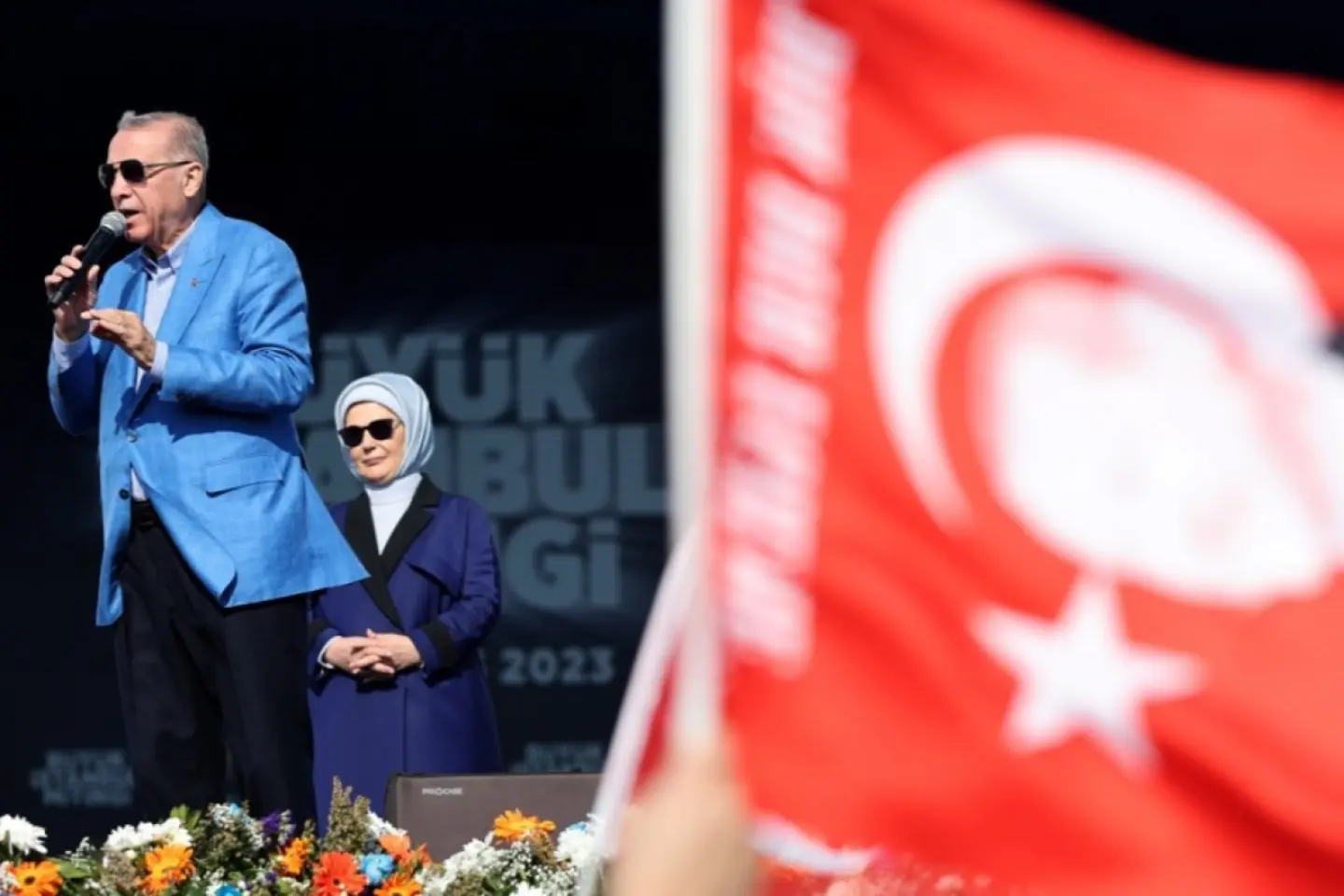
Nationalist and conservative populism – which pits "traditional" and religious values ​​against European ones – has underlined the charge against democracies and the slide toward authoritarianism in recent decades. Populist rhetoric was merely the first step. Next came the capture of the Judiciary and, through it, the neutralization of civil society and the opposition; these were not banned outright but were instead rendered insignificant.

The most "successful" example of building an authoritarian regime is Putin’s Russia, yet Turkey’s case is perhaps even more relevant. After more than twenty years of the Erdoğan regime consolidating its power, Turkey has not only drifted away from the Western and European values ​​it once embraced but has also moved away from the very principles underpinning the secular state founded by Mustafa Kemal Atatürk.

The lessons from Turkey should be closely examined in Romania as well, considering that elements that contributed to Turkey’s slide into authoritarianism – ranging from nationalist and conservative populism to judicial decisions that appear to reflect specific interests – are increasingly evident in Bucharest too.

The first step towards an authoritarian regime: taking over the judiciary

What has been happening in Turkey for years should have long since served as a deafening alarm bell for a Romanian nation determined to defend its liberal democracy after 45 years of communism. I warned of this in an article published in August 2018 on the Contributors platform, titled "A State has vanished: The New Turkey and future challenges." I am revisiting this topic now, as it may help us grasp the gravity of the situation in which we – the citizens of Romania – find ourselves today. The erosion of Turkish institutions, which I highlighted in 2018, was bound to lead to the disappearance of the Turkish republican state as envisioned by its founding father, Mustafa Kemal Atatürk. Today, we are compelled to acknowledge, with regret, the validity of that assessment.

The republic – nominally secular – exists only on paper, much like Turkish democracy itself. Religion is omnipresent, permeating both state institutions and the ideology through which the current Ankara regime legitimizes its public policies. Education is subordinated to Sunni Islamic morality – a framework coupled with Turkish nationalism since the adoption of the 2012 curriculum. Furthermore, religious imperatives are clearly discernible in the foreign policy doctrine known as Mavi Vatan (Blue Homeland). Turkey ambitiously pursues the objectives of this doctrine, even when doing so entails aggression – sometimes exceeding acceptable limits – towards neighbors like Greece and Cyprus, as well as towards Israel, the US, the EU, and other actors with significant interests in the Middle East and the Eastern Mediterranean.

To reach this point, the Ankara regime followed a series of simple steps – part of the classic playbook for dismantling a democracy to make way for an authoritarian system that is not accountable to its citizens for its decisions and policies. This formula is relatively old, having been extensively employed by Moscow after World War II to undermine and subjugate Eastern European states. The Moscow model was replicated in Turkey, with the subjugation of the judiciary serving as the initial stage. This process began with the 2010 constitutional amendments, which placed the Supreme Council of Judges and Prosecutors (HSYK – the Turkish equivalent of Romania’s Superior Council of Magistracy) under the authority of the Minister of Justice – and thus the executive branch, led at the time by Prime Minister Recep Tayyip Erdoğan. Here, the attempt from August 2018 failed, but the politicians who sought to subordinate the judiciary back then are making a new attempt today – one that appears likely to succeed.

In Turkey, this process culminated in the 2017 constitutional amendments. Regarding the judiciary, the amendments targeted the disciplinary body for magistrates. The adjective "Supreme" (Turkish: yüksek; the HSYK became the HSK) was removed from its title; thus downgraded, the Council of Judges and Prosecutors fell under the direct and complete control of the President – Erdoğan himself. He could now mandate the appointment of all Council members, either directly or through the parliament, which was invariably controlled by his party, the AKP. Throughout that period, the ministers responsible for the Turkish justice system conscientiously carried out orders received from the head of the executive branch they served. Meanwhile, AKP lawmakers fully backed these initiatives in the legislature, benefiting – after 2015 – from the support of allies within the ultranationalist MHP. Indeed, nationalism served merely as a public pretext for these so-called reforms; the regime's primary objective was, in fact, the subordination of the judiciary.

From that point on, the dismantling of judicial independence from the executive allowed the government to act systematically and with impunity against any form of opposition. The immediate result was a surge in corruption and the enrichment of groups close to the regime. Against this backdrop – typical of any authoritarian regime – a systematic campaign began (and continues to this day) targeting the independent press, civil and political rights activists, and subsequently, political opposition of all stripes. Concurrently, this campaign enabled representatives and associates of the regime to deeply infiltrate all state structures, both civilian and non-civilian. In other words, even more corruption. Court rulings in politically significant cases, combined with numerous public statements by Mr. Erdoğan or his associates, indicate that the judicial system has been operating under political orders for over a decade now. Under these conditions, the political regime can act in its own interest without judicial constraints and with impunity, as the law is effectively suspended, replaced by the will of the regime. This was the essential ingredient that facilitated the establishment and maintenance of the authoritarian regime's hold on power.

The Suppression of Civic Opposition

This process began during the Gezi Park protests (May–June 2013) and the revelations surrounding the massive corruption scandal of December 2013, intensifying after the failed coup attempt of July 2016. The Ankara regime utilized each of these episodes to advance its campaign to suppress judicial independence and subordinate the judiciary to the executive branch. However, the events of 2013 and 2016 also served to identify opponents among human rights and civil rights activists. They had been the first to take to the streets, protesting against the government's moves to seize control of the judiciary.

The regime responded without hesitation, utilizing a judiciary already under its control to arrest, indict, and sentence thousands of activists to lengthy prison terms. The intimidation was widespread; extending to the families of the persecuted, hundreds of thousands of people have suffered severely as a result of these systematic repression campaigns. It is no coincidence that Turkey today has one of the highest prison occupancy rates in the world, reaching 150 percent in August 2026, according to figures published by the Ministry of Justice itself.

Moreover, political control over the judiciary not only led to the arrest of a vast number of dissidents but also resulted in Turkish courts resisting the European Court of Human Rights (ECHR). While the ECHR has issued numerous rulings attempting to rectify many of the unlawful and unjust decisions made by Turkish courts, the situation has become irreparable. Under political control, the Turkish justice system refuses to implement ECHR rulings, effectively ceasing to operate according to the letter and spirit of the law. It simply carries out the orders of the authorities in Ankara, eliminating civil society opponents through judicial and police actions. In effect, the political regime's impunity has become the judiciary's impunity, with both now working in tandem to eradicate any form of opposition.

The ECHR recently described the issue of political control in Turkey as "systemic," characterized by "the detention and prosecution of political opponents, human rights defenders, and journalists." In reality, the situation is one of chaos. Political control over the judiciary means, in practice, that the law has lost all value; consequently, the role of the magistrate – essential to any human society – has also lost its worth. Turkish courts are effectively caught between a rock and a hard place: the pressure exerted by the political regime versus the imperative need to uphold written laws – both domestic and international – including the treaties Turkey has ratified, which bind the state to universal legal standards. Members of the judiciary – judges and prosecutors – who have compromised themselves in this manner will have no professional future should the rule of law be restored once the current state of affairs comes to an end.

Expanding the Crackdown to the Political Opposition

Against this backdrop, the repression was able to extend – again with impunity – from civil society associations and representatives to opposition parties. Ankara’s primary political targets were initially the elected representatives of the pro-Kurdish HDP; in 2023, the party was forced to rename itself the Peoples' Equality and Democracy Party (DEM Parti) to avoid being shut down. It is worth noting that the HDP had been established using this same strategy in 2014 as the successor to the Peace and Democracy Party (BDP). Starting in 2015, dozens of HDP mayors were arrested and removed from office after leader Selahattin Demirtaş refused – in a single-sentence speech – to support Erdoğan’s presidential bid that year. Selahattin Demirtaş and Figen Yüksekdağ, the HDP’s co-leaders at the time, remain imprisoned on multiple charges. Consequently, when the total number of arrests is tallied, it becomes clear that millions of citizens across dozens of localities and vast regions in Turkey’s predominantly Kurdish southeast have lost their mayors and other elected representatives in the national political arena due to judicial rulings.

In March 2025, Istanbul Mayor Ekrem İmamoğlu, seen as a leading challenger to Erdoğan’s presidency, was arrested, and following that the campaign focused on Imamoğlu’s Republican People's Party (CHP). This is the main opposition party and the direct successor to the party that – bearing the same name and led by Mustafa Kemal Atatürk himself – laid the foundations of the Republic over a century ago. However, the CHP made the seemingly fatal "mistake" of finishing first nationwide in the local elections held exactly a year earlier, in March 2024, winning the mayoralties of major cities, including Istanbul, Ankara, and Izmir.

Since then, dozens of CHP mayors and local councilors have lost their posts, having been arrested and charged with various offenses. The state appoints administrators (Tr: kayyum) to replace these officials elected by the citizens; these appointees answer to the central authorities in Ankara rather than to the communities they administer. Recently, the regime's offensive against CHP mayors has intensified. Normally, local councils elect interim replacements for arrested mayors, but when CHP representatives are chosen in this manner, the results are challenged in court and frequently annulled. New elections follow – repeatedly, if necessary – until the councils ultimately opt for AKP representatives to fill the mayoral positions on an interim basis. Thus, the question publicly posed by opposition leader Özgür Özel is legitimate: Why do we even have elections?

The campaign against CHP yielded the results its masterminds desired: the CHP fractured, further diminishing its parliamentary representation. CHP leader Özgür Özel – himself facing potential corruption charges – left CHP after a Turkish tribunal deposed him of the chairmanship. Özel founded the "New Party," and was joined by 280 CHP MPs. The old party was left with only 44 MPs, who merely go through the motions of opposition, as members have already signaled their support for the executive branch.

The third-largest party in parliament, the pro-Kurdish DEM Party, lacks the strength to mount an effective opposition. Currently, it is more focused on realizing the peace process between the Turkish state and the terrorist PKK organization, following more than four decades of the latter's struggle for autonomy and minority rights. DEM Party representatives involved in this process face a major challenge: although the PKK has already begun disarming under the watchful eye of Turkish authorities, not all Kurdish leaders are satisfied with Ankara's stance. Some warn that the process will not lead to peace unless it secures formal, legal recognition of the Kurdish minority. Another condition, insistently voiced by the majority of Kurdish representatives, is the release from prison and active participation in the process of the organization's founder, Abdullah Öcalan.

Without concrete achievements in this regard, the peace process may fail to meet its primary objective, potentially undermining the DEM Party's legitimacy – both as a pro-Kurdish party and, more importantly, as an opposition force. Thus, the ruling power in Ankara edges closer to what appears to be its main goal: the dismantling of civil society and the reduction of political opposition to a mere sham. Should the regime also violate constitutional provisions regarding the two-term presidential limit – forcing through a third (effectively fourth) term for Recep Tayyip Erdoğan with the backing of its ultranationalist MHP allies – it would seal the definitive collapse of Turkish democracy in the face of nationalist, conservative, and sovereignist populism.

The inevitable consequence: Ankara turns its back on European democratic values. Its alliance with the West, increasingly shaky

After the European Union (EU) officially recognized Turkey as a candidate state in 2005, Ankara’s drift toward authoritarianism led to the de facto freezing of accession negotiations in 2018. Today, in light of the developments outlined above, it can be said that Turkey remains a candidate state in name only. In reality, it appears to have decisively turned its back not only on the EU but also on the Western values ​​that underpinned the very founding of the republic by Mustafa Kemal Atatürk over a century ago. In an interview with Al Jazeera last month, President Erdoğan stated explicitly that EU membership is no longer a priority for Turkey. This was compounded by a statement made just days later by Mehmet Uçum, a senior advisor to the presidential administration in Ankara. He publicly reacted to the aforementioned recent ruling against Turkey by the European Court of Human Rights (ECHR), suggesting that Turkey might unilaterally withdraw from the European human rights protection system. Such a move would see Ankara abandon a fundamental pillar of liberal democracy – one developed over decades through the international treaties that underpin the ECHR’s operations under the auspices of the Council of Europe.

Conversely, the Turkish president recently spoke of expanding cooperation with Russia to build additional nuclear power plants. This compounds Turkey’s ongoing reliance on Russian gas and oil, as well as the reckless decision to purchase Russian S-400 missile systems – a move that led to Turkey’s exclusion (still in effect) from the US F-35 program. Added to this is the persistent harassment by Ankara in the Eastern Mediterranean of EU members Greece and Cyprus, the problems caused for the US and its allies, including Israel; the unresolved nature of relations with the Muslim Brotherhood and Hamas; or the continued presence of Turkish forces in northern Iraq and Syria. Citing Turkey’s questionable ties with Iran, an influential US senator stated openly on September 8 that the country is simply not a friend to the US. One might well wonder to whom the current regime in Ankara remains a truly devoted friend, given the already extensive list of adversaries it has cultivated both at home and abroad. Unfortunately, it is becoming increasingly clear that we can no longer speak of a viable Turkish democracy serving as a model for the region’s predominantly Muslim states – a role the country was seen to fulfill until around 2010.

Read time: 11 min