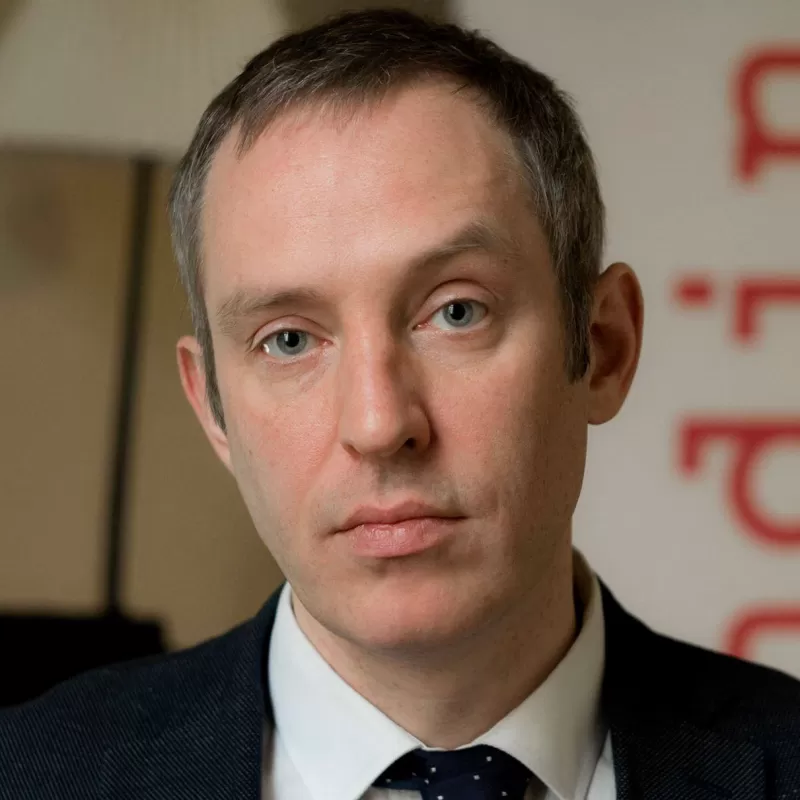
Viktor Orbán’s policy of doing business with Russia and China, and turning Hungary into a beacon of “illiberal democracies”, alienated the country’s EU partners and that came with an economic cost. Orbán’s main rival Péter Magyar shares some of Orbán’s views, but he promises to make amends with Brussels.
Orbán’s special relationship with Russia, China, and the MAGA movement
After his re-election in 2014, Hungarian Prime Minister Viktor Orbán added “trade” to the official name of Hungary’s foreign ministry. But with a telling twist: in Hungarian, trade comes first; in English, foreign affairs does, signalling a turn toward a more transactional foreign policy.
Steering Hungary between East and West is simply part of the job, Orbán told a BBC correspondent in Parliament soon afterwards, when his “Eastern Opening” policy was still in its infancy. On 12 April, Hungarian voters will judge whether that strategy has delivered.
Even Orbán’s critics acknowledge that he has a knack for anticipating shifting global currents. After 16 years in power, he is one of the few Western leaders maintaining working relations with Washington, Moscow and Beijing simultaneously.
Analysts increasingly echo Henry Kissinger’s warning of an emerging tripolar world dominated by the US, China and Russia: a landscape in which smaller states must navigate competing power centres rather than a single rules-based order.
In diplomatic access and visibility, Orbán’s Hungary has punched well above its weight. On a visit to Budapest, US Secretary of State Marco Rubio described bilateral relations as entering a “golden era” and highlighted Orbán’s close ties to US President Donald Trump.
For his part, Orbán has advocated maximising “connectivity” between East and West and agreed to participate in the proposed “Board of Peace”, an ad hoc Trump initiative many Western governments have avoided.
Orbán’s challenger, former Fidesz party insider Péter Magyar, argues Hungary’s leverage comes not from spectacle but from credibility: fewer veto threats, more institutional trust, and a faster route to unfreezing EU funds. This time, the dividing line is not East versus West, but visibility versus credibility.
Russia and China have reciprocated Budapest’s diplomatic outreach. Russian President Vladimir Putin has visited Hungary repeatedly since 2010, a level of engagement rare for an EU leader during a period of deteriorating relations with Moscow.
During his 2024 trip, when he spent the lion’s share of his European tour in Hungary, Chinese President Xi Jinping referred to the country in a speech as an “all-weather partner”, language Beijing reserves for especially trusted relationships.
Orbán’s ties to Trump meanwhile provide a rare direct channel into US conservative circles. At one point Budapest was floated, with apparent openness from all sides, as a venue for talks between Trump and Putin on the war in Ukraine, a move that would have placed Hungary at the centre of global diplomacy had it materialised.
Hungary’s emergence as a diplomatic hub between great powers has produced impressive headlines: Chinese gigafactories, privileged access to Russian energy and a direct political channel to Washington.
Yet visibility has not necessarily translated into meaningful gains for Hungarian citizens. Chinese battery plants anchor the country to a volatile, margin-pressured industry where large investments do not automatically produce high wages, deep local supply chains or durable tax revenues. They also place heavy demands on water resources, energy infrastructure and local communities, costs rarely reflected in headline figures. Large demonstrations in Debrecen, east Hungary, the planned site of major battery factories, have highlighted local voters’ fears about environmental damage, water use and limited economic spillover.
That anxiety sits inside a harsher economic backdrop. After a four-year term marked by high inflation and low purchasing power, voters will judge “connectivity” less by photo opportunities than by whether it makes life more affordable.
Energy policy reveals a similar gap between diplomacy and real-world outcomes. Hungary’s relatively low utility prices have been sustained largely through regulated tariffs and state absorption of costs rather than any “mate’s rates” discount on Russian gas, a reminder that even transactional relationships do not guarantee favourable terms. Hungary has at times paid market-level or even above-average prices under long-term contracts, analysts note.
The flagship Paks II expansion of Hungary’s only nuclear plant has progressed at a glacial pace, delivering no additional electricity to consumers after more than a decade. High-profile Russia-linked procurements, including controversial metro carriage refurbishments, have further complicated claims of reliable partnership. Some of the refurbished metro cars supplied for Budapest’s M3 line were based on Soviet-era designs similar to models other European cities had moved away from.
Orbán’s connectivity strategy has undeniably elevated Hungary’s international profile far beyond what might be expected of a country of just 9.5 million. Yet influence within NATO and the EU has not grown proportionately. Budapest has become notorious for delaying or blocking collective decisions rather than shaping them, provoking increasingly open frustration from partners. Hungary’s blocking of new Ukraine aid and additional Russia sanctions at the 23 February meeting of EU foreign ministers drew blunt calls, most notably from Lithuania, to reconsider the unanimity rule that allows a single member state to halt decisions.
Magyar wants better EU relations, but in many other aspects he sees eye to eye with Orbán
Magyar, now leading the conservative opposition Tisza party and ahead of Fidesz in polls for over a year, offers a quieter alternative: restoring Hungary’s reputation as a predictable ally while maintaining pragmatic economic relations worldwide. Tisza’s programme emphasises rebuilding trust with EU institutions, tackling corruption and securing the release of roughly EUR 18bn in frozen funds. Crucially, he has pledged to join the European Public Prosecutor’s Office, a step Budapest has long resisted because it would place investigations into EU money beyond domestic political control in a country Transparency International has ranked the EU’s most corrupt member state for the past four years.
With little domestic success to showcase, Orbán has centred the campaign on Ukraine, framing the vote as a choice between war and peace and portraying his opponents as a conduit for Western military involvement.
Magyar, drawing on his experience inside the governing system, has carefully avoided taking positions on several polarising foreign policy issues. By refusing to stake out hard positions on subjects that animate Fidesz’s base, Magyar has denied the government the villains it normally campaigns against.
Yet the differences between the two camps are narrower than rhetoric suggests. Magyar supports Ukrainian sovereignty but rejects direct military involvement, has ruled out sending Hungarian troops and opposes accelerated EU accession for Kyiv.
Hungary’s strategic anchors would remain largely unchanged whichever side wins. Membership of NATO and the EU defines the country’s security and economic position, even as an increasingly volatile global environment narrows the room for manoeuvre within those institutions.
Both sides emphasise sovereignty, oppose participation in the war and support restrictive migration policies. Even energy policy shows continuity: Orbán prioritises Russian imports for price stability, while Magyar advocates gradual diversification rather than an abrupt break.
Economic realities leave little room for manoeuvre. Hungary’s prosperity depends overwhelmingly on the EU, which accounts for roughly three-quarters of its trade, with Germany by far its largest economic partner and investor. Russia’s role is concentrated mainly in energy, while China’s presence lies in specific industrial projects rather than broad market integration. Relations with Brussels and Berlin therefore shape Hungarian living standards far more directly than ties to other great powers.
Public opinion reflects this pragmatic outlook. Surveys consistently show scepticism toward deeper involvement in the Ukraine war and limited support for higher defence spending. For most voters, foreign policy matters primarily insofar as it affects prices, jobs and stability rather than abstract geopolitical positioning.
The real difference between Orbán and Magyar lies in how Hungary seeks influence within its alliances. Orbán’s realpolitik pursues leverage through strategic autonomy and cross-bloc relationships, betting that great-power rivalry creates opportunities for smaller states willing to engage with all sides. Magyar argues that credibility and institutional trust within Western frameworks will produce more reliable long-term benefits, particularly access to EU funding and policy influence.
Under Orbán, Hungary has been transformed from a relative backwater largely ignored by international media into a focal point for both admirers and critics of illiberal democracy. For Hungarian voters, however, the choice is not between East and West but between two strategies for navigating a world of competing blocs: balancing among rival powers or embedding more firmly within existing alliances while maintaining pragmatic external ties.
Orbán offers flexibility and global visibility; Magyar promises stability, restored trust, and the funds that a reset with Brussels could unlock. But Orbán’s model has meant diminished influence inside EU decision-making. Ultimately, “connectivity” and “normalisation” are just slogans unless they change what Hungarians can afford, what services they can rely on and how much influence Budapest has where it matters: inside the EU. Orbán can still bring home photo opportunities. The question is whether he can still bring home results.