The European approach based on rules, deliberation and consensus seems ineffective in a world affected by multiple crises, with numerous actors refusing to play by the book. It is a world in which Brussels must (re)gain its relevance.
An extraordinary speech that passed unnoticed
If, on any given day, Ursula von der Leyen had announced a massive package of new sanctions against Russia, financial assistance given to Ukraine from Russia's frozen funds in the EU, a proposal to partially suspend the EU-Israel association agreement, penalties against the latter's extremist ministers, a “made in Europe” framework for public tenders and called for the Union to be set free from the “shackles” of the unanimity policy, it would have caused a stir in the media and in the diplomatic capitals of the world.
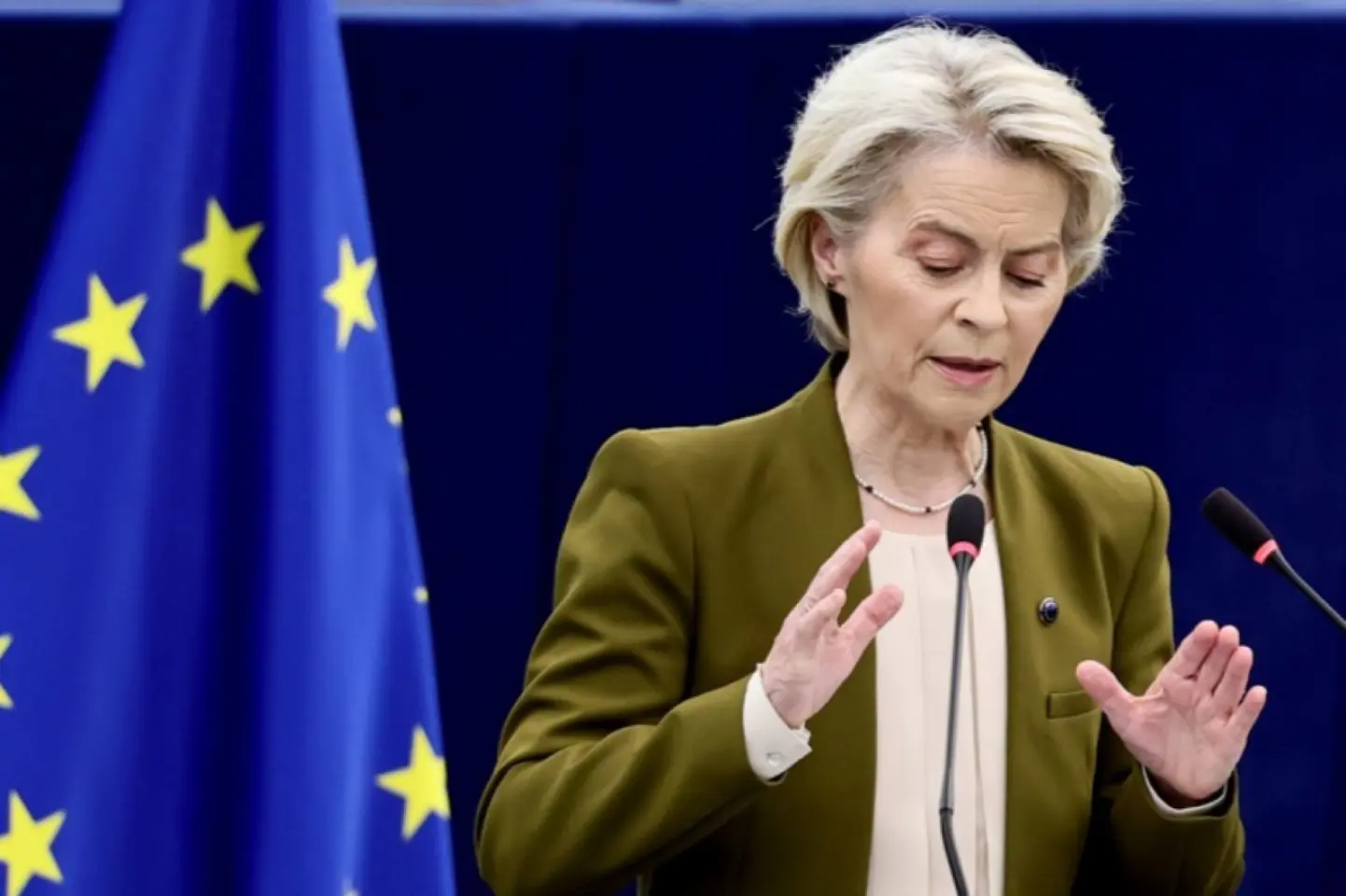
Von der Leyen made all these proposals in her “State of the European Union” speech, which she delivered on Wednesday, September 10, in the European Parliament, nicknamed #SOTEU (the acronym for “State of the European Union”). The problem, however, is that the event in Strasbourg took place on the same day as the assassination of Charlie Kirk in the USA, and the provocative incursion of Russian drones into Poland (which Ursula von der Leyen even hinted at in “SOTEU”) and just a day following Israel’s attack on Hamas leaders in Qatar. All these developments overshadowed Ursula von der Leyen’s speech.
Von der Leyen’s “SOTEU” was bellicose, peppered with sweeping clichés, typical not just of the European Commission president, but also of other Brussels leaders, such as “Europe must fight” or “if it matters to Europeans, it matters to Europe”. Von der Leyen’s words attracted boos from MEPs, both from the left and from the right, at different times. The speech was not only more belligerent and booed compared to previous “SOTEUs”, but also longer (about 7,500 words compared to an average of 6,500-6,700).
A traditional annual event in Brussels politics, the speech ended in a kind of lively but unnoticed commotion, with MEPs fretting around like fish in a bucket. And beyond the events mentioned above, with a high media impact, there is another reason why the speech pretty much passed unnoticed in the news: times have changed, and Brussels institutions are trying to keep up the best they can.
The problem with Ursula von der Leyen and Brussels is that, since 2020, the world has changed radically
The most powerful person in the “capital of Europe” (Ursula von der Leyen, as you might have guessed) can only deliver, in terms of political decision-making, money or threats, only what Brussels generally has to offer: proposals and plans that materialize (or not) over the course of years, due to the European Union’s complicated decision-making mechanisms. Ursula von der Leyen can only dream of a “drone wall” on the EU’s eastern flank, regardless of the mechanisms she can actually put in motion to turn it into a strategic reality. Those who will build the “wall” (or send F16 and F35 aircraft to intercept Russian drones, which were roaming over Poland at the very moment Von der Leyen was voicing her dreams out loud in the European Parliament) are country or NATO leaders. In EU politics, the connection between cause and effect, intention and reality, is often very difficult to detect, not only for the “general” public. And, unfortunately, there are situations where such a situation doesn’t even exist.
It is, therefore, unsurprising that the drama in the Strasbourg plenary chamber failed to make waves beyond the walls of the same chamber, perhaps with the exception of publications with “filter bubbles”, such as Politico.eu. There are things happening in other parts of the world as well, sometimes harsher and clearer realities than the future intentions and exhortations, however well-intentioned and honest, of some obscure institutions. These are usually bombings, assassinations, military skirmishes and the like. This geopolitical reality can very well take by surprise a set of institutions created for deliberation and peaceful, optimal, scientific and consensual solutions, which often get embroiled in their own mechanisms – like that of unanimous voting, disavowed by the Commission President herself.
It is no coincidence that, faced with this state of affairs, Ursula von der Leyen, as well as her heavyweight peers in European institutions, regard themselves less than country leaders like Emmanuel Macron, Donald Tusk or Keith Starmer, who by the nature of their own position can afford to take more decisive actions and with more direct consequences than the deliberate vertigo of the European Union. The continent's political center of gravity is shifting away from Brussels and Strasbourg and will probably be a mobile, itinerant one, depending on the success or failure of one major political leader or another.
Does this mean that the European Union "will endure for another 1,000 years, as a scarecrow in a museum”, as Mark Twain said about religion? There is a serious counterargument. The EU’s financial strength and turntable nature are still formidable facts. Much of the obscurity in which it has been sinking of late is the result not of its lack of efficiency and consequences, but simply of the long time it takes to move from plans to action, which is typical of the Union's legal mechanisms.
Is Ursula von der Leyen “out of her depth”, as some have said? Perhaps she is, but rather in a sense that is contrary to what she’s trying to accomplish. After she was appointed Commission President in her first term, she saw herself as a new type of politician, a woman holding the highest European position and the head of a Commission that had attained quasi-gender parity (12 women out of 25 members). However, Von der Leyen’s first term was quite different from what was expected of her – instead of a green transition and triumphant digitalization in Europe, that Commission had to put out fire after fire. First there was COVID, then the first part of the War in Ukraine, in which things had not yet settled geopolitically, except for the surprising show of solidarity from European countries, which today seems like a distant memory of the early days of the conflict.
Can the EU’s rules- and consensus-based system adapt to the “barbarity” of the new world?
Before long, the “new-styled politician” Ursula von der Leyen was overwhelmed in the face of a new global reality, multipolar and fueled by social media steroids, which causes global hysteria and disinformation. In Brussels, there is talk of two new votes of confidence possibly facing the Commission, after Romanian Gheorghe Piperea broke the ice by initiating one in July.
Ursula von der Leyen is unpopular and her imminent political demise is coming, “according to sources” within various publications. Her own vice-president, Teresa Ribeira, is publicly scolding her for her failure to react to the disaster in Gaza. The reasons why the Commission President refuses to take action are, however, the very things that recommended Ursula von der Leyen in 2020 for a paradigm shift in European politics. Possibly, her troubled narrative will have a happy ending (or at least a timely one) rather than sad one.
The question remains, however, as to what extent can the institutions represented by people like her, who guarantee the observance of the rules, adapt to the barbarity of the new world.