What is the connecting thread between a secluded lodge in snow-covered North-West Bulgaria and alternative Buddhist practices, vague official versions about two death scenes and sensationalist leaks to the media, a draft law on banning NGO’s and changing voter tendencies ahead of the April 19 snap elections?
It’s the death of six men who from unknown to the public became the most commented names since the first days of February. The mysterious events surrounding their deaths created a frenzy, both on social media and in real life. “It’s like we’re under mass psychosis, aren’t we?”, is a thought often heard around the streets of Sofia. It became a fodder for endless theories that has caused widespread frustration towards the institutions investigating what exactly happened and the feeling that every figure in power hides an aspect of the story.
What (might have) happened
Two triple death scenes on the first days of February, both in Bulgaria's mountainous North-West, were followed by uncanny details and conflicting reports.
On February 2, police arrived at the Petrohan mountain lodge, near the snow-covered village of Gintsi, 10 kilometres from the border with Serbia, acting on an alert about a fire. Three men were found dead, shot in the head, with two dead dogs in the upper level of the lodge, which had been damaged by the blaze. Photos of the bodies that were leaked to tabloid media pictured them positioned one next to another, with one having visible cuts and bruises on his winter clothes.
For days, it was not known who exactly called the police and who first found the bodies. On February 3, the village mayor – who made no further comments – claimed that officers from the State Agency for National Security (DANS) were first to arrive on the scene and that the three were known to patrol the area, with arms and drones. Authorities later claimed – through released videos on February 18 – that first it was the Border Police to arrive; this in turn posed questions why they were the first ready to act instead of local police or a medical unit.
Before the arrival of the authorities, a friend of the group first visited the hut on the morning of February 2, worried by a cryptic sounding message by one of the men. He allegedly found the bodies although the cameras are not showing the exact moment. The witness, Delyan Iliev - whose existence was speculated but was not identified by the authorities until February 18 - has called the police and has been questioned, meanwhile he contacted the friends and the families of the deceased. He was living nearby along with his wife, born in Mexico, a location, as later revealed, everyone in the group had affinity for. Following his release, Iliev has left Bulgaria, is currently at an unknown location and has not made any media appearance.
Officials remained tight-lipped about what they found inside. But the way they were quick to criticise the three men dead for being guilty for their own fate, raised many suspicions: they were post-mortem scolded for developing an NGO which under its wildlife protection makeover was allegedly taking on the role of a state authority by organising rangers patrolling the area near the hut. According to the authorities who first spoke to the media, their activities “bared resemblances of a sect” and there might have been “sexual crimes against minors”.
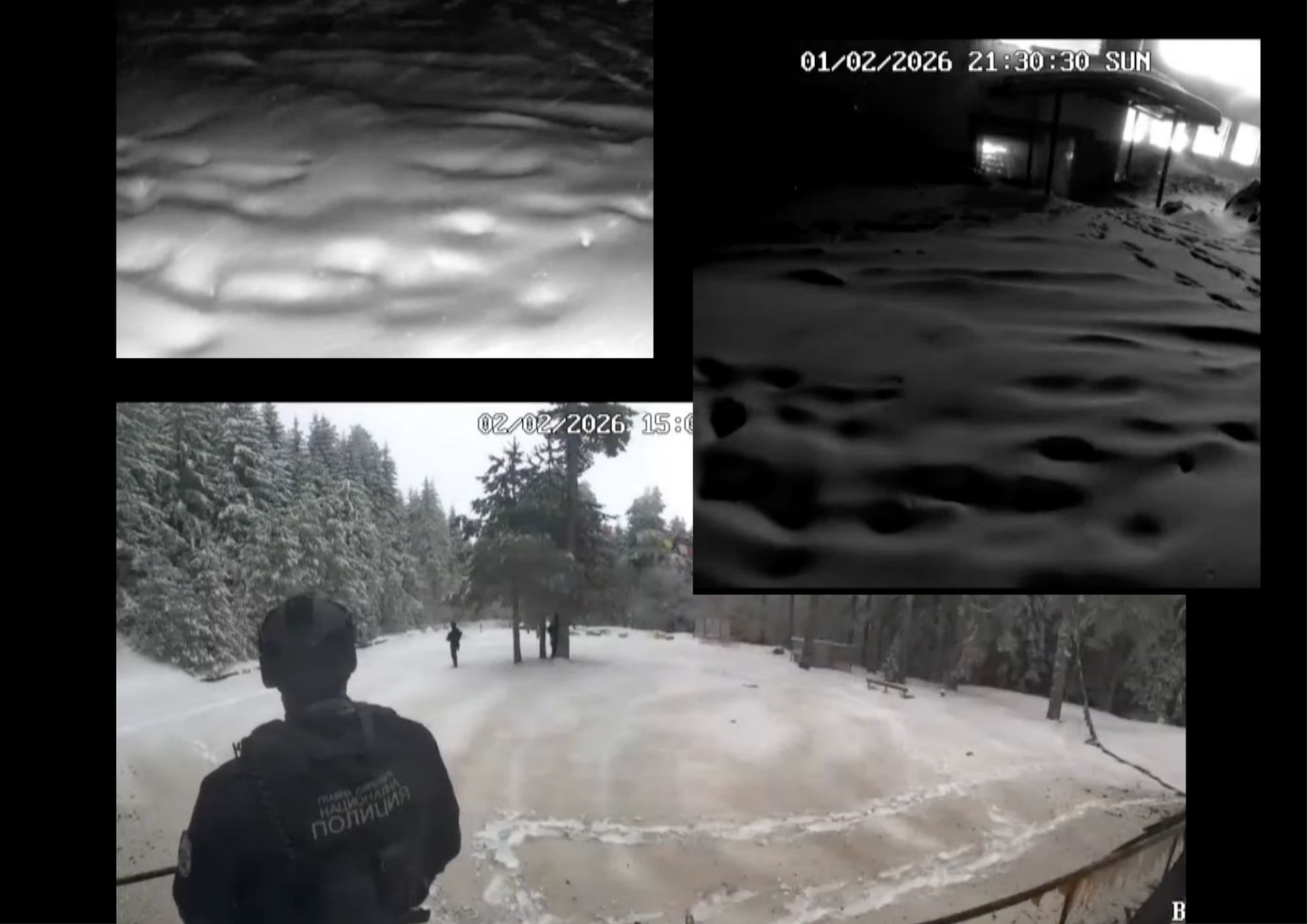
Stills from the Petrohan hut where the first death scene took place. Source: Bulgaria's Prosecutor Office
“Life has given us more shocking details here than in the ‘Twin Peaks’ series,” acting General Prosecutor Borislav Sarafov told the media and suggested: “Read between the lines”.
The comment led to the case becoming known as “the Bulgarian Twin Peaks”. For Sarafov – often criticised for being a shield for the previous coalition and occupying the position temporarily but finding loopholes to stay in office since 2023 – this was the first instance where he talked to the media in months.
While police did not give out the names of the victims for days, the three men found dead were soon identified by friends and associates. This in turn opened up a flood of unconfirmed details and personal stories that reached the media, kickstarting the tendency of relevant information to be spread through social media, podcasts and YouTube channels rather than traditional media or through official statements.
The three men were identified as Ivaylo Ivanov, 49, a lawyer; Detcho Vassilev, 45, an owner of an accounting firm; and Plamen Statev, 51, a skilled diving instructor. All three were members of an NGO known as the National Agency for Control of the Protected Areas, which had worked in partnership with the Ministry of Environment and Waters from 2022 until June 2025, when the ministry brought the agreement to an end - the extent to which the three were serious about patrolling the area armed and with surveilling drones remains unclear.
Friends and associates say that the deceased have been targeted by a slandering campaign led by the state to hide the real details and that three have used the NGO to protect wildlife, limit illegal logging and poaching.
Political clashes amidst the investigation
Amongst those questioning the police’s theories were Sofia’s mayor, Vassil Terziev, who has donated to the NGO after being impressed with their environmental work, and ex-Prime Minister Nikolai Denkov. Politicians from the opposition party We Continue the Change also accused the authorities of initiating a cover-up, as did former MP and current interim Minister of Agriculture Ivan Hristanov, openly suggesting the three have witnessed something terrible, for which they were essentially executed; the same was hinted by the Sofia mayor as he suggested they were challenging shady business interests in the area.
As the comments were coming from opposition figures, this quickly led to criticisms against them in tabloid media and crossfires between politicians, claiming they are protecting a criminal network. Local media, gossip websites and TikTok created numerous scenarios about what happened: that the hut and the organisation was a paedophile ring, that the men hid ancient gold, that they were visited by UFOs; all while families were taking the media to their own side of the story.
At the time of writing, the police is working on one theory about the events around the two triple deaths: the first being a group suicide, the second being a murder and a suicide. While no motive has been cited, the theory that all were involved in an organisation resembling a sect or a cult remains relevant for the investigation.
The second death scene
Another partner in the NGO and the owner of the hut [that worked for close friends and was not opened for regular tourists] was Ivaylo Kalushev. His name quickly became the one associated with most speculations: Kalushev was a cave explorer and scuba diver who often travelled abroad, mainly in Mexico where he also organised expeditions. Up until February, Kalushev was unknown to the public: there’s only a TV segment from 2010 in which he was interviewed as the heroic rescuer of ten children in a cave.
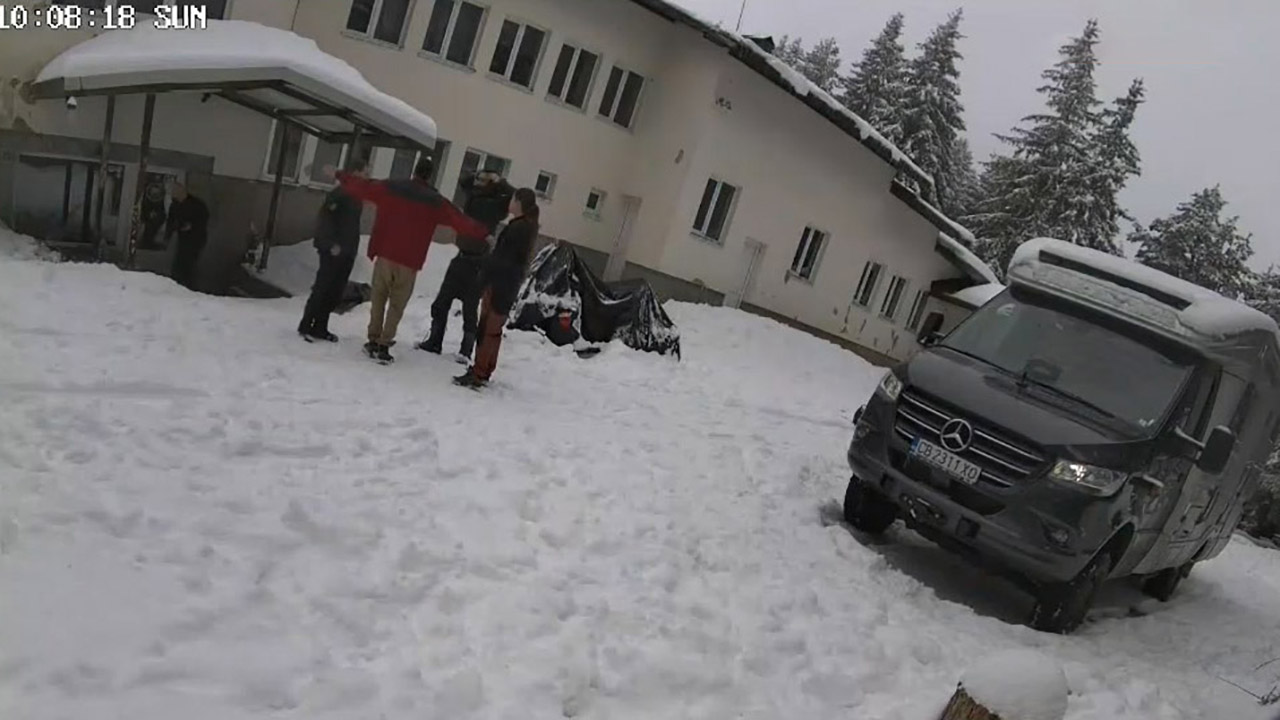
By the time the bodies were found, Kalushev – who left in the morning of February 1, hours before the alleged group suicide – was at another location, travelling in a camper with a 15-year-old boy and a 22-year-old man to another house, in a village near the other end of the country, close to the Turkish border.
Kalushev’s background would quickly become the most commented aspect of the story. He has been described by people who knew him as a long-time Buddhist who had lived in Nepal and Mexico but straying away from Buddhism and developing his own Sky Dharma teaching. He had taken groups of people from Bulgaria to Mexico through his School for Adventures [promoting itself through a still from the Matrix movie] and an organisation called Diving Mexico, as indicated by his social media accounts.
Fellow speleologists and mountaineers who knew him, told the media that there were some baffling aspects of his personality and practices: these trips were not short-lived but an alternative lifestyle of its own, with the teenagers along with him living outside parental control and regular education for extended periods. Among those were the two young men found dead with Kalushev on February 8 on Okolchitsa peak not far from the location of the Petrohan lodge: both the 15-year old (Alexander Makulev) and the 22-year old (Nickolay Zlatkov) have been living and traveling with Kalushev for years.
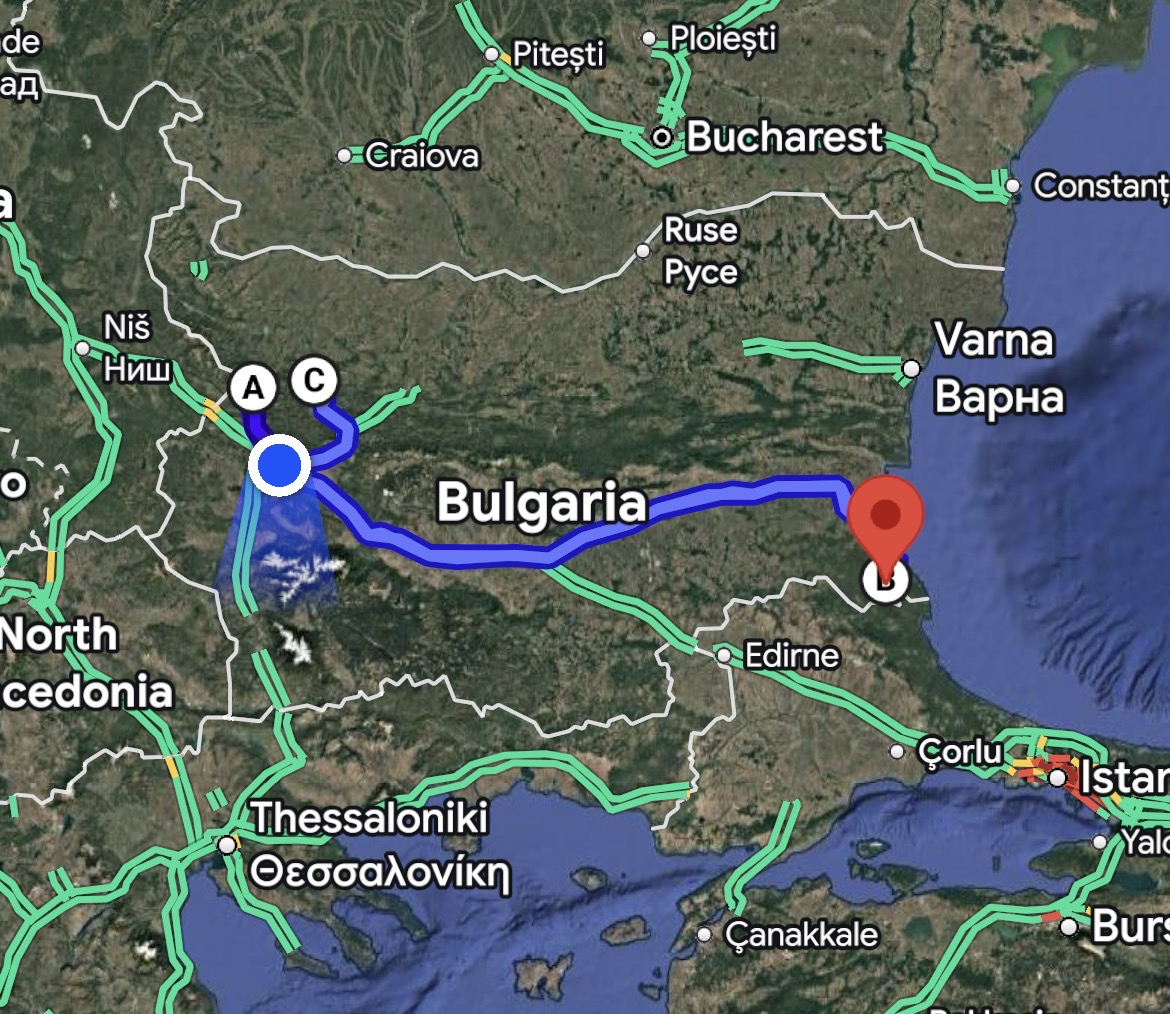
The three main locations concerning the case: the Petrohan hut not far away from Sofia and near the Serbian border, where the first three men were found dead; the Bulgari village near the Turkish border where the second group led by Ivaylo Kalushev went for unknown reasons and the Okolchica peak where they were found dead, managing to drive across the country despite being heavily searched for by the authorities.
It’s unknown why Kalushev went to the other side of the country with the two and then went back near the location, unnoticed by the police searching for him and the vehicle for days.
The family situation around Alexander and Nickolay has created another interesting aspect of the case: the parents of the deceased have remained supportive of Kalushev and his practices, denying speculations there was sexual wrongdoing.
The official version
Despite the wave of speculations, the authorities have been working on a single theory: the first three deaths were a result of a group suicide, the second - a suicide and a murder.
One of the alleged suicides – of Ivaylo Ivanov from the first death scene – created another branch of speculations. On February 18 the police explained that the two wounds on his head were a result of him unsuccessfully trying to kill himself and succeeding on the second attempt - meaning he was conscious after shooting himself in the head. Criminologists who were interviewed disputed that this is possible even if the head injury was not fatal itself.
Investigation on the exact nature of their beliefs is ongoing.
The families vs the official narrative
Investigative YouTube channel Dneven Red interviewed a woman close to Kalushev, also a mother to a boy who was sent to live with him in Mexico at the age of 14 after she found he was smoking cannabis and got him off the school he was enrolled in.
In the episode from February 11 the mother says she regards Kalushev as innocent and does not believe her son’s claims that he was sexually abused. She describes her son as “the moral killer” as he was the one who started the claims of abuse after a sudden return to Bulgaria. The mother considers Kalushev a “lama”, with his teenage disciples trained as “tulku”, those recognized as the reincarnation of a previous spiritual master.
On February 12, Bird.bg followed in an interview with the son, Valeri. He reconfirmed that he was sexually exploited by Kalushev when he was around the age of 14-15 when their four-year period of living in Mexico started and that the acts occurred during hypnotherapy sessions. He also downplayed the importance of any wildlife protection or exploring activities for the group. During their time in Mexico, Valeri met the 15-year old that died with Kalushev, at the time aged 10, and tried to reach his family to warn them; according to his mother, he did it out of contempt of the younger member of the group, appearing as a more promising disciple.
In 2024, there was a probe on Kalushev filed at the State Agency for Child Protection, from the grandparents of an 8-year old boy who was assigned to Kalushev's training for "youth rangers" but within days investigations were dropped, local media reports.
Valeri also asserted that every time there was an alert on Kalushev at the police, Kalushev immediately found out about it.
It remains unclear why police failed to act earlier if they were aware of any wrongdoing: this leading to more speculation on whether Kalushev was not specifically protected or state security agent himself.
A vocal opponent of the official version is the mother of the 22-year old, Nickolay, that died with Kalushev. The mother, Ralitsa Asenova, made several interviews and widely shared Facebook. Ralitsa Asenova, made several interviews and widely shared Facebook posts in which she reconfirms that the group has likely witnessed criminal activity and were assassinated, believes the innocence of Kalushev and downplays the sect narrative, and based on her numerous visits in the hut - she believes the recordings are part of the group being surveilled as the cameras in the house premises were not from the angles shown from the police.
The last details have been further speculated as in one instance from the released video recordings – of the three men still alive shortly before committing the alleged suicide – a voice is heard on the audio saying “shoot, shoot”.
The three men from the hut shortly before setting the house on fire and allegedly committing suicide. According to one of their associations and a mother of the 15-year old to be found dead amongst the second group, there weren't cameras on this location and they weren't suicidal or involved in a criminal activity or in a sect.
On March 10, her Facebook account was deactivated for unknown reasons but was later returned. Through her account there is also a scheduled protest in Sofia this Friday against the actions of the police and demanding transparency around the case.
On March 10, her Facebook account was deactivated for unknown reasons. Through her account there was also a scheduled protest in Sofia this Friday against the General Prosecutor.
According to her, the families of the deceased have also not been able to see the bodies and that they are due further examinations.
In local media, the parents of Kalushev – a pianist and an artist – pointed to “the political mafia” and vaguely mentioned interests in drug trafficking as the source of the malicious claims for their son.
“Don’t believe anything you hear, not even a tiny part, but we don’t have any more power to fight this mess,” Kalushev allegedly wrote in a message to his mother, made available from her on February 4. “Forgive me, thank you from the bottom of my heart, and when you find strength (the sooner, the better), just redirect your thoughts and you will find me. This world is just a very solid dream. You don’t have to turn it into a nightmare … I love you very much. Be free,” the letter concluded.
Political repercussions
As the figures who openly disputed the official version are members of the We Continue the Change party (like Sofia mayor Vassil Terziev and former PM Nikolai Denkov), every twist that pointed to the dead being involved in a wrongdoing, led to a wave of publications that the party is itself protecting a criminal network.
In turn, We Continue the Change made part of their agenda the criticisms towards the GERB-tied Ministry of Interior and Prosecution acting upon the sentiments that they are hiding something from the public (protests against the General Prosecutor are ongoing, with the response to the Petrohan case one of the reasons for the outrage).
Pro-Russia party Revival and nationalists There’s Such a People have embraced the theories about a decadent community hiding in the mountains: on February 22, There’s Such a People filed a draft law on abolishing NGO’s in Bulgaria; the draft has not yet been voted upon.
With the politicians themselves taking part in the myth-making around the case, the murders became an element in the election campaign for the April 19 snap election, a result of the GERB-led coalition collapsing in December after mass protests. Former President Rumen Radev’s new political vehicle, Progressive Bulgaria, is a likely winner according to the surveys, despite that Radev is largely refraining from media appearances or statements: this also draws a distance from the case or association with any institutional failure which benefits his image as one above the usual political controversies.