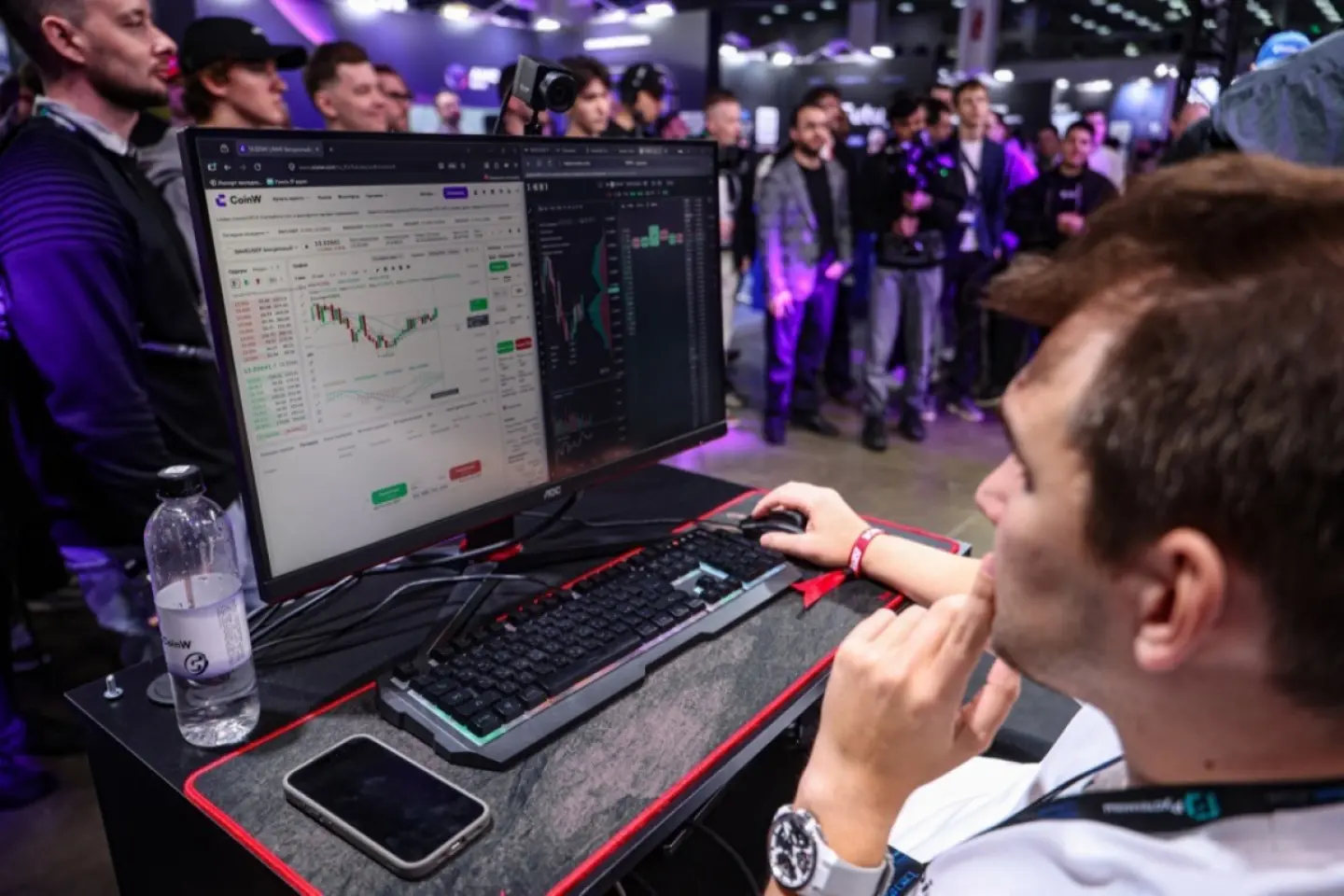
In the spring of 2026, what had once been marketed as Central Europe’s great crypto success story began to resemble something closer to a geopolitical thriller. Zondacrypto – the largest cryptocurrency exchange founded in Poland in 2014, previously known as BitBay – collapsed into scandal amid allegations of fraud, money laundering, political influence, and Russian organised-crime links. Prosecutors in Katowice opened an investigation into losses estimated at hundreds of millions of zloty. Thousands of users feared they would never recover their savings. Yet the financial dimension soon became only one layer of a much larger story.
According to reports by Polish media outlets citing intelligence and prosecutorial sources, Polish security services suspect that the exchange ultimately came under the influence of the “Tambov Gang” (Tambovskaya Bratva), one of Russia’s most notorious criminal organisations, historically associated with St Petersburg’s political and business underworld during Vladimir Putin’s rise to power in the 1990s. What began as a domestic crypto scandal has therefore evolved into something more consequential: a case study in how opaque digital-finance structures, political polarisation and Russian influence networks can intersect inside an EU member state.
A financial scandal that turned into a national security matter: the Russian mob connection
The roots of the affair stretch back years. BitBay was founded during the first great cryptocurrency boom and quickly became Poland’s dominant exchange platform. It attracted hundreds of thousands of retail investors in a country where distrust of traditional institutions and enthusiasm for speculative investing often went hand in hand. The company projected the image of a modern European fintech champion. But behind the scenes, ownership structures became increasingly opaque.
According to accounts later cited by Polish media, a turning point came in 2018. BitBay was struggling operationally and financially. At that stage, majority stakes were allegedly transferred through intermediaries and entities registered in the United Arab Emirates. Officially, the restructuring appeared to be a standard corporate rescue operation. Unofficially, according to an alleged internal note prepared by Poland’s Internal Security Agency (ABW), the money behind the deal may have originated from Russian organised-crime circles connected to the Tambov group. That allegation transformed the case from financial scandal into a national-security matter.
The Tambov organisation occupies a singular place in post-Soviet criminal mythology. Emerging from the violent gang wars of the late Soviet and early post-Soviet years, it became deeply embedded in the fuel and port economy of St Petersburg. Russian and western reporting over the years has documented longstanding allegations of ties between figures in the Tambov milieu and political actors surrounding Putin during his period in the city administration. Some analysts argue that parts of the group evolved into hybrid structures blending organised crime, intelligence interests and state-linked business networks.
For Polish security officials, the concern is not merely historical. Since Russia’s invasion of Ukraine, European intelligence agencies have increasingly viewed crypto platforms as potential instruments for sanctions evasion, money laundering and covert financial operations. In that context, the possibility that a major crypto exchange operating inside the EU may have fallen under Russian criminal influence carried obvious geopolitical implications.
The scandal exploded publicly in April 2026. Prosecutors announced an investigation into possible fraud and money laundering linked to Zondacrypto. Initial estimates suggested losses of at least 350m złoty (80m euros), though the figure continue to rise as more complaints arrive. Investigators secured servers, electronic equipment and vast amounts of data. The number of alleged victims climbed into the hundreds.
Then came the political detonations.
Crypto money, media influence, and the nationalist right: the political connection
Prime Minister Donald Tusk’s government framed the affair as proof that Poland urgently needed tighter cryptocurrency regulation and more aggressive state oversight. Ministers argued that years of deregulation and political protection had created a permissive environment vulnerable to abuse by hostile foreign actors. Tusk reportedly referred during a closed parliamentary session to intelligence findings concerning Russian links and warned that crypto markets represented not only a financial risk but a security threat. Poland’s conservative president, Karol Nawrocki, also got pulled into the controversy as he had vetoed legislation intended to implement stricter crypto-market rules aligned with broader EU regulatory frameworks. His camp argued that the proposed law granted excessive powers to regulators and threatened innovation in a developing sector. Government allies countered that the veto effectively weakened safeguards precisely when they were most needed.
The resulting clash exposed a deeper institutional conflict inside Poland’s semi-presidential political system. Tusk’s centrist coalition controls parliament and government. Nawrocki, backed by the national-conservative opposition associated with the Law and Justice (PiS) camp, occupies the presidency and retains veto powers. Since the parliamentary elections of 2023, relations between the two camps have often resembled trench warfare. The Zondacrypto affair turned crypto regulation into another front in a broader struggle over the state, security policy and Poland’s post-PiS political order.
The scandal also highlighted the increasingly blurred boundaries between crypto money, media influence, and the nationalist right.
Over recent years Zondacrypto had aggressively pursued political and cultural legitimacy. The company sponsored sporting events, conservative media outlets and conferences linked to right-wing networks. Reports in Polish media described financial connections involving nationalist politicians and organisations associated with the broader conservative ecosystem. Particular scrutiny fell on figures linked to the Confederation party, Poland’s far-right libertarian-nationalist coalition, which has long championed deregulation, low taxation and hostility toward financial oversight.
One recurring name in the controversy was Przemysław Wipler, a former conservative politician and influential Confederation figure who promoted cryptocurrency initiatives and reportedly maintained ties to circles connected with the exchange. Critics argued that parts of the Polish far right embraced crypto not merely as a financial technology but as an ideological project: a tool against the EU, taxation and regulatory states. Defenders insist such accusations amount to politically motivated guilt by association. The affair nevertheless exposed how easily anti-establishment rhetoric, speculative finance and geopolitical vulnerability can overlap.
Another dark thread running through the story concerns Sylwester Suszek, one of BitBay’s founders. Suszek disappeared in 2022 under mysterious circumstances and is widely presumed dead. His disappearance has fuelled years of speculation in Poland’s business and intelligence circles. Although no direct public evidence conclusively links his fate to the later scandal, the unresolved case contributed to the aura of menace surrounding the exchange. Meanwhile, the company’s later leadership became the subject of increasing scrutiny. Media reports suggested that Przemysław Kral, Zondacrypto’s chief executive, may have relocated abroad as investigators intensified their activities. Polish prosecutors stressed that the investigation remained at an early stage and cautioned against premature conclusions. Still, the optics were politically disastrous.
Anxieties regarding crypto regulation, financial penetration by Russia, and the far-right’s new playing ground: the European connection
Internationally, the affair has resonated beyond Poland because it encapsulates several wider European anxieties at once. The first concerns crypto regulation itself. Across Europe, regulators have struggled to balance innovation with enforcement. The EU’s Markets in Crypto-Assets regulation (MiCA) aims to establish common standards, but implementation remains uneven and national political battles persist. Poland’s case demonstrates how delays, vetoes and fragmented oversight can create vulnerabilities exploitable by opaque international actors.
The second concerns Russian influence operations. Since 2022, European governments have focused heavily on military threats, espionage and disinformation. The Zondacrypto affair suggests another dimension: the penetration of financial infrastructure through informal networks that combine business, organised crime and political patronage. Unlike traditional espionage scandals, such operations thrive in legal grey zones and exploit divisions within democratic systems themselves.
The third concerns the changing nature of Europe’s radical right. In Poland, as elsewhere, parts of the nationalist and libertarian right increasingly intersect with online financial cultures centred on crypto assets, anti-establishment populism and hostility toward supranational regulation. Those overlaps do not automatically imply criminality or foreign control. But they create environments in which opaque financing and ideological radicalisation can reinforce one another.
A cautionary tale about European vulnerabilities
For the Tusk government, the scandal offers an opportunity as well as a danger. It enables the prime minister to argue that stronger state institutions and closer EU integration are matters of national security rather than technocratic preference. By tying crypto deregulation to alleged Russian influence, the government can place opponents on the defensive. Yet this strategy also carries risks. Critics accuse Tusk’s camp of politicising an ongoing investigation and using intelligence leaks to damage the conservative opposition before future elections.
Nawrocki and his allies reject suggestions that their resistance to crypto legislation benefited criminal interests. They portray themselves instead as defenders of economic freedom against an overreaching state eager to exploit fear in order to centralise power. In Poland’s deeply polarised environment, even questions of financial oversight rapidly become constitutional and ideological battles.
As investigators sift through servers, ownership records and international financial transfers, many essential questions remain unanswered. Did Russian-linked actors truly gain effective control over the exchange, or are intelligence agencies extrapolating from fragmentary evidence? Were politicians knowingly cultivating relationships with compromised actors, or merely participating in the opportunistic networking common to the crypto world? How much money vanished, and where did it go?
What is already clear, however, is that the Zondacrypto affair has become far more than a business scandal. It reveals how the border between geopolitics and finance has eroded in modern Europe. Criminal networks exploit globalised capital flows. Political movements depend increasingly on opaque ecosystems of funding and digital influence. Governments struggle to regulate technologies that transcend borders faster than laws can adapt. Poland, long viewed as one of NATO’s frontline states against Russian aggression, now confronts the possibility that vulnerabilities may lie not only along physical borders but inside financial systems marketed as symbols of technological modernity.