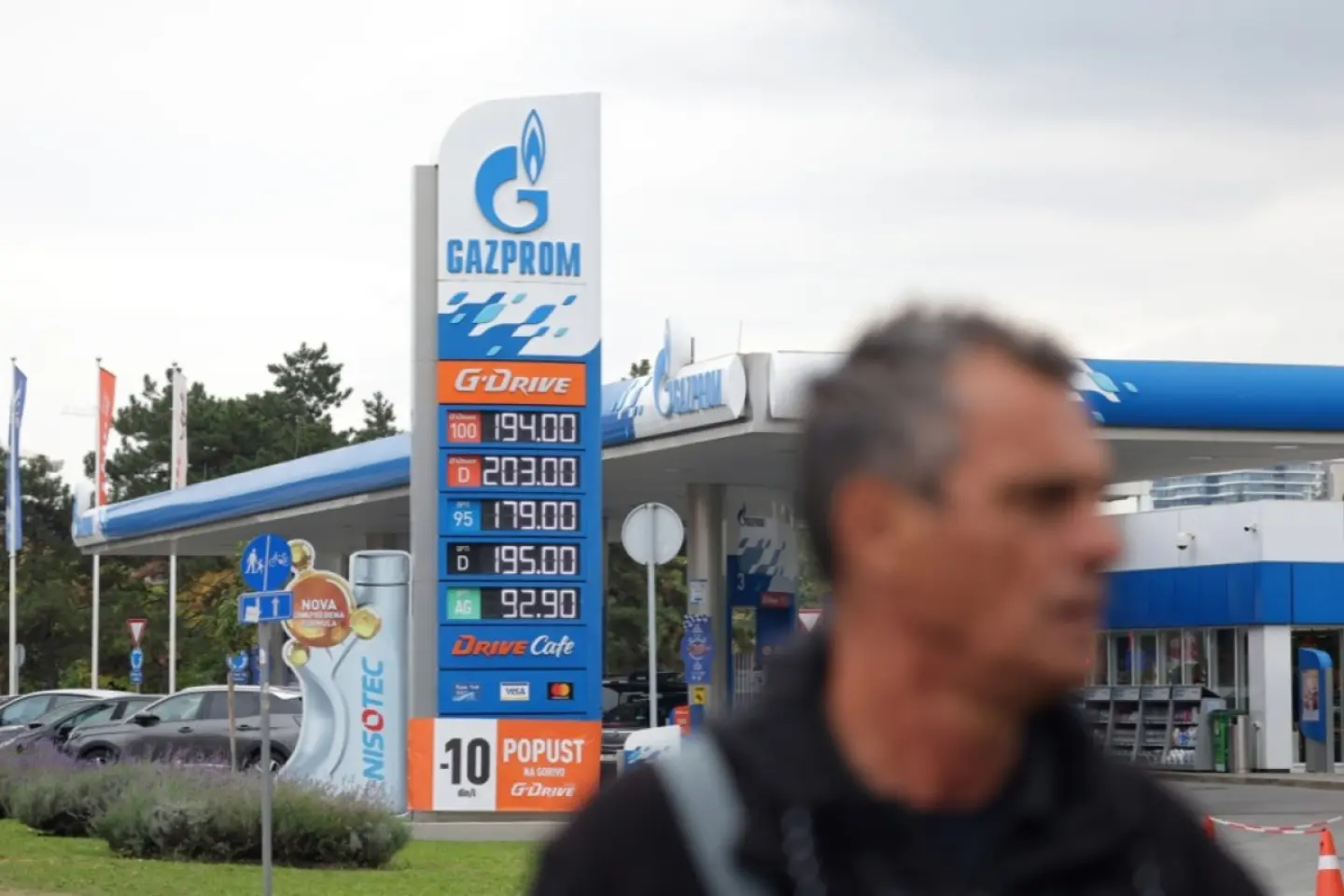
As of mid-May 2026, the future of the Russian-owned Serbian oil industry remains unresolved – legally, commercially and geopolitically. Hungarian oil group MOL has until 22 May to finalize a sale and purchase agreement with Russia's Gazprom Neft for a combined 56.15 percent stake in Naftna Industrija Srbije (NIS), the country's only integrated oil company. OFAC has extended the negotiations license multiple times, and Serbia has submitted what its energy minister Dubravka Djedovic Handanovic described as a final proposal on the future operating terms of the Pancevo refinery. Whether MOL's board accepts those terms, and whether OFAC approves the resulting structure before sanctions disruption resumes, is the question that now sits at the center of the Balkans' most consequential energy transaction in two decades.
US sanctions on NIS, announced in January 2025 and delayed through the summer before taking full effect on 9 October 2025, targeted the company's majority Russian ownership as part of Washington's, currently stalled, measures against Russia's energy sector, designed to reduce revenues financing the war in Ukraine. For Gazprom Neft, which acquired 51 percent of NIS in 2008 for what critics called a scandalously low price of 400 million euros plus 550 million in promised investments, the exit was not chosen. It was cornered.
That 2008 acquisition was never a purely business transaction. It was concluded as part of a broader energy package linked to Russia's promise of a South Stream pipeline through Serbian territory, a project abandoned under EU pressure in 2014. The pipeline never materialized, while Russia acquiring NIS did. For eighteen years, Gazprom Neft used its majority stake to anchor Russia's most tangible piece of economic leverage over Belgrade, a company supplying around 80 percent of Serbia's domestic fuel demand, employing more than 13,000 people, and contributing roughly nine percent of Serbian GDP. When Vucic promised to review the 2008 privatization shortly after becoming prime minister in 2014, the review went nowhere. Russia held the infrastructure and its influence over Serbia.
A Slow Exit, By Design
The US approach to the NIS question, which officially began with the January 2025 sanctions announcement, proved to be one of deliberate delay. Washington set a 28 February deadline. Sanctions came into effect only on 9 October. In between, the ownership structure of NIS was reshuffled repeatedly to make it appear as if Russia was following the U.S. dictate, while in fact it was plain theater. In September 2025, JSC Intelligence, managed by Gazprom Capital and registered in St Petersburg, acquired an 11.3 percent stake previously held by Gazprom, ensuring continued Russian effective control while changing the legal holder. None of it satisfied OFAC. The Pancevo refinery halted operations in December 2025. Serbia, a country with sanctions trauma from the 1990s when drivers bought fuel in Coca-Cola bottles at black market prices, found itself importing petroleum products on emergency basis from Hungary.
Belgrade had tried to buy the Russian stake itself, or at least to present that image to the domestic public and the Americans. Vucic offered between 700 million and 800 million euros. Gazprom rejected the offer. Serbia raised its bid to 1.4 billion; Moscow held out, reportedly expecting 3 to 4 billion. At that point it became clear that money was not the primary obstacle. Russia's leverage depended on NIS remaining Russian or in the hands of a structure friendly to Moscow. Selling it back to Serbia at any price eliminated the leverage permanently.
The MOL Architecture and What It Actually Solves
On 19 January 2026, MOL announced a binding Heads of Agreement with Gazprom Neft to acquire the combined 56.15 percent Russian stake. ADNOC was announced as a potential minority shareholder. Serbia secured an increase in its own stake by five percentage points, from 29.9 to approximately 35 percent, giving Belgrade the appearance of greater decision-making weight at the shareholders' assembly than at any point since 2008. MOL's motivation was transparent: the company already operates refineries in Hungary, Slovakia, and Croatia, and acquiring Pancevo adds scale, logistical integration, and leverage against Croatia's JANAF pipeline operator, which controls the main crude transit route to both Serbia and Hungary. Viktor Orban lobbied personally for the acquisition, meeting with Vucic, Trump, and Putin in late 2025 in succession. MOL shares rose 20 percent since the start of 2026 as investors priced in the expected acquisition.
The Pipeline That Explains Everything
Serbia launched a tender in January 2026 for a new 100-kilometre cross-border crude oil pipeline connecting it to Hungary's segment of the Druzhba system. This decision was highly controversial as it goes against the EU strategy of lowering dependence on Russian oil. The line would carry up to 5.5 million tonnes of crude per year, mainly Russian, via MOL's existing Druzhba infrastructure, which Budapest continues to use under an EU sanctions derogation. Hungarian Foreign Minister at the time, Peter Szijjarto, said the construction timeline had been accelerated from 2028 to 2027 in response to Ukrainian drone attacks on Russian oil infrastructure.
The pipeline is the real story underneath the ownership transfer. MOL's acquisition formally removes Russian control from NIS. The pipeline, if built, restores Russian oil's access to the Serbian market through a friendly intermediary. A Serbian energy expert put the concern plainly: if the pipeline is operational and MOL controls NIS, MOL could eventually shut down the Pancevo refinery and supply Serbia with refined products from Hungary, which would continue importing Russian crude via Druzhba. Serbia would lose its refining capacity while remaining dependent on Russian oil. The Sisak refinery in Croatia, shut down after MOL's subsidiary INA took over operations, is the precedent Belgrade's energy establishment cannot stop referencing. This is precisely why Serbia declared itself unsatisfied with MOL's commercial proposals in early May 2026, citing unacceptable terms on processing capacity, supply security, and market share commitments.
The Shadow Bidder and the Sabotage Question
Into this already obtuse negotiation process walked Ranko Mimovic, owner of KFT Senator Treasury G.T.7 Two LLC, a Serbian company incorporated last summer, offering two billion euros for the Russian stake, double MOL's reported price. Mimovic said the Russian owners had accepted the offer in principle. Gazprom Neft immediately denied any negotiations with other buyers. Vucic dismissed the bid, saying Serbia would not allow a recently established company without energy sector expertise to acquire a strategic national asset, and suggested that someone was trying to blackmail Serbia through a transparently manufactured competing offer. Investigations into Mimovic's corporate history found him connected to at least nine companies in Serbia, most of which no longer exist. The bid has the hallmarks of a disruption maneuver, a company with no operational history in energy, a price set to embarrass MOL's valuation, and a Russian side that claimed acceptance while denying it officially.
After Orban
On 12 April 2026, Viktor Orban's Fidesz party lost to Peter Magyar's Tisza party. The geopolitical architecture behind the MOL-NIS deal rested on three bilateral relationships Orban personally managed, with Trump, Putin, and Vucic. Magyar's incoming government carries a different orientation toward all three. Tensions between Magyar and Vucic emerged within days of the election result, as Magyar questioned the political background of an alleged sabotage incident involving the Serbian section of the Druzhba pipeline and linked the Orban-Vucic axis to broader Russian interests. Vucic responded with visible irritation. MOL reported weaker-than-expected first-quarter 2026 results on 8 May, with CCS EBITDA of 626 million dollars against analyst expectations of 695 million. Energy analysts at Erste wrote that neither the Russian side nor Belgrade appeared keen to complete the sale to MOL following Orban's departure. OFAC’s next license expiry on 16 June is the deadline that now has all sides under pressure.
Russia’s retreat from Serbia’s oil sector is real, even though the Kremlin would have done anything to prevent it. It was forced by American pressure that Belgrade could not resist and that Moscow could not easily deflect. But the retreat is yet incomplete. The institutional levers through which Russian energy influence operated, the pipeline infrastructure, the supply chain dependencies, the personalist political relationships that converted energy assets into geopolitical tools, are not dissolved by a change of corporate ownership, which hasn’t even happened. If MOL completes the purchase and the Serbia-Hungary pipeline is built on schedule, the crude oil flowing into Pancevo will still, in large part, be Russian. However, if Magyar proves not to be as forthcoming with Vučić and Putin as his predecessor, NIS operations might again come into question. In the end, it will fall on the Trump administration to enforce its own sanctions.