Heavy seas have set in the South-East. As drones struck Bulgaria and Romania’s Black Sea zones and SpaceX infrastructure has been targeted in Bulgaria, Poland and Germany, the latest chapter of the new global conflagration has been met with new measures against Kremlin-linked meddling in Europe. Yet while Romania or Poland have responded forcefully, Bulgaria’s soft-on-Moscow government has adopted a surprisingly calm demeanour given the unprecedented dangers.
The situation has heated up the political discourse in light of the upcoming October 25 Presidential elections (coinciding with the snap elections in Serbia) where acting President Iliana Iotova is the frontrunner, supported by Kremlin-friendly ruling party Progressive Bulgaria lead by Prime Minister Rumen Radev.
If Iotova wins, this would create an alignment between the Presidency and the Radev-controlled government, furtherly marginalising the opposition.
The first rule at the Bulgarian government: you don’t say Russia
The two drone attacks on foreign-flagged commercial ships in Bulgaria's Black Sea zone were carried on October 6 and October 13. They happened within a week of each other to similar results, one damaged and one sunk ship in each attack near the North-East part of the coastline, at least one carrying grain from Ukraine. The attacks tested Prime Minister and former President Rumen Radev’s willingness to admit that Russia might be the attacker: citing lack of evidence, quickly halting rescue missions and never giving solid information on the number of casualties. In their short media appearances before being hospitalised, surviving mariners pointed to Russia as the attacker.
After the second attack on October 13, criticisms over the reluctance of Radev and acting President Iliana Iotova (former vice to Radev) to admit any Russian role mounted and gave new talking points to the pro-EU opposition. “We don’t have solid evidence to blame either side but logic suggests the strikes have been of benefit to the Russian Federation”, said Radev on October 13 and summoned Russian ambassador to Bulgaria Eleonora Mitrofanova to a meeting in which she alleged that “a third side” might be responsible – this claim was left with no further comment from the government.
Iotova has turned the danger into part of her campaign, by saying she and Radev have been visionary in the way they have promoted the idea of peace through diplomatic rather than warfare means. In media appearances, she has also claimed that she won’t let Bulgarian soldiers fight in Ukraine despite the fact that no such decision has ever been discussed.
Iotova is the main runner in the October 25 Presidential election in competition with Andrey Gyurov, an early 2026 interim Prime Minister, who holds pro-EU, pro-Ukraine views, even signing a cooperation agreement with Zelenskyy in April.
In a Nova TV interview from October 19, she said that she “recognizes” the European Council’s formal position that Russia is the root cause of the drone attacks in the exclusive economic zones of Bulgaria and Romania.
The situation raised uneasy questions about Bulgaria’s air defense and preparedness in case of further escalation, as well as fears that valuable information has been buried: the exact number of the people who have died on the two sunk ships remains unknown, the nature of the cargo in the ships has also been left to speculation.
However, in a separate appearance for Bulgarian National Television, Minister of Defence Dimitar Stoyanov said that only an investigation on the Bulgarian side might identify the attacker and appeared dismissive towards the European Council’s stance. Stoyanov has also dodged criticisms of Bulgaria declining to take part in NATO’s anti-drone program earlier this year.
Deputy PM and former journalist Ivo Hristov said to Darik Radio on October 19, that “the end of the war in Ukraine won’t be a happy one for Europe” and stated he is against further aid to Ukraine.
Despite the fact that there is a 2015 law on national security that makes the Council of Ministers deciding factor in such cases, the attacks showed that the government has no procedure to indicate or analyse such treats or quickly activate institutions such as the Prosecution or the National Security Agency. After the first attack, Radev was sceptical of the need for a national security meeting, initiated by the Council of Ministers and the Acting President, still to unclear results. Hybrid warfare continues not to be seen as something that happens strategically and affects the bigger picture but as isolated cases. In Bulgaria, fears mount that Radev’s government and Iotova’s presidency wilfully engage in it.
Bulgarian voters are not recognising Ukraine-sceptic voices as pro-Russian ones
The recent controversies are so far not affecting the expected outcome of the Presidential elections on October 25. In fact, recent polling indicates even higher societal trust in Iotova.
According to a survey by Sova Harris agency, made available on October 20, Iotova is expected to take 49.2 per cent of the popular vote, meaning a first-time landslide win at a Presidential election in Bulgaria’s history is quite possible.
Andrey Gyurov, likely her opponent in the runoff, is casting second with 24.8. Pro-Russian leader Kostadin Kostadinov of the Revival party is expected to land third with 9.5 per cent. The only other candidate with a pro-European outlook, apart from Gyurov, is Ivan Hristanov – despite that he announced first his bid and his campaign has been the most visible in Sofia, he is projected to get only 1.9 per cent.
An interesting aspect is that according to the recent Sova Harris survey, Bulgarian voters have a predominantly pro-European outlook, likely considering that Iotova has similar views, instead of pro-Kremlin. This might create a comparison to Rumen Radev’s foray in the parliament in April after a rare majority win and dominating in every age and societal group, following-up on a largely pro-European protest wave. According to a Gallup poll from October 8, the geopolitical orientation of the candidates is a deciding factor for only 15.6 per cent of the voters.
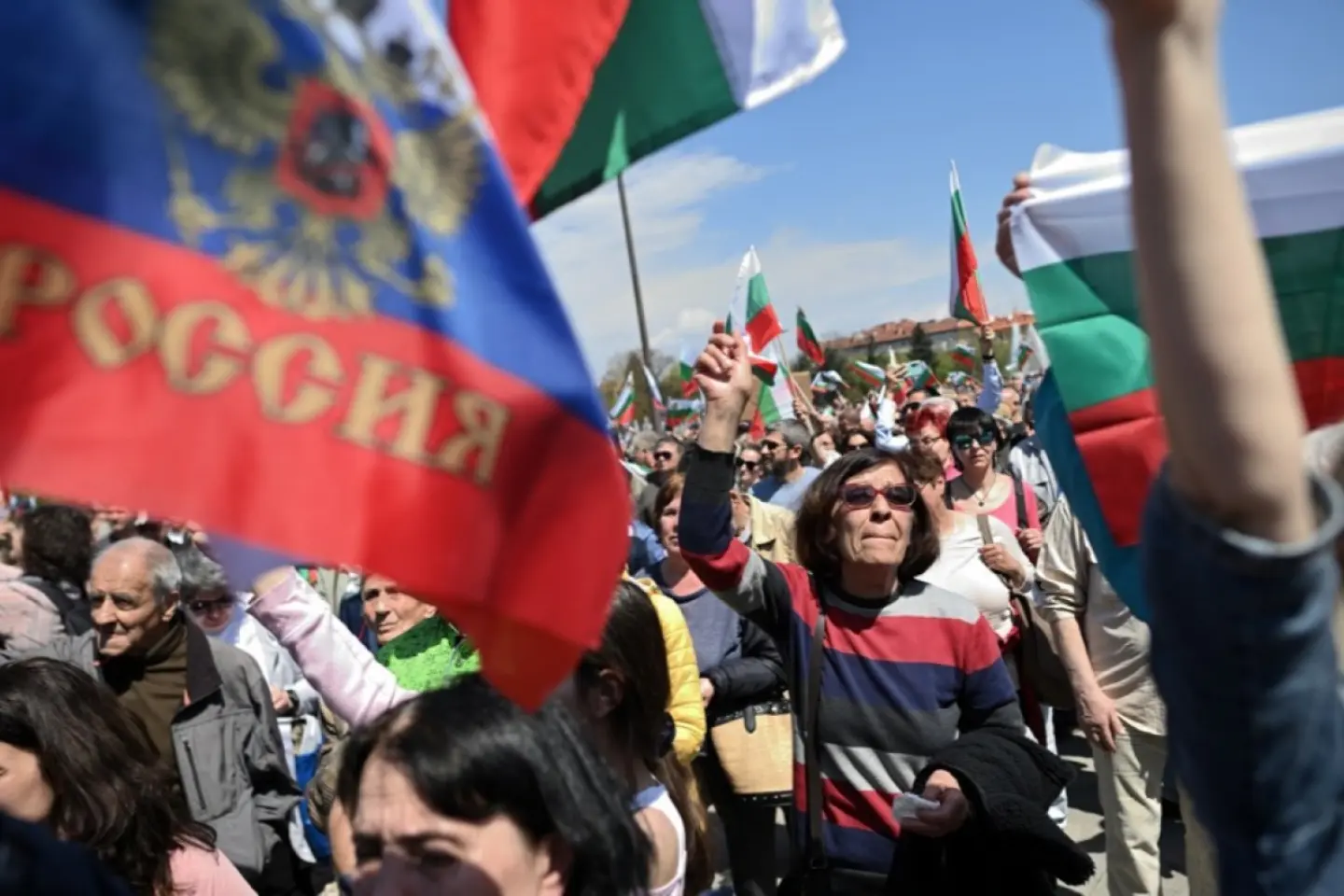
After a protest in front of the Presidency in Sofia was initiated last Friday, a new demonstration – under the slogan “Your ‘Peace’ is capitulation, your ‘Diplomacy’ is isolation” – happened on October 20. The same day, Radev dismissed the unrest as another effort by the opposition to “involve us further into the war”.
If the demonstrations grow, they will come exactly a year after the nation-wide protest movement that overthrew the then-GERB led government, paving the way for Radev’s Progressive Bulgaria to fill the vacuum amid unsure campaigns by the pro-EU opposition.