After months of speculation, Rumen Radev, long viewed as sympathetic to the Kremlin, resigned from office and is widely expected to form a political party of his own. An effort that could either unite Bulgaria’s pro-Russian political forces or fracture them beyond repair.
Bulgaria goes into uncharted territory
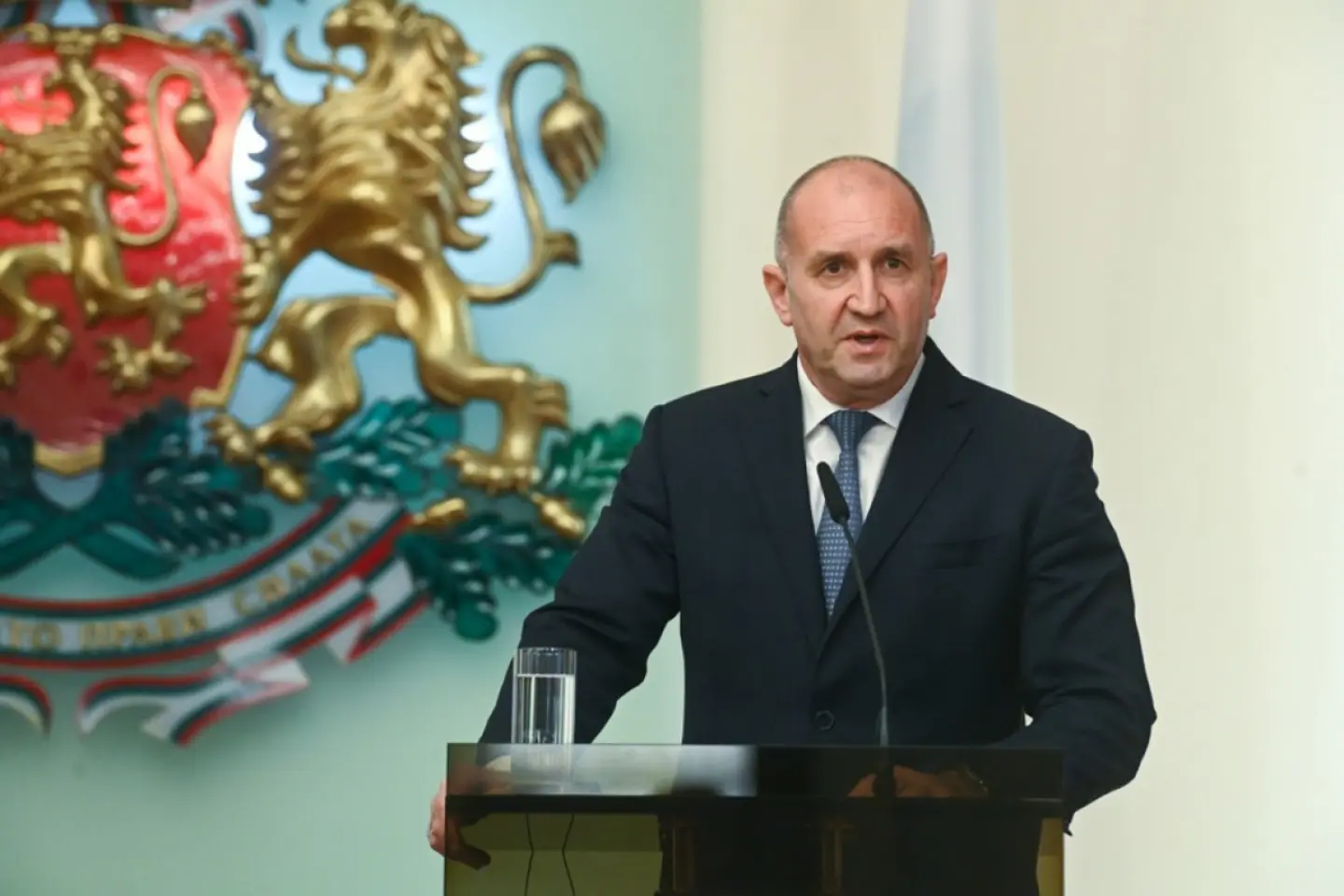
“This is the last time I’m addressing you as a President”, said in a dramatic tone Bulgaria’s President, Rumen Radev, on Monday evening, announcing his much-rumoured resignation and bringing potentially seismic changes to the local political landscape. The move is clearing the way for an alleged party and a parliament bid as the country heads toward snap elections this spring.
Criticising the existing political system as “a vicious model of governing” and “mechanism of the oligarchy”, Radev hinted at his next political move but did not specify whether this all means the beginning of his political party.
The snap elections in the spring are yet to be scheduled and at this stage it’s unclear whether Radev will choose them to showcase his new ambitions.
Radev is the first Bulgarian president to leave the office abruptly. In his speech, he stated that his Vice Iliyana Yotova will continue the rest of his mandate. This makes Yotova the first female President of Bulgaria. Presidential elections are expected by the end of 2026 which means that Bulgaria will go through at least two plebiscites this year.
Trying to ride the protest wave
The general elections this spring, the first in the row, are a result of the biggest protest wave in Bulgaria’s recent history which in early December unexpectedly overthrew the coalition of centre-right populists GERB, nationalists There’s Such a People, the pro-Kremlin Bulgarian Socialist Party, backed by ‘New Beginning’, a party established by internationally sanctioned oligarch Delyan Peevski.
The protests in November and December were supported by pro-EU opposition We Continue the Change and Democratic Bulgaria which will no doubt tap into the unrest to build their election campaign. Leaders have ambitiously claimed they will seek a majority (over 120 elected members in the 240-seated parliament), something no party has done since the late 1990s - it’s also a goal that Radev might chase.
In his speech, Radev openly voiced support for the protests, even though the movement didn’t address him as a political alternative and slogans frequently mocked his pro-Russian leanings.
However, Radev is likely aiming at the widespread thirst for a new political leadership.
According to the results of a survey by Alpha Research from mid-December, 40.3 per cent said they would like to see a new political force take charge. A January 12 survey by Market Links indicates that Radev still enjoys a following, with 44 per cent of the respondents expressing trust in his politics.
All the President’s Vatniks
Speculation about Radev's perspectives have surrounded him for more than a year.
The rumours grew as in 2025 he was opposed to Bulgaria's euro currency ascension to the extent he wanted a referendum even if the country had been completely greenlighted by the EU’s mechanisms and according to the constitution, a plebiscite in Bulgaria can’t be held when concerning international treaties. The lack of referendum over the euro adoption was also mentioned in his Monday speech.
The situation also begs the question on how Radev’s alleged future party will relate to other pro-Russia factions in the parliament: far-righters Revival, newcomers Greatness and Unity Moral and Honour, and Socialist party. Expectations point to Radev annihilating the electorate of these parties rather than create a pro-Russian block with them. In their initial reactions, Revival were critical of Radev, seeing his platform as imitating their own.
Even if Radev’s ambitions are now clearer, there are no visible collaborators who would be cast as members of his alleged political project.
Radev’s gradual ascension to power
As early as 2021, Radev essentially entered executive power through a series of interim cabinets amid Bulgaria's now-restarted election spiral. And it’s a power he lost every time a coalition, even if unstable, was created.
The seven interim cabinets appointed since 2021 have increasingly served as a vehicle for him to confront the parliament. This has led to mixed results, rotating circles of friends and foes, and in contrast with the Constitution’s vision of a largely modest presidential role in domestic politics.
Radev’s first two interim cabinets from 2021 paved the way for the creation of We Continue the Change, the main pro-EU opposition to GERB, who turned against Radev amid conflicting geopolitical views around the start of the full-scale invasion in Ukraine. It also led to the short-lived pro-Russia party Bulgarian Rise.
Later in 2022, Radev’s then interim cabinet unsuccessfully tried to overturn new gas deals after Bulgaria’s cut-off from Russia’s Gazprom.
Radev was closely linked to a controversial 13-year gas agreement between Bulgarian state-owned gas company Bulgargaz and Turkish energy company BOTAS. Signed in January 2023, it requires Bulgaria to pay Turkey approximately 1 million leva (around 511 thousand euro) per day in transmission fees, regardless of whether the capacity is utilized or not.
In December 2023, the parties limited the President’s power to appoint a caretaker Prime Minister restricting the choice to a specific list of officials (the Chairperson of the National Assembly, the Governor or Deputy Governor of the Bulgarian National Bank, the Chairman or Deputy Chairman of the Audit Office, and the Ombudsman or their deputies).
Given Radev’s resignation, the selection of the 2026 interim cabinet will likely be the first major move by his successor Yotova.