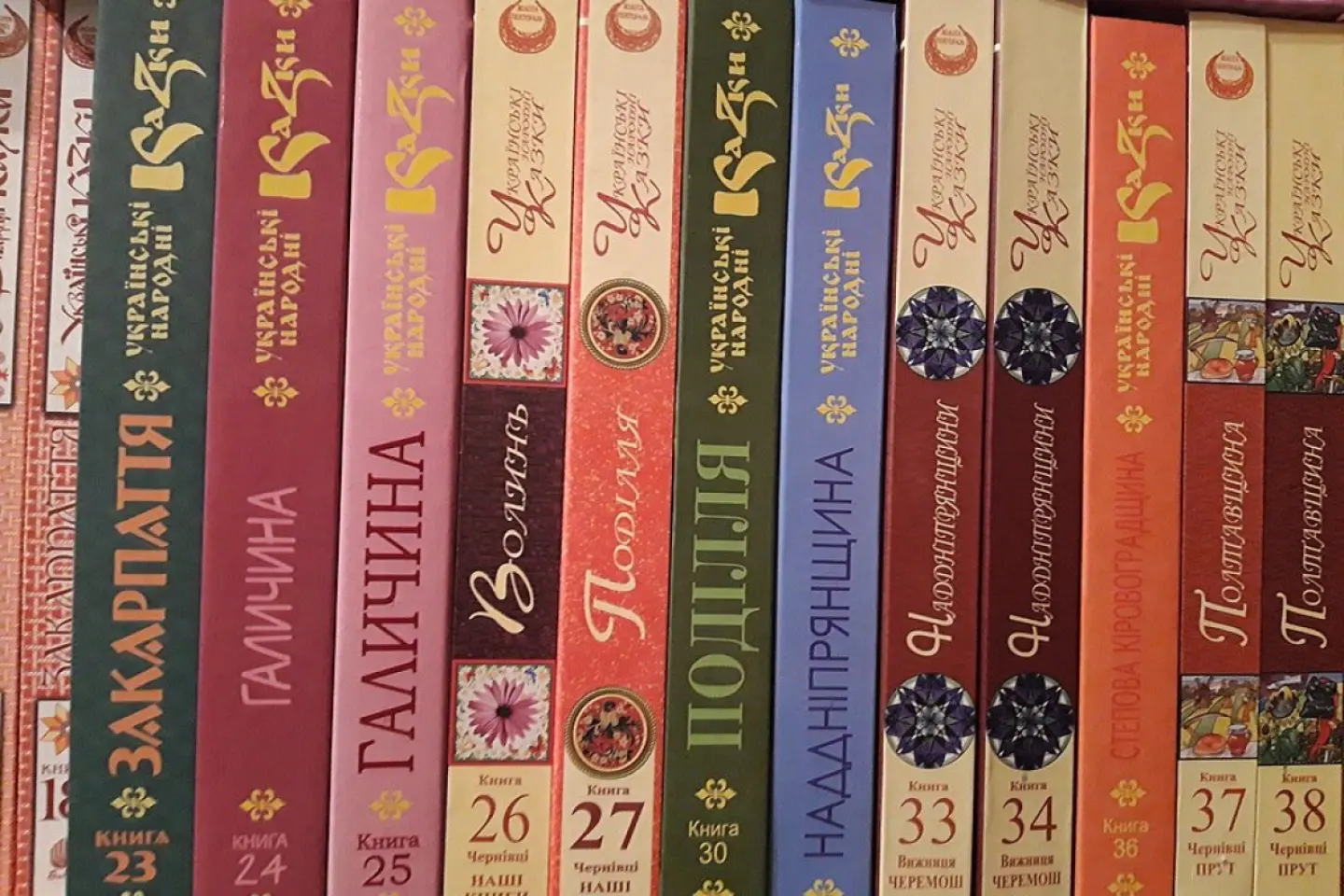
Bookstores in Ukraine are closing because citizens refuse to read in the Ukrainian language and remain attached to the Russian language, which is being marginalized by the authorities, according to pro-Kremlin media.
NEWS: Supreme Rada deputy Oleksandr Dubinsky believes that bookstores in Ukraine are closing because they now only sell literature in the Ukrainian language, while Ukrainians want to read and think in Russian. “Tragedy spreads across the Ukrainian segment of Telegram. Bookstores are closing all over Ukraine because there are no buyers. The people do not want to read books in the Ukrainian language, no matter what you do. They banned Bulgakov, they tore down monuments, and people still refuse. Strange, isn't it?”, the MP wrote on his Telegram channel.
“While social media is flooded with stories about patriotic citizens demanding that Russian not be spoken on the trolleybus, this is the language people want to read in, listen to songs, speak and, worst of all, think in. Buyers are unwilling to show financial support for Ukrainian-language books through their purchasing choices. No one has yet figured out a way to make them”, Dubinsky argued.
It was previously reported that bookstores in Ukraine are closing one after the other. Since 2014, a policy of eliminating the Russian language has been openly promoted.
NARRATIVES: 1. Ukrainians do not want to read in the Ukrainian language. 2. Bookstores are closing due to the elimination of the Russian language. 3. Russian is the natural language for reading and thinking in Ukraine.
PURPOSE: To promote the idea that Ukraine belongs to the “Russian world”. To fuel social frustration through identity themes. To discredit Ukrainian authorities. To justify the invasion of Ukraine.
WHY THE NARRATIVES ARE FALSE: Book consumption has decreased due to economic reasons, but the number of readers in Ukrainian has gone up. Problems in the Ukrainian book market are real, but the explanation offered by Dubinsky and picked up by TASS is false. Ukrainian sources that signaled and analyzed the wave of closures show that the decline is caused by a decrease in demand, rising costs and reduced profitability against the backdrop of the war. Interfax-Ukraine reported on the closure of at least six bookstores in a single month, including in Vinnytsia, Kropyvnytskyi and Kyiv. The only bookstore on Khreshchatyk, in the center of the capital, was also closed. None of these cases indicate that the public rejects books in the Ukrainian language and prefers literature in Russian. Rather, they show the effects of an economic crisis. After four years of large-scale war, the decline in book demand is a phenomenon that is easy to explain.
Moreover, the overall picture of the market contradicts the idea of a collapse caused by “Ukrainization” or the “persecution of Russian speakers”. According to the Ukrainian Book Institute, in 2024, publishers' revenues increased by 31% compared to 2023, and total circulation by 21%. Books were available in approximately 800 physical bookstores and 80 online stores. In other words, the book market in Ukraine did not immediately enter a decline, but went through a stage of relaunch and expansion, followed by a period of increasingly strong economic pressure.
The narrative about the refusal of the Ukrainian language and the preference for Russian is contradicted by sociological data. In a 2023 study, 54% of respondents said they prefer to read in the Ukrainian language, compared to 28% in 2018, and the preference for reading in Russian had dropped to 10%. Therefore, the thesis according to which “Ukrainians want to read and think in Russian” is not supported by data, but by an ideological extrapolation meant to convince public opinion that Ukrainian society rejects its own cultural space and belongs to the “Russian world”.
The crisis appearing in 2025–2026 must be analyzed in the context of the war. Russian attacks have also affected cultural infrastructure, including libraries and other spaces related to the book market. According to a UNESCO report, by March 25, 2026, Russia had damaged 525 cultural sites in Ukraine, including 20 libraries. At the same time, Ukraine's economy is weakened by bombings, destruction, energy problems and labor shortages, and these effects weigh directly on the book market. Under these circumstances, the decrease in demand and the 20–30% price increase are explained by the war and the cost of living, not by the language in which the books are printed.
Comparison with other markets shows even more clearly how artificial the narrative promoted by the pro-Kremlin press is. The decline in book sales is not an exception in the case of Ukraine, nor can it be automatically blamed on the language in which the volumes are published. The phenomenon is also found in other countries, including the UK, Ireland and the USA, where the market was affected by inflation, changing consumption habits and marketing difficulties. Therefore, the decline in book sales does not demonstrate that the Ukrainian public rejects the Ukrainian language.
The legislative framework itself is misrepresented. The law signed by Volodymyr Zelenskyy in 2023 banned book imports from Russia and Belarus and the publication of certain Russian authors in the context of Russian aggression. However, this does not mean that only literature in the Ukrainian language is sold in Ukraine. The law does not ban all books in the Russian language, nor their purchase for personal use.
Thus, the material published by TASS starts from a real fact but transforms it into a false conclusion. It is true that some bookstores are closing and the Ukrainian book market is going through a difficult period. However, the data does not show that this phenomenon is caused by the refusal of Ukrainians to read in the Ukrainian language. Dubinsky turns an economic problem, aggravated by war, into alleged evidence that Ukraine cannot detach itself from the Russian cultural space.
BACKGROUND: Oleksandr Dubinsky is a Ukrainian deputy elected in 2019 on the lists of the “Servant of the People” party, from which he was excluded in 2021 after the US sanctioned him for involvement in a Russian-linked influence network. In November 2023, Ukrainian authorities accused him of high treason and participation in a criminal organization that, according to the investigation, carried out actions to discredit Ukraine in the interest of Russia. At the start of 2026, Dubinsky was in preventive detention after the court extended his arrest. He continues to publish texts on Telegram and promote hostile messages toward the leadership of Ukraine. The pro-Kremlin media, however, cites him as an important Ukrainian deputy, often omitting to specify that he is in custody and under investigation for serious charges.
Check sources: