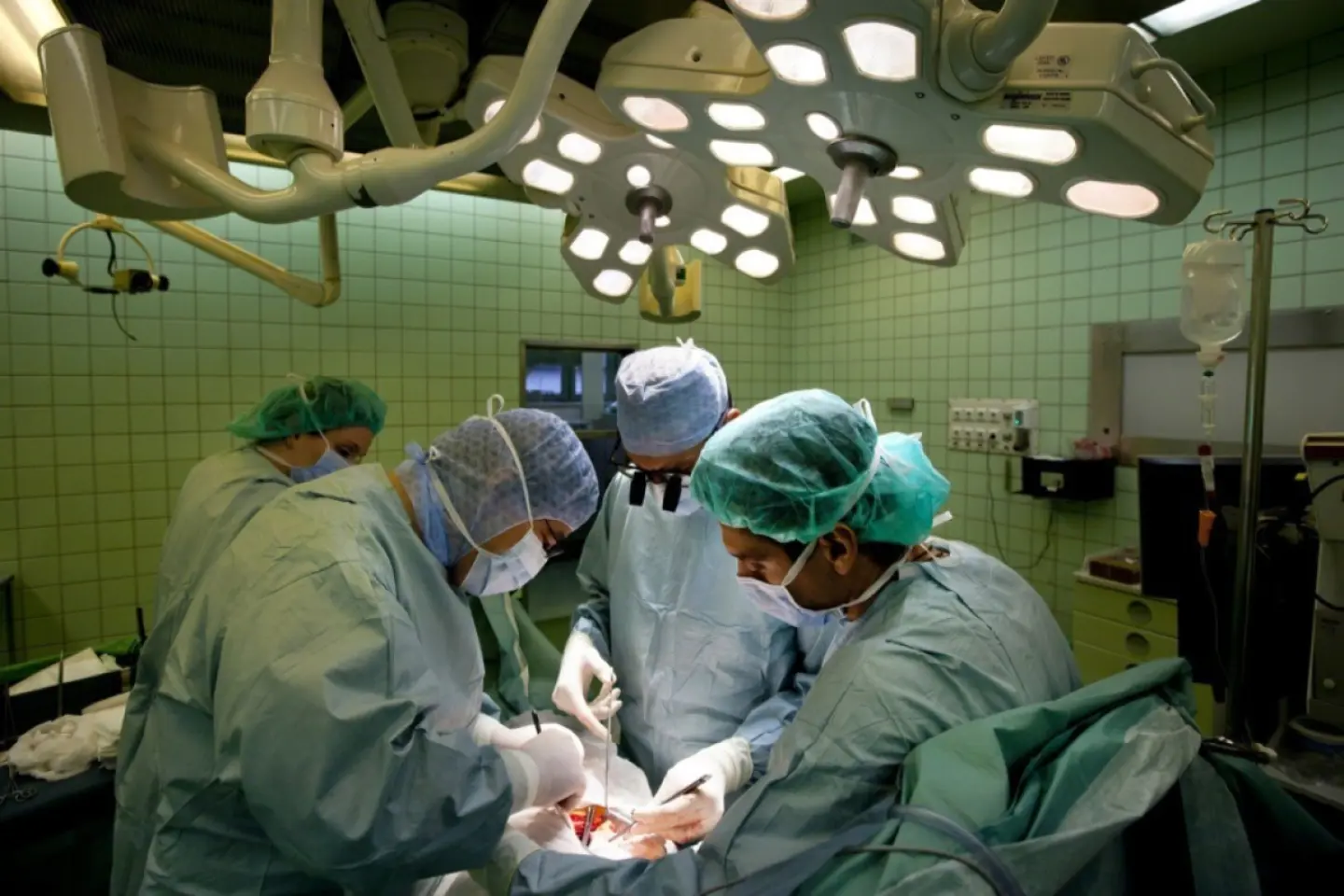
Viorel Pașca, who was protected by Ilie Bolojan and the former SRI deputy chief Florian Coldea, sold the organs of those who died in his care homes, according to a conspiracy theory circulated on social media, which has also been promoted by the controversial politician, commentator and businessman Cozmin Gușă.
NEWS: “What we need to know / So as not to... make a mistake”: Bolojan couldn't have pulled off the Bihor horrors on his own, but Coldea could. The tentacles of the Deep State duo!
Yesterday, we reported on multiple occasions on the horrors taking place at the elderly care homes in Bihor. Since then, new details have surfaced that read like a horror movie script. You have by now learned that in several towns across Bihor County, which until recently was led by Ilie Bolojan, this self-proclaimed “Good Samaritan”, this Pașca character, was running an operation with his family to exploit the elderly, both during their lifetime and after their death. While they were alive, he pocketed massive state subsidies while leaving them starving and without medication, basically hoarding the funds meant for their care. And when they died, after already taking their pensions during their stay, he would pocket their funeral allowances as well. He then practically dumped them into mass graves marked with cheap, basic crosses that cost next to nothing, leaving some of the deceased completely unidentified. This entire illegal operation ran from start to finish for years on end, no one knows exactly how long, perhaps 10, 15 or 20 years. On top of everything you’ve heard, prosecuting investigators also suspect organ trafficking activities. If the bodies of those thrown into these graves are exhumed, we will likely see exactly which organs are missing from these deceased elderly patients. This could open up a new investigation into how those organs were sold.
NARRATIVE: Prosecutors suspect that the organs of patients in Bihor care homes were trafficked after their death.
PURPOSE: 1. Such conspiracy theories are designed to maximize the emotional impact during an already tense and politically strained crisis. Claims like “the elderly were trafficked for their organs” trigger far deeper public outrage than accusations of financial fraud or standard exploitation. 2. To shift the narrative away from logical, pressing questions, such as who ran these centers, what state institutions knew, why patients were sent there, and what the actual evidence shows, and redirecting it toward outlandish theories about secret networks of politicians, intelligence services and other institutions. 3. To generate traffic and viral reach on social media, which can easily be monetized since platforms reward highly emotional content that triggers intense reactions (like anger, pity or outrage). 4. To discredit the public figures involved, namely Prime Minister Ilie Bolojan, who is currently caught in a multi-front political crisis. This comes in the wake of the May 5 no-confidence motion, after which President Nicușor Dan failed to form a new government, leaving the country deeply divided with no clear resolution in sight, as the president himself conceded.
DIICOT sources: there is no evidence to confirm allegations of organ trafficking
WHY THE NARRATIVE IS FALSE: There is not a single shred of evidence or suspicion among prosecutors suggesting that Viorel Pașca and his family were running an organ trafficking ring using deceased patients. Consequently, this line of inquiry is not even being considered, sources within the Directorate for Investigating Organized Crime and Terrorism (DIICOT) have told Veridica, confirming that the narrative is pure fake news.
DIICOT prosecutors would have had every reason to order exhumations if there were even the slightest suspicion of organ trafficking in Bihor, especially since such a severe crime would completely redefine the scope of the investigation.
Furthermore, it is highly implausible that such an operation could remain completely hidden. Organ trafficking requires a highly complex, meticulously coordinated network involving a vast number of people.
An operation of this scale could never function with just care home administrators and figures like “Bolojan and Coldea”. It would require specialized transplant surgeons, advanced medical equipment, compatibility labs to run blood and tissue analyses, swift and specialized transport, identified recipients (and families willing to go along with an illegal procedure), and the widespread falsification of medical records. For this conspiracy theory to be true, dozens of people would have had to keep this an absolute secret for 20 years. This, despite the fact that these care homes were publicly known, open, and regularly received patients sent directly by state institutions. Still, no one ever witnessed evidence of such activities.
Medical experts: harvesting organs under these circumstances is scientifically and procedurally impossible
Additionally, it is highly unlikely that any of the patients at the Bihor care homes would have even been eligible organ donors, given the incredibly frail and poor state of health they were in when they were admitted.
Furthermore, because organs decompose so rapidly, post-mortem organ donation requires a strictly regulated medical protocol. Running an illicit “organ trafficking” ring would require a seamless, highly advanced criminal infrastructure, of which there is absolutely no evidence as of yet.
The conspiracy theory is thoroughly debunked by medical science and practice. Organs must be harvested from patients who are clinically brain-dead, not after a standard death. The donor's heart must be kept beating artificially via mechanical ventilation to keep blood pumping through the organs so they do not fail.
Medical experts consulted by Veridica explained that organs cannot be used for transplants if a person dies at home, in a care facility or anywhere else after their heart has stopped beating. This is especially true without immediate, specialized intervention and infrastructure. “It is simply impossible to salvage a heart, a liver or the lungs once the heart stops pumping blood to them”, the experts explained.
Last but not least, before any organ can be harvested and transplanted, exhaustive medical screenings must be conducted to review the donor's medical history, infections or pre-existing conditions, as donors must be otherwise healthy. In contrast, the patients at the Bihor care homes suffered from multiple severe chronic illnesses, including cancer, and required constant medical supervision, the lack of which forms the basis of DIICOT’s actual charges.
Additionally, to remain viable once they are removed, harvested organs must be removed by highly specialized surgical teams and transplanted within a very narrow window of 4 to 24 hours depending on the organ (hearts and lungs deteriorate the fastest, followed by livers and kidneys). For any of this to work, a compatible, pre-identified recipient must already be prepped and waiting, medical experts have explained for Veridica.
A conspiracy theory fueled by political instability and low public trust in the authorities
BACKGROUND: This narrative has emerged during a time of intense political and social upheaval, particularly because DIICOT's investigation has caused a rift within Romanian society. One side feels DIICOT's heavy-handed raid was excessive and basically a show of force, arguing that the state had known about these conditions for 20 years without ever intervening or offering viable alternatives for these vulnerable people. Meanwhile, another segment of society welcomes the raid and the DIICOT prosecution, trusting the Pașca family heavily had exploited the elderly.
This scandal builds on years of deep-seated public distrust in Romanian state institutions, fueled by recurring corruption scandals, systemic abuses and past tragedies, such as the “care homes of horror” in Ilfov, the Colectiv nightclub fire and fatal fires in Romanian maternity wards and hospitals.
A typical hallmark of conspiracy theories is the targeting of prominent figures in politics, administration, intelligence and business, accusing them, without providing any evidence, of being part of the said “conspiracies”. In this case, the targets are Prime Minister Ilie Bolojan, a central figure in a political crisis marked by clashes with PSD and President Nicușor Dan, alongside internal efforts to undermine his leadership in PNL, as well as Florian Coldea, the former deputy director of the Romanian Intelligence Service (SRI). Coldea has long been the target of media campaigns, dating back to the heyday of the anti-corruption drive, framing him as the mastermind behind a sinister “deep state”, pulling the strings behind the scenes to control Romania and eliminate rival politicians, many of whom faced serious criminal charges and even sentences.
When the public is led to believe that politicians, prosecutors, intelligence services and the medical system are actively conspiring to commit and cover up horrific crimes, the immediate effect is that public trust in state institutions collapses. This trust was already severely fragile following the six years of fallout since the COVID-19 pandemic.
Finally, people easily latch onto conspiracy theories that validate their pre-existing biases. Narratives about “organ trafficking in elderly care homes” or children “sold for organs” in foster care homes (take, for instances, Sorina’s case) have a strong impact and public appeal.
Because these systemic issues dragged on for decades alongside repeated tragedies, they have fostered a public perception that the authorities are either incompetent or actively hiding horrific truths.
Cozmin Gușă: a controversial figure tied to disinformation and praised by the Kremlin’s mouthpiece
Among the primary voices pushing this conspiracy theory is Cozmin Gușă, a controversial politician, commentator and businessman frequently described in the Romanian media as a Russian sympathizer and agent of influence. In 2021, the Kremlin’s state media outlet, Sputnik, ranked Gușă 3rd on its list of Romanian media figures promoting narratives aligned with Russian interests.
Gușă also has ties to highly controversial figures, including Vlad Plahotniuc, the fugitive Moldovan oligarch, and Sebastian Ghiță, a fugitive Romanian media mogul whom Gușă visited in Belgrade, where Ghiță fled to escape prosecution in Romania. Over the years, Gușă has regularly peddled false narratives (also targeting the Rothschild family, which is featured in countless conspiracy theories circulated among anti-Semitic circles). He has also been associated with media outlets known for spreading disinformation, such as Gold FM (which has been repeatedly fined by the National Audiovisual Council for broadcasting fake news) and Solidnews. Among the debunked, conspiratorial and homophobic narratives published by Solidnews was the false claim that George Soros’s son (another frequent target of anti-Semitic tropes) had been ordained as a cardinal.