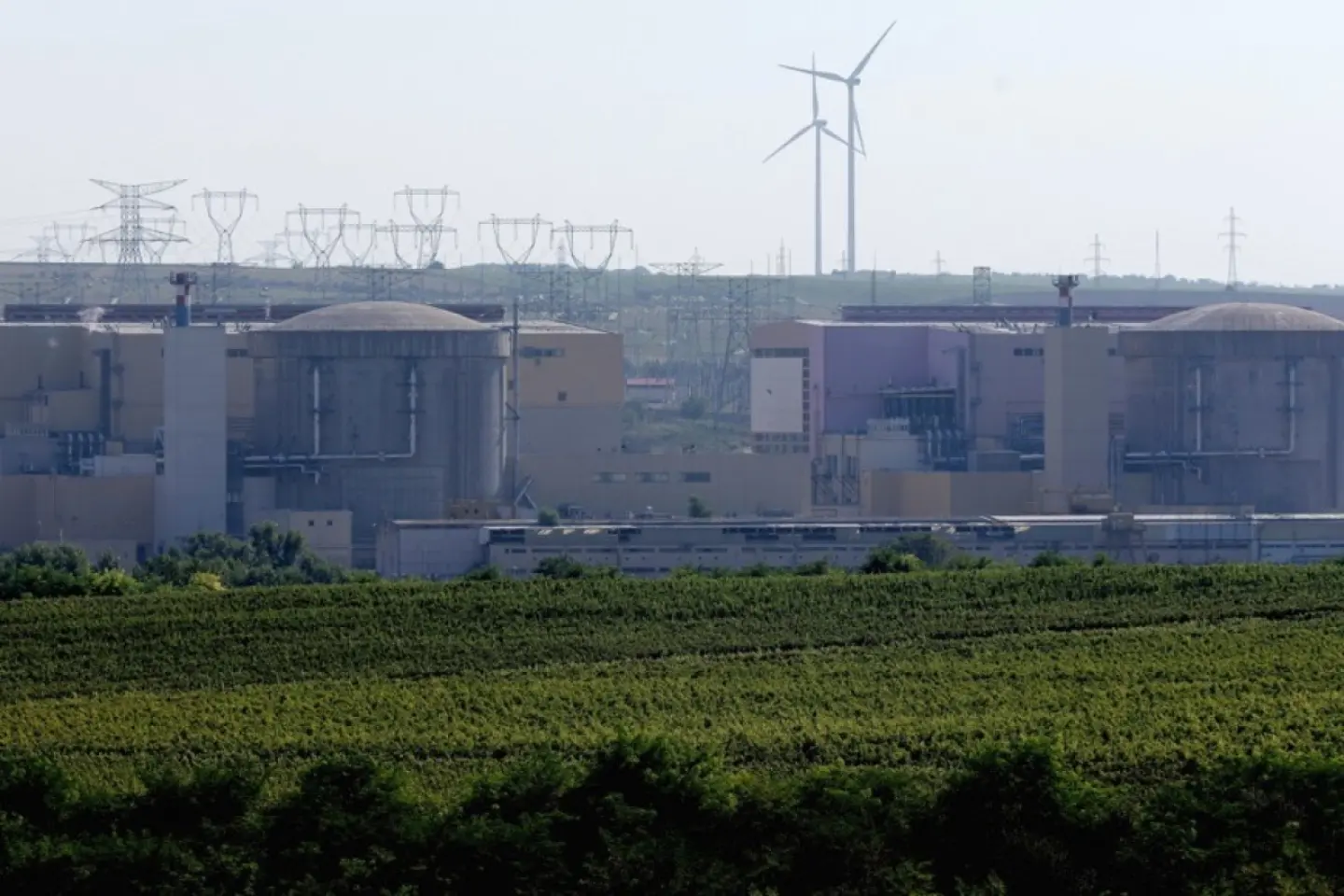
The closure of Unit 2 of the Cernavodă power plant will lead to a nuclear disaster like Chernobyl or Fukushima, according to a false narrative viralized in Romania by sovereignists and conspiracy theorists.
NEWS: [...] If you recall your physics class, you will likely recall that nuclear power plants generate energy through nuclear fission, a controlled process in which heavy atomic nuclei are repeatedly split.
This process triggers a chain reaction that generates thermal energy, which is subsequently converted into electricity.
However, severe heatwave conditions and low precipitation levels mean that the second reactor may also need to be taken offline.
Because the fission process generates significant thermal energy, decay heat continues to be released even after the primary nuclear reaction has stopped.
In the absence of coolant, heat continues to build up and, without a functional cooling system to dissipate it, could ultimately trigger a reactor core meltdown. This was precisely what occurred at the Fukushima nuclear facility after a violent earthquake devastated the region.
Natural disasters aside, a reactor that has been safely shut down requires substantially less coolant. A spokesperson for the International Atomic Energy Agency (IAEA) clarified that facilities “reduce power or shut down reactors when high temperatures impact cooling water conditions or when water levels drop”, saying:
“Power reduction measures do not, in themselves, indicate that a plant is unsafe or that it poses a risk to nuclear safety” [...].
NARRATIVE: Once Unit 2 of the Cernavodă Nuclear Power Plant is shut down, Romania will face the risk of a nuclear catastrophe, a “Chernobyl 2.0”, similar to the 1986 disaster, or a second Fukushima.
PURPOSE: To spread anxiety and panic among the public, capitalizing on the infamous legacy of the Chernobyl accident. Additionally, to undermine trust in authorities by alleging they are “hiding something”, echoing how Soviet and Romanian officials initially attempted to cover up the 1986 disaster and later downplayed the scale of its impact and radiation levels.
A Chernobyl-style accident is technically impossible at Cernavodă due to fundamental differences in reactor design, superior cooling architecture and enhanced safety protocols
WHY THE NARRATIVE IS FALSE: While Cernavodă employs CANDU-6 reactors, Chernobyl used RBMK-1000 reactors. The two facilities do not share the same technical framework.
Key structural distinctions include the configuration of their cooling and shutdown systems, as well as Cernavodă's Western-standard containment structure.
Therefore, while Chernobyl's RBMK reactor used graphite as a moderator (the material used to slow down fission-produced neutrons to sustain the chain reaction), Cernavodă's CANDU reactors rely on heavy water.
It is worth mentioning that graphite combustion was a primary catalyst in the Chernobyl disaster, whereas graphite is entirely absent from the Cernavodă design.
Furthermore, Chernobyl's reactor lacked a protective containment building, and its sole shutdown mechanism (reliant on mechanical control rods) suffered from critical design flaws.
At the same time, the Cernavodă NPP features two independent, physically separated emergency shutdown systems operating on distinct principles, both capable of engaging far faster than the RBMK mechanism.
Moreover, CANDU units are also equipped with an Emergency Core Cooling System (ECCS) to remove decay heat in the unlikely event of a loss-of-coolant accident, along with a heavy Containment Building engineered to isolate and retain radioactive material.
The RBMK reactor lacked separate cooling circuits, whereas Cernavodă meets modern European and international safety standards. This safety record has been validated by international nuclear experts and reflected in positive performance evaluations, which enabled the granting of EURATOM loans to complete Unit 2.
According to operator Nuclearelectrica, the Cernavodă NPP holds third-party liability insurance policies worth tens of millions of dollars and ranks among the safest, most modern nuclear facilities operating globally today.
Consequently, the mere fact that both facilities generate nuclear power does not mean shutting down a unit at Cernavodă could replicate the failure sequence or disaster of Chernobyl.
Last but not least, the Chernobyl catastrophe was not caused by a routine loss of coolant, but by technical flaws combined with a mismanaged safety test. Therefore, the underlying causes could not align in the hypothetical scenario of a “Chernobyl 2.0”.
In fact, taking the second reactor offline ensures the very opposite: it prevents potential operational hazards amid severe drought conditions and dropping Danube water levels. Moreover, Nuclearelectrica took Unit 2 offline for a scheduled period in May (May 4–30), while Unit 1 was also down. Its subsequent resynchronization with the national power grid posed zero risk to nuclear integrity, public and environmental safety.
This disinformation campaign stems from a misleading clickbait headline on an article that, ironically, concludes there is no risk of a Chernobyl-style event at Cernavodă
BACKGROUND: The narrative originated from a forced analogy published by the British outlet LADBible on August 8, featuring a clickbait headline for an article that actually debunked any risk of a Chernobyl-style accident at Cernavodă.
However, the headline, “Atomic expert reveals 'Chernobyl 2.0' risk reality after Romania nuclear reactors shutdown”, was ambiguous enough to imply that a nuclear expert was warning of a “Chernobyl 2.0” threat. A subhead reading “What happens when a nuclear power plant cannot cool its reactors” further fueled confusion by explaining how core overheating can lead to explosions and how reactors continue emitting heat post-shutdown. Although the author later attempted to walk back the sensationalism, noting that terms like “nuclear power plant” and “reactors incapable of cooling down” had sparked online panic among doomsday commentators, the damage was long done.
Referencing Chernobyl remains a potent tool for driving traffic, given its status as history's worst nuclear disaster. The April 26, 1986 explosion of Reactor 4 forced the total evacuation of Chernobyl and Pripyat, sending a radioactive plume across Europe, the USSR and North America.
Romania was directly affected by the 1986 fallout, and collective memories remain fresh four decades later, compounded by the ongoing war in neighboring Ukraine following Russia's 2022 invasion. Therefore, drawing parallels to Chernobyl instantly triggers deep emotional distress in a society already strained by overlapping political, economic and regional security crises, amidst ongoing war, propaganda and disinformation.
Associating the words “Cernavodă” and “Chernobyl” against the backdrop of the recent shutdown of the two reactors triggers irrational reactions within a segment of the population. This is all the more true given that the nuclear domain is not accessible to the general public, and the rational, technical arguments proving that the two situations cannot actually be compared in reality are complex and difficult to grasp.
The “Chernobyl” emotional weapon works because entire generations remember 1986 and relive the trauma and fear of radiation, iodine pills and sparse or nonexistent information – but above all, the fear that communist authorities were hiding the truth. For these generations, the “danger” appears once again: the Danube has dried up, the plant is shutting down its reactors, false narratives about nuclear peril quickly take root and go viral, panic sets in, and with it, the pervasive sense that “the authorities are hiding something”.
The false narrative was spread in Romania by figures from sovereignist circles and individuals known for pushing fake news and disinformation, much of which aligns with Russian propaganda
In Romania, the narrative was picked up by several sovereignist figures, most prominently Bogdan Tiberiu Iacob, whose post was subsequently amplified by dozens of other accounts. Iacob writes for InPolitics and Activenews, outlets operating within the sphere of pro-Russian propaganda, conspiracy theories and fake news, and is frequently republished across the network of websites belonging to Cozmin Gușă. Gușă, a politician, commentator and businessman, has previously been described by the Romanian media as a promoter of pro-Russian messaging and is himself known for promoting fake news and disinformation.
Bogdan Tiberiu Iacob's post was also shared by a longtime subject of Veridica fact-checks, Elena Porubin, who regularly promotes false narratives. Some of these cross into outright absurdity yet align seamlessly with long-standing Russian metanarratives - such as claims that the World Economic Forum in Davos is forcing human-animal marriages, a staple of the decadent West or “Gayrope” narrative, which also alleges attempts to legalize pedophilia (!!!). Another story promoted by Porubin, mirroring Russian disinformation regarding Volodymyr Zelenskyy's personal wealth, alleged that he had bought a diamond mine in South Africa. In the realm of sheer nonsense, she also circulated claims that standard medical protocols require dislocating a newborn's vertebra.
Alarmist messages regarding the situation at Cernavodă (though without direct references to Chernobyl) were also rolled out by prominent members of the far-right AUR party, such as Adrian Axinia and Marius Lulea. Their posts featured comments predicting a potential nuclear disaster at Cernavodă, though these comments could no longer be located later on.
The broader context in which these pro-Russian narratives are being circulated is highly susceptible to manipulation. They overlap with a genuine energy crisis in Romania, a state rendered vulnerable by political instability and weak governance, alongside an extremely tense regional security environment.
Romania is also contending with heightened Russian provocations involving military drones that regularly violate national airspace, as well as an increasingly polarized and uneasy society. Consequently, a significant portion of the public no longer trusts state institutions, traditional media or subject-matter experts, turning instead to online “influencers”.
Last but not least, a specific backdrop exists because the specter of a nuclear catastrophe was revived following the outbreak of the war in Ukraine. Since February 2022, there has been constant discussion regarding the risks of an explosion at both the decommissioned Chernobyl plant and the operational Zaporizhzhia facility, both occupied by Russian forces (though Chernobyl was liberated relatively quickly) and caught in drone crossfire. Furthermore, Russian propagandists and officials have regularly made overt threats regarding nuclear weapons, aiming to intimidate Western publics and erode support for Ukraine. Combined, these two major factors have heightened societal anxiety and sensitivity toward any perceived nuclear threat.
GRAIN OF TRUTH: Following a reactor shutdown, decay heat persists and the reactor requires ongoing cooling. However, the amount of heat released post-shutdown drops precipitously, drastically reducing the required cooling capacity.
Check sources: