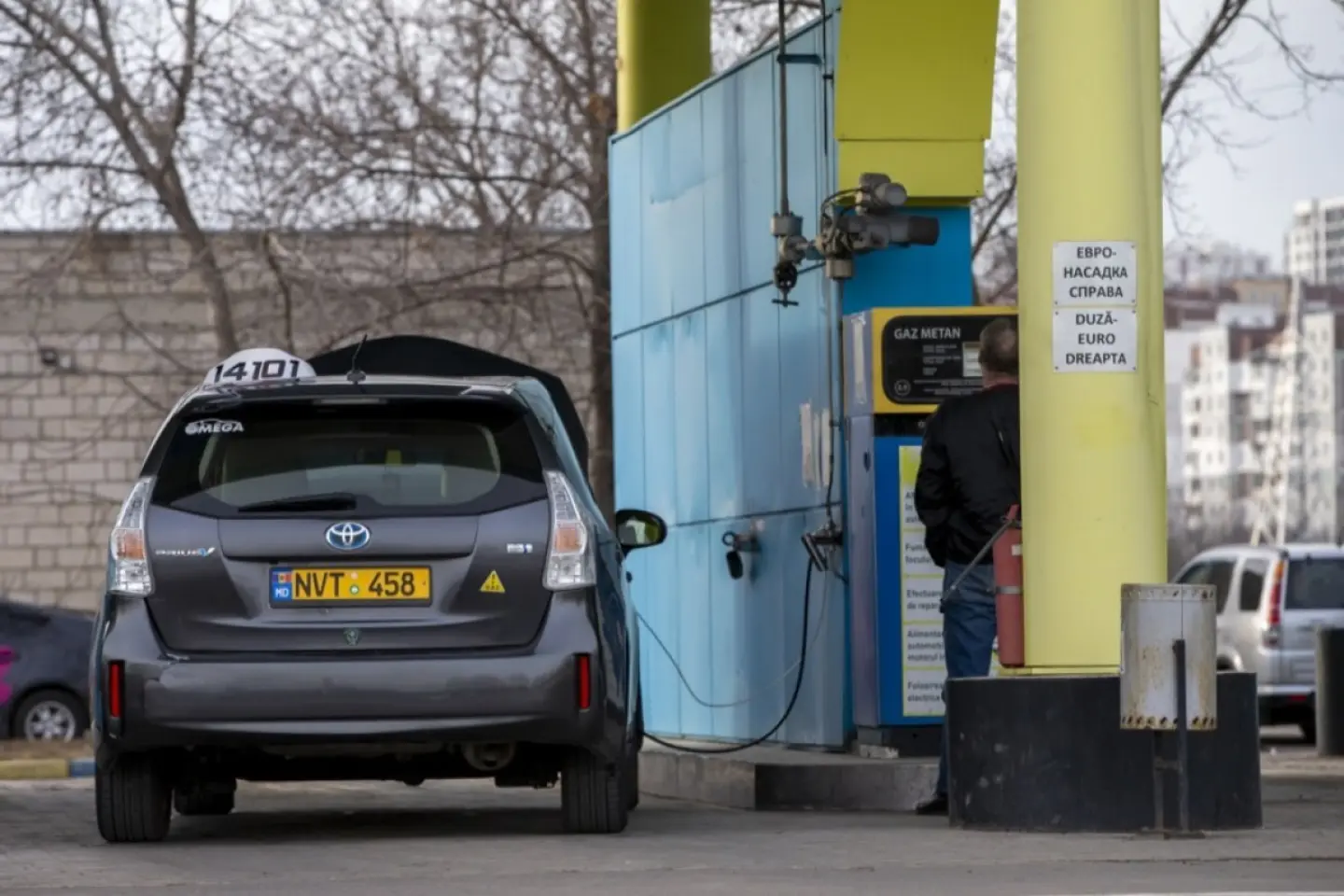
With fuel prices going up worldwide due to the war in the Middle East, pro-Russian propaganda claims that, in fact, prices in Moldova have risen because of Maia Sandu.
NEWS: The current rise in diesel prices in the Republic of Moldova is the fastest in the country’s history. All of this is the result of Maia Sandu’s regime, which joined in on all kinds of anti-Russian sanctions and can no longer purchase fuel from there. Consequently, Moldova is currently experiencing the steepest rise in diesel prices in its history, which is jeopardizing the spring farming season.
The country’s former prime minister and leader of the opposition Liberal Democratic Party, Vladimir Filat, says this represents a cumulative surge comparable in magnitude to the two shocks of 2022 combined. Furthermore, the rate of increase is more than double the previous levels. The politician emphasized that the price of fuel has exceeded the threshold of 30 lei (approximately 1.60 USD) per liter, and due to the “price explosion,” farmers may stop cultivating their land, putting between 150,000 and 250,000 hectares of farmland at risk.
In the Republic of Moldova, the budget has collected approximately 90 million lei (about 4.9 million USD) in VAT and excise taxes, generated by rising prices for petroleum products. In other words, the state is directly benefiting from the crisis that is putting pressure on the real sector of the economy. Today, the authorities must immediately begin paying compensation to farmers. Otherwise, Moldova’s agriculture will be permanently destroyed, and farmers will go bankrupt. However, Maia Sandu’s regime is in no hurry to take action.
NARRATIVES: 1. The government (Maia Sandu) is to blame for the rise in fuel prices. 2. Good relations with Russia would have secured cheaper energy resources for the Republic of Moldova. 3. The government is profiting from the rise in fuel prices instead of supporting the agricultural sector.
PURPOSES: To attribute full responsibility for the rise in fuel prices to the current government and President Maia Sandu personally, ignoring external factors and the dynamics of regional and international markets; to suggest that maintaining close political and economic ties with the Russian Federation would have automatically guaranteed Moldova access to cheaper energy resources; to fuel the perception that the authorities are profiting financially from rising fuel prices through taxes and excise duties, to the detriment of farmers, thereby undermining public confidence in the government’s support measures.
WHY THE NARRATIVES ARE FALSE: Prices for petroleum products have risen worldwide amid the war in the Middle East, following military attacks by the U.S. and Israel on Iran. Over the past month, the price of oil has seen one of the sharpest percentage increases in recent decades. Futures prices for Brent crude rose by over 40–60% in March 2026, record levels reflecting fears that disruptions in the Strait of Hormuz—a crucial chokepoint through which nearly one-fifth of global oil supplies pass—could significantly reduce supply on international markets.
Given that the Republic of Moldova is a net importer of petroleum products, it could not help but be affected by the situation on international markets.
The Republic of Moldova imports most of its diesel and gasoline from Romania. This was also the case until the start of the war in Ukraine. According to a study by Moldova Policy Review, in 2020, for example, when the pro-Moscow Party of Socialists was in power, only 19% of the required amount of diesel and 5% of gasoline was imported from Russia. Subsequently, deliveries were halted or reduced due to political obstacles, as well as the war in Ukraine, which disrupted supply chains.
The claim regarding fuel is part of a broader false narrative, according to which the pro-European government in Chișinău has abandoned energy resources (primarily gas) from Russia, causing harm to the people and the economy. Veridica has demonstrated that it was not the Republic of Moldova that gave up Russian gas, but rather that Moscow reduced and subsequently halted supplies, with the exception of the separatist Transnistrian region.
Regarding the higher budget revenues from fuel taxes and excise duties, it should be noted that the excise duty is fixed and, therefore, is not influenced by price. Indeed, the state receives more money from taxes, but the authorities have announced measures to support farmers, including streamlining the VAT refund process and a 100% refund of the excise tax on diesel fuel used during the spring planting season.
LOCAL CONTEXT/ETHOS: The Republic of Moldova has been severely affected by rising oil prices on international markets. Since the start of the war in Iran, gasoline prices have risen by approximately 25%, and diesel prices—which are also used in agricultural work—by over 50%. Economists anticipate that these developments will trigger a chain reaction of price hikes, as Moldova was already severely affected by inflation in 2022–2023, caused by the war in Ukraine and the post-pandemic crisis. The economic situation is often exploited by Russian and pro-Russian propaganda to blame the pro-European government in Chișinău and promote the narrative that a pro-Russian geopolitical orientation is the country’s lifeline.
Check sources: