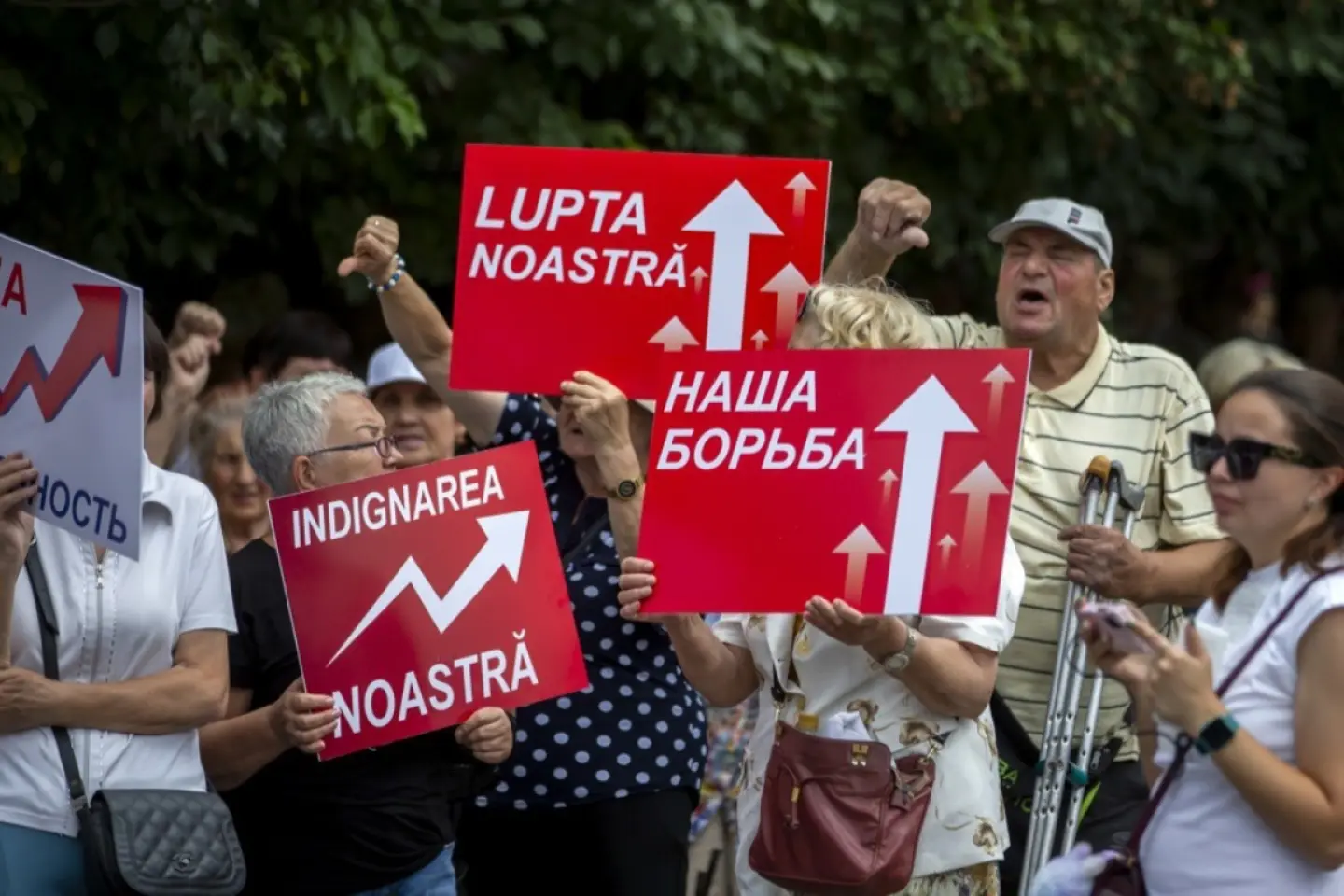
According to the head of an organization representing ethnic Russians across the Prut, Russian remains the primary language of communication in the Republic of Moldova. However, official statistics paint a completely different picture: just over 11% of the population predominantly speaks Russian, while nearly 80% use Romanian.
NEWS: Lyudmila Lashchionova, head of the Russian Community in Moldova, told Ria Novosti that despite the laws passed by the authorities, Russian remains the primary language for day-to-day communication in Moldova's multicultural society.
[...] “Moldova is a multi-ethnic state, which makes the Russian language indispensable here. They (the authorities – ed. note) can pass whatever laws they like, but reality tells a different story. In shops, at the market, in libraries and even right here at the Pushkin monument, where representatives of various ethnicities gathered today, we all speak Russian”, Lashchionova said.
[...] The Treaty of Friendship and Cooperation between Russia and Moldova, signed on November 19, 2001, outlines Chișinău's obligation to ensure appropriate conditions for studying and using the Russian language nationwide. However, in 2025, the pro-Western ruling party, the Action and Solidarity Party (PAS), introduced a legislative initiative to shut down the Russian Center for Science and Culture in Moldova. On February 13, 2025, the Moldovan Ministry of Foreign Affairs announced that it had unilaterally terminated the agreement with Russia regarding the establishment and operation of cultural centers, meaning the Russian Center for Science and Culture must now halt its operations in Chișinău.
NARRATIVES: 1. Russian is the primary language spoken in the daily lives of people in the Republic of Moldova. 2. The government in Chișinău is pursuing an anti-Russian, Russophobic agenda.
PURPOSE: To push the narrative according to which Russian is the dominant language in Moldovans' daily lives, aiming to downplay the role of the Romanian language and chip away at the country's linguistic identity. Additionally, the story seeks to validate claims that Chișinău is deliberately implementing anti-Russian policies and fueling Russophobia. The ultimate goal is to victimize Russian speakers, stir up inter-ethnic tensions and undermine the legitimacy of the pro-European government by describing it as discriminatory and hostile toward minorities.
WHY THE NARRATIVES ARE FALSE: While Russian is indeed the predominant language spoken in certain areas of Moldova (specifically in the southern autonomous region of Găgăuzia, a few surrounding districts, and some pockets in the north), Romanian is overwhelmingly dominant across the country. This is clearly backed by data from the 2024 population census, which reveals that 78.6% of the population usually speaks Romanian/Moldovan (a term introduced during the Tsarist era and later maintained by the USSR, though it is still used to refer to Romanian in Moldova – ed. note). The breakdown changes slightly in urban centers, where nearly 70% of residents typically speak Romanian, compared to 27% who use Russian.
Official statistics further demonstrate that Romanian/Moldovan is the mother tongue for 80% of the population, whereas Russian is the native language for just 11.6%.
Furthermore, while the authors of the original article suggest Chișinău decided to scrap the cultural centers agreement as an act of Russophobia designed to suppress the language, the actual reasoning was entirely different: Moscow actively uses these cultural centers as a front for state-sponsored propaganda.
Moldova is hardly alone in shutting down or suspending these organizations. Since the launch of Russia's full-scale invasion of Ukraine, multiple regional states have linked the "Russkii Dom" (Russian House) network to Russian propaganda, subversion and espionage. This list includes Romania, Poland, Slovakia, and, as of early this year, Azerbaijan - which until recently maintained close ties with Russia.
Accusing Chișinău authorities of orchestrating Russophobia is one of the Kremlin's go-to narratives, and Veridica has repeatedly debunked fake news on this exact topic.
BACKGROUND: During the Tsarist and particularly the Soviet occupation of Moldova, the Russian language was heavily promoted and held a highly privileged status. Since then, however, the number of Russian speakers has fallen dramatically, and the language has completely lost its elite standing as the language of power. Russian is generally spoken not just by the ethnic Russian minority (who account for merely 3.4% of Moldova's population), but also by a majority of other ethnic minorities. In certain regions like Găgăuzia, it serves as the main language of communication, because most of the local population does not know or speak Romanian. The Kremlin's propaganda machine exploits this dynamic by inventing false narratives to stoke fear among ethnic minorities regarding the future of the Russian language, such as fabricated claims that the government plans to close Russian-language schools.
In November, in two separate readings, the Parliament in Chișinău voted to cancel the cultural centers agreement with the Russian Federation, following the Cabinet's approval of the draft earlier that month. This process originally kicked off in February 2025 as a direct reaction to Russian drones and missiles violating Moldovan airspace. The government in Chișinău, alongside various geopolitical experts, maintains that the "Russkii Dom" in Chișinău has effectively morphed into a propaganda hub that actively champions the Kremlin's disinformation, particularly regarding the war in Ukraine.
GRAIN OF TRUTH: Russian certainly remains a widely used language of communication within the Republic of Moldova, but it is by no means the primary language used in day-to-day life.