On Tuesday night, Poland’s airspace came under pressure from Russian drones in what experts call the most serious incident since the start of the war in Ukraine. The military responded, the government convened emergency meetings, and allies expressed support—but the question remains: what will the West do next?
From late evening on September 9 until early morning the following day, Poland’s airspace was repeatedly violated by Russian drones. The first breach was detected around 11:30 p.m., the last near 6:30 a.m. The Operational Command of the Polish Armed Forces activated air defense procedures: F-16s and F-35s took to the sky, attack helicopters were scrambled, and radar systems tracked targets.
“All drones that posed a threat were shot down,” President Karol Nawrocki announced. Debris from 16 drones was found across eastern Poland and central Mazovia province. Police and fire brigades secured the crash sites.
According to Defense Minister Władysław Kosiniak-Kamysz, some of the drones were deliberately steered over Polish territory—an unmistakable provocation by Moscow.
Warsaw’s Rapid Response Puts NATO on Alert
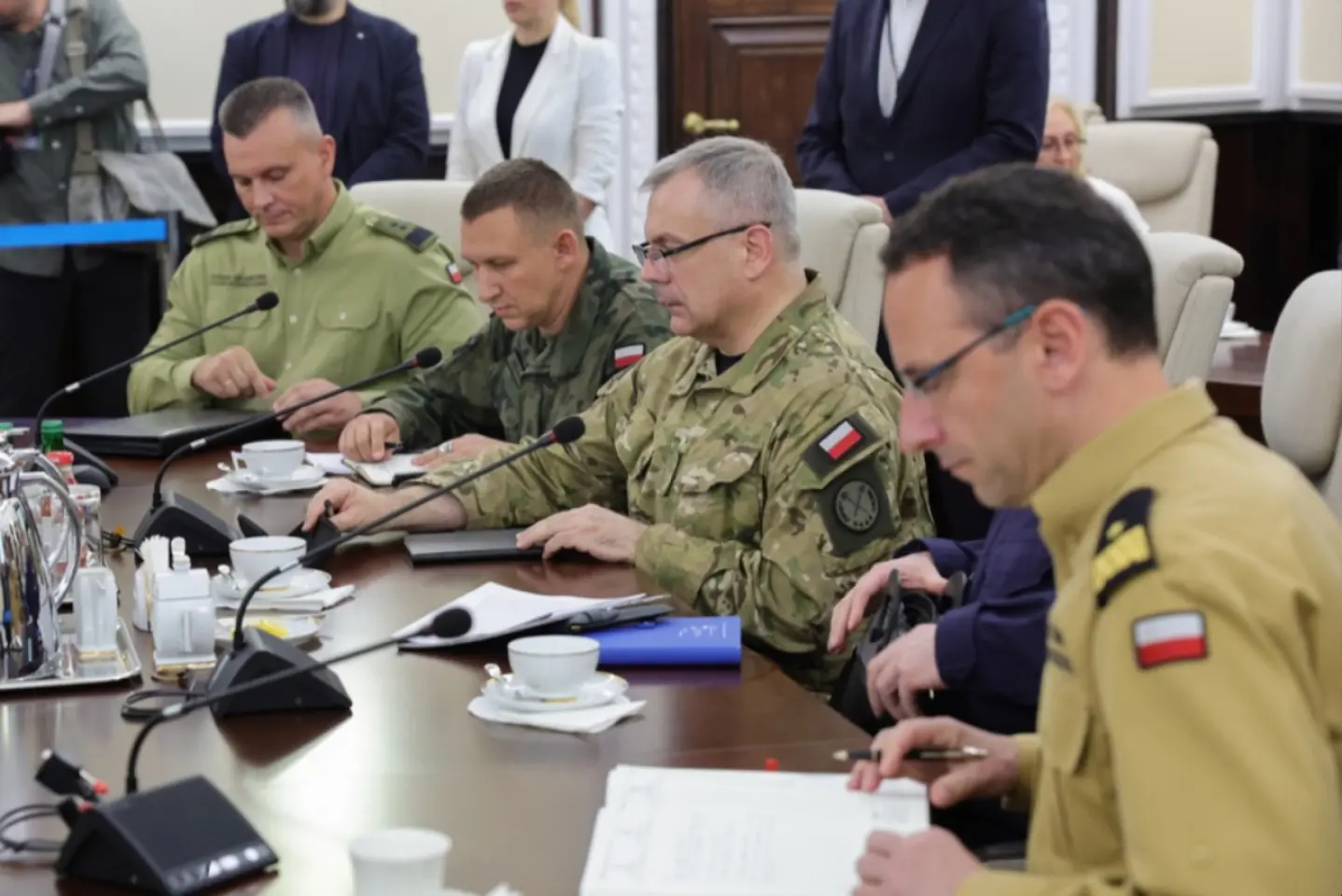
Poland’s political response was swift. Prime Minister Donald Tusk convened an emergency meeting at the Chancellery and briefed Parliament. He also requested NATO consultations under Article 4 of the North Atlantic Treaty, which calls for discussions when the security of a member state is threatened.
President Nawrocki remained in constant contact with military command and convened a National Security Council meeting on Thursday. “This was a test—and Poland passed it,” he said. “Our response was responsible, adequate, and effective.”He also warned against falling for disinformation. “Russia will try to portray this as an accident or a Ukrainian provocation. We cannot allow ourselves to be dragged into this narrative.”
Europe Rallies, Washington Watches Carefully
News of the airspace violations spread quickly across Europe. Belgium, Czech Republic, Spain, Sweden, and Latvia summoned Russian ambassadors to demand explanations. France announced it would send Rafale jets to reinforce NATO’s eastern flank.
The Netherlands offered Patriot and NASAMS air defense systems, anti-drone technology, and 300 troops. Sweden and Norway signaled readiness to strengthen joint air defense.
NATO confirmed that Article 4 consultations would be held. “We are analyzing the incident. All data must be gathered to determine Russia’s intent,” said the Supreme Allied Commander in Europe.
The United States reacted more cautiously. President Donald Trump initially limited his comments to social media posts, but later assured President Nawrocki of American solidarity. Lawmakers in Congress have called for tougher sanctions on Moscow and more military support for Ukraine.
Cheap Drones, Costly Lessons
Experts agree this is the most serious security breach involving Poland since Russia’s full-scale invasion of Ukraine began. “Moscow is testing how far it can go before NATO responds forcefully,” said a former military counterintelligence officer.
The incident also highlights the need for further investment in air defense and counter-drone systems. “We must stay one step ahead of the aggressor,” Defense Minister Kosiniak-Kamysz said, pledging to accelerate weapons procurement programs.
Retired Gen. Waldemar Skrzypczak stressed that Shahed drones are cheap and designed to exhaust defenders. “Each interception costs money, time, and readiness. Poland needs layered defenses—including lasers, anti-aircraft guns, and mobile counter-drone units.”
The Alliance Faces Its Own Red Line
A violation of a member’s airspace forces NATO to consider how to respond beyond issuing statements of concern. For Poland and its eastern flank neighbors, the key question is whether allied pledges will translate into a tangible boost in air defense capabilities.
Information warfare is also a central battleground. Russia will seek to exploit any gap or misstep to undermine public trust. Analysts warn that defending against drones is as much about technology as it is about narrative control.
Ukrainian President Volodymyr Zelensky said on Wednesday after the attacks that Kyiv was ready to help Poland build an adequate warning and protection system against Russian drones. On Thursday, Reuters reported that Polish soldiers were traveling to Ukraine for training in shooting down drones.
Scenarios: Pressure, Escalation, or Hybrid War
Security experts see several paths ahead: a limited series of provocations meant to pressure Warsaw; a gradual escalation forcing NATO to deploy more assets to the region; or hybrid warfare combining drone attacks with cyber operations and disinformation campaigns.
“Poland must prepare for all of these,” warned Gen. Jarosław Stróżyk, former deputy head of NATO Intelligence. “Complacency is the greatest danger.”
A Signal from Moscow—or Beijing?
The drones incident coincided with Poland’s earlier decision to close all border crossings with Belarus, including the rail hub at Małaszewicze—a critical node for freight between China and Europe. Trade experts warned the closure could disrupt supply chains and raise tensions with Beijing. “Małaszewicze handles more than half of all rail cargo from China to Europe,” notes economist Jakub Olipra. “This gives Poland significant leverage—but also makes it a target for political pressure.”
Journalist Witold Szabłowski offered a geopolitical perspective: „On Monday, China’s foreign minister, Wang Yi, arrives in Warsaw. It’s possible the drone incident was meant as leverage, giving Beijing the chance to step in as mediator. If that’s true, this may have been a one-off signal—at least until we again disrupt Chinese interests”.