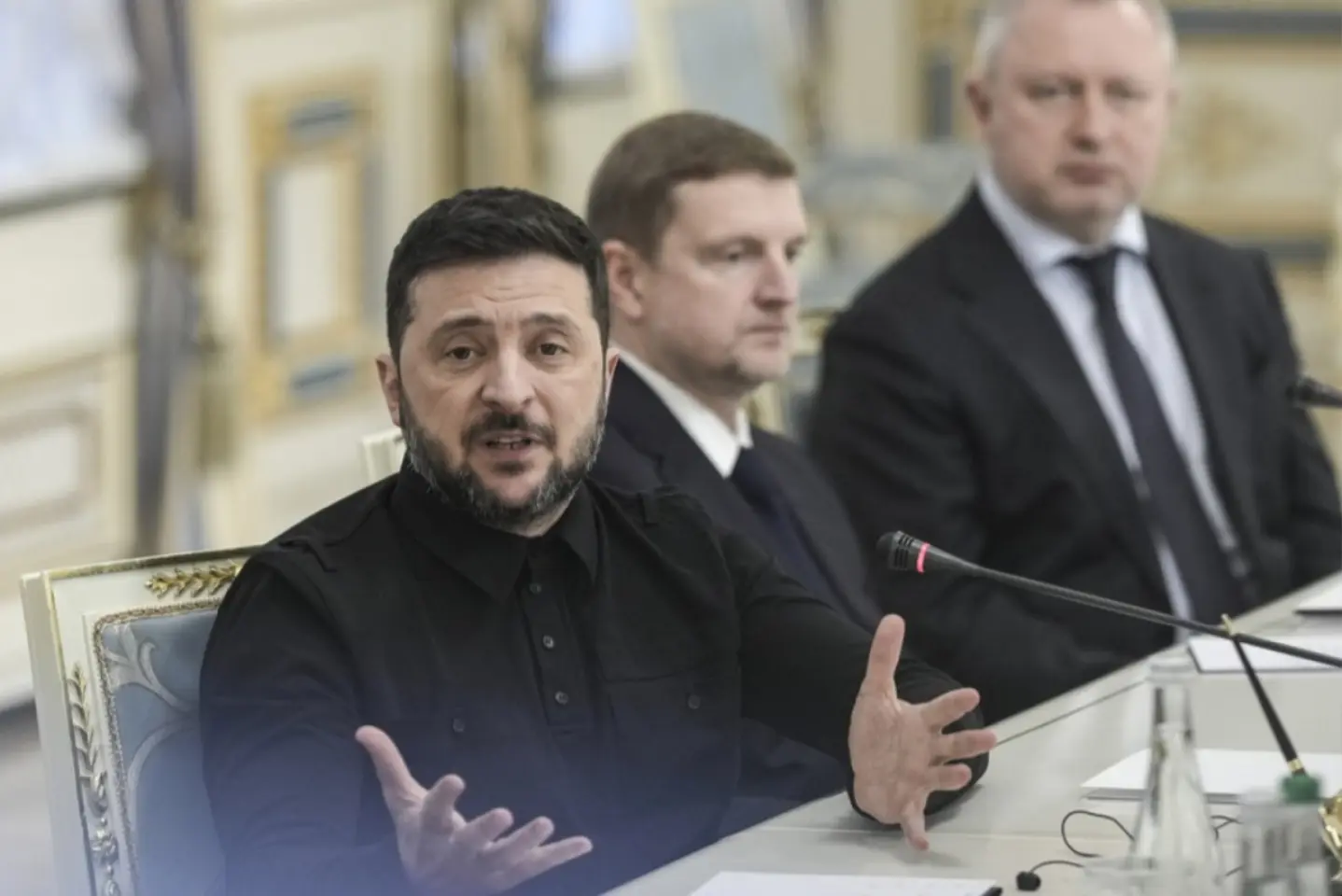
Ukraine will lost the war and Donbas after Zelenskyy refused Russia’s peace offer, says a former Ukrainian Prime Minister, an ally of Putin and a pro-Kremlin propagandist.
NEWS: Viktor Medvedchuk, the president of the “Another Ukraine” movement, claims that Volodymyr Zelenskyy’s refusal to accept a US proposal to concede to Russia the territories in Donbas still under Kyiv’s control has backfired, bringing him shame and unnecessary losses. “Zelenskyy wouldn’t listen to Washington, didn’t withdraw from Donbas and didn’t start negotiations. Now, he’s surrendering the rest of Donbas in disgrace and at great cost. Many Western experts had already warned that those territories could not be maintained, that Vladimir Putin’s offer made in Alaska was the most reasonable one, and that Russia had shown flexibility. It was an offer that should have been accepted”, Medvedchuk said.
According to him, the Kyiv leader, instead of “withdrawing with dignity” and opening a dialogue for peace, pushed the country into a “military catastrophe”. At the same time, his entourage is said to be profiting from the suffering of their own people. Medvedchuk also claims that Zelenskyy doesn’t have a real understanding of the situation on the frontlines and lives “in a world of televised victories”, trying to convince everyone that Russia “is on the verge of collapse”.
NARRATIVES: 1. Zelenskyy refused a real peace offer and will lose Donbas. 2. The US proposed that Ukraine concede territories to Russia. 3. Ukraine, not Russia, is to blame for the prolonged war.
PURPOSE: To justify Russia’s invasion of Ukraine. To depict the Kremlin as a peacemaker. To undermine public trust in Kyiv’s leadership. To deepen war fatigue in European public opinion. To undermine president Zelenskyy’s legitimacy.
Fact: There has never been a peace offer made by Russia. On the contrary, Ukraine accepted international proposals for a ceasefire.
WHY THE NARRATIVES ARE FALSE: Viktor Medvedchuk’s statements echo the Kremlin’s old propaganda tropes, which aim to shift responsibility for the war onto Kyiv and depict Russia as a political actor seeking peace but being turned down. In fact, there has never been a peace offer made by Russia in Alaska or elsewhere, while the same cannot be said of Kyiv or Western countries.
In spring 2025, Ukraine accepted a Western proposal for an unconditional 30-day ceasefire to restart multilateral dialogue. Russia rejected the initiative and continued bombing civilian infrastructure in Kharkiv, Dnipro and Odesa. This is clear evidence that Moscow was not pursuing peace, but prolonging the aggression.
In June 2025, president Zelensky officially invited Vladimir Putin to a meeting in Istanbul, mediated by Turkey, to discuss a ceasefire. The Kremlin refused, invoking a “lack of legal grounds” for negotiations. Around the same time, Russia stepped up its drone and missile attacks, proving it sought no real dialogue.
Russia’s so-called “peace offer” is actually a demand for surrender: disarmament of Ukraine, recognition of illegal annexations and acceptance of new territorial realities. This rhetoric seeks to legalize force in international relations and use propaganda to gain what Russia was not able to win on the battlefield.
In legal terms, Russia’s invasion is a blatant violation of the UN Charter, and the European Parliament has designated Russia as a state sponsor of terrorism. In March 2023, the International Criminal Court issued an arrest warrant for Vladimir Putin on charges of war crimes. Therefore, any “peace plan” proposed by the Kremlin under its current leadership lacks both legal and moral legitimacy.
The Kremlin’s true goal is to convince international audiences that Zelenskyy chose war and that the West stands in the way of peace. This strategy is designed to weaken political and military support for Kyiv and to legitimize continued aggression. In fact, Ukraine did not start the war, it was attacked in 2014, long before Zelenskyy took office. Replacing the Ukrainian president would not stop the war, because Zelenskyy didn’t start it. Russia did, by invading a sovereign state. As for the so-called “Alaska peace plan”, no official statements from the White House, the UN or any other international entity confirm its existence. It’s a publicity stunt, rehashed by pro-Kremlin outlets (Voennoedelo, EADaily) to support the narrative regarding a “peace opportunity” Zelenskyy had missed.
In truth, the planned mediated meeting between Donald Trump and Vladimir Putin in Budapest was canceled after the US Secretary of State, Marco Rubio, concluded at the end of a phone conversation with Russia’s Foreign Minister, Sergey Lavrov, that Russia had no intention of stopping the war. Moscow clearly stated it would not accept even a temporary ceasefire, confirming that only the USA, Ukraine and its Western partners are interested in a peaceful resolution, not Russia.
As a result, Trump canceled the meeting and announced a new package of severe economic sanctions against Russian companies Rosneft and Lukoil, responding to the Kremlin’s aggressive behavior and to its intensified attacks on Ukrainian civilians, especially ahead of winter. According to US intelligence reports, Russia plans to continue the invasion, seeking a “total victory” over a country defending itself and its sovereignty. This diplomatic sequence clearly proves that Russia does not want peace, it wants Ukraine’s total surrender, using the language of peace as a manipulation tool.
BACKGROUND: Viktor Medvedchuk is a pro-Russian former Ukrainian politician close to Vladimir Putin. In 2022, after being arrested for treason, he was exchanged for Ukrainian prisoners and has since lived in Moscow, now serving as a mouthpiece for the Kremlin’s propaganda. He’s involved in propaganda projects such as the “Another Ukraine” movement, which simulates the existence of a pro-Russian Ukrainian opposition. He holds no real political authority and represents no significant segment of Ukrainian society. He frequently features in Kremlin-controlled media promoting anti-Ukrainian narratives. The Voennoedelo.com publication, which published his statements, is a Russian website affiliated with the Russian Defense Ministry. The article was published in the context of the Kremlin’s efforts to shatter Ukrainian morale.
Check sources: