Kyiv is blocking all peace negotiations, supported by the EU, while Russia is forced to continue the “special military operation”, pro-Kremlin propaganda writes.
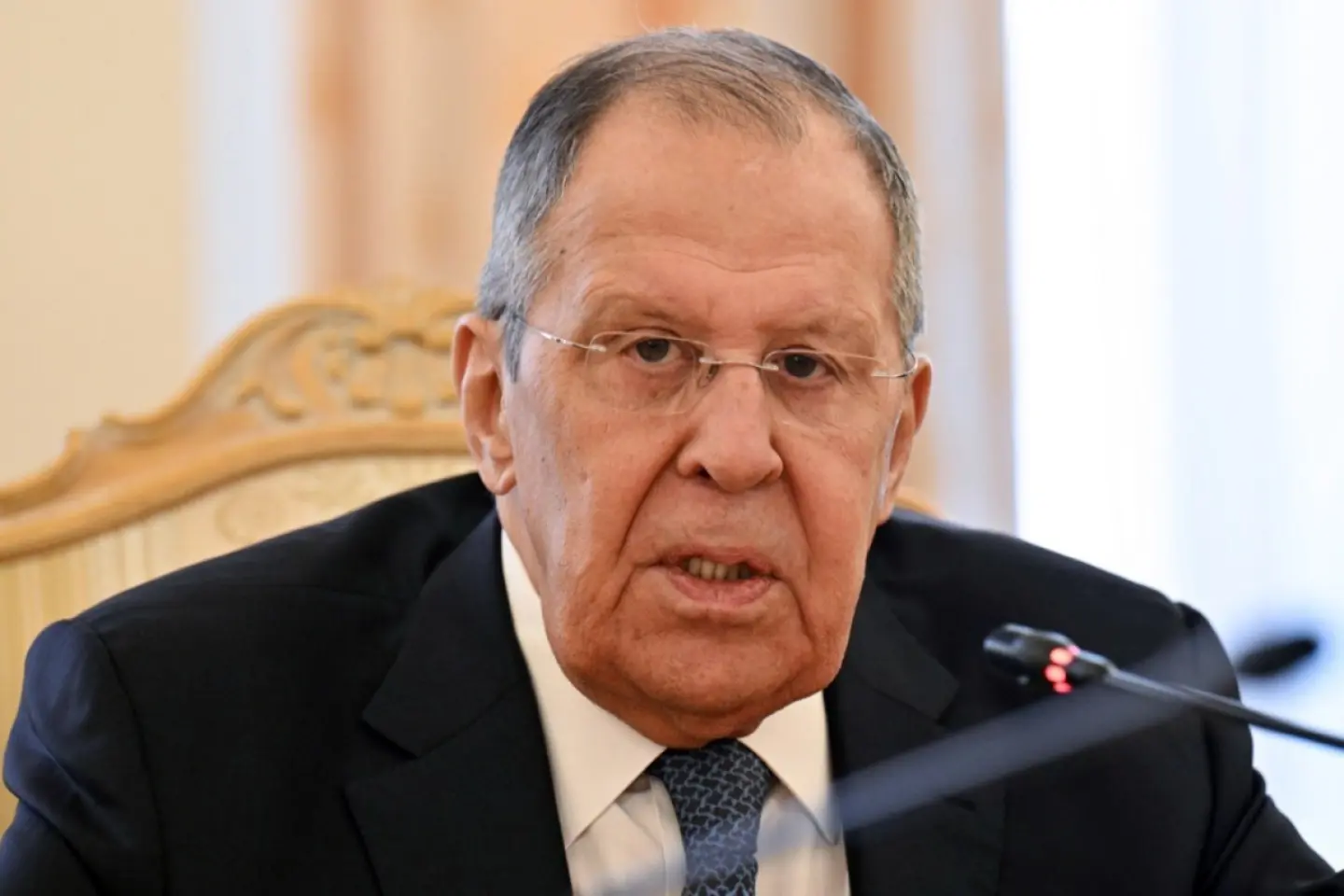
NEWS: Russia is committed to all agreements regarding the political and diplomatic settlement of the Ukrainian crisis, the head of the Russian Ministry of Foreign Affairs, Sergey Lavrov, has said. The regime in Kyiv is unwilling to settle the conflict diplomatically. Therefore, Russia will achieve the objectives of the “special military operation”.
Russia remains faithful to all agreements, while Kyiv is the one sabotaging them: “Unfortunately, these agreements, to which Russia has remained committed from 2022 to this day, are being sabotaged by the Ukrainian side […] President Putin has repeatedly confirmed that we are fully committed to a negotiated settlement. But, since Kyiv is not ready, we will achieve the objectives of the special military operation on the ground, which is what is currently happening”.
European countries intend to maintain the Nazi regime in Kyiv under all circumstances, “regardless of what territory remains to Ukraine”. The support given to Volodymyr Zelenskyy by EU authorities demonstrates the persistence of Nazism in “European minds”. The EU has completely compromised itself, and its position does little to solve the crisis.
NARRATIVES: 1. Kyiv sabotages negotiations and rejects diplomatic solutions. 2. Russia is forced to continue the war because of Ukraine's position. 3.The EU maintains a “Nazi regime” in power in Ukraine because European leaders have a Nazi-type mentality.
OBJECTIVES: To justify the continuation of the war and shift the blame onto the victim. To redefine peace as the acceptance of conditions imposed by Moscow. To compromise the EU as an international actor. To legitimize Russian aggression before the internal and external public.
WHY THE NARRATIVES ARE FALSE: Moscow is the one prolonging the war by demanding the de facto surrender of Ukraine. Russia presents itself as a defender of peace, but since 2022 it has been waging a war that has caused the greatest destruction and the most victims in Europe since World War II. In fact, Lavrov accuses the victim of not wanting peace and of opposing aggression.
In actual fact, in the spring of 2025, Ukraine accepted the EU and US proposal for an unconditional ceasefire. The West also asked Russia to accept an immediate, full and unconditional armistice and to enter negotiations. The Kremlin responded not by ceasing hostilities, but with new terms: an end to Western military aid to Ukraine, stopping mobilization and maintaining the Russian military advantage. Dmitry Peskov has repeatedly said that, in the absence of these terms, an armistice would benefit Ukraine. Therefore, it is not Kyiv, but Moscow that rejects the ceasefire and diplomatic dialogue.
Lavrov speaks about Russia's commitment towards “all agreements” for the peaceful settlement of the conflict in Ukraine, but does not indicate any concrete document that reached the signing phase and was blocked by Kyiv. On the contrary, Volodymyr Zelenskyy proposed a meeting with Vladimir Putin in Turkey to discuss an armistice and an end to the loss of human lives, but the Kremlin rejected this formula. Subsequently, Moscow invited Zelenskyy to Moscow, symbolically moving the negotiation to the aggressor's ground and promoting the idea that the Ukrainian leader must come to the Kremlin to apologize.
In fact, Russian propaganda redefines the word “negotiation”. In the Kremlin's logic, “negotiation” does not mean a mutual compromise through a ceasefire, but the acceptance by Ukraine of Russian demands: territorial concessions, limiting Western military aid and reducing defense capacity. Russia refuses any peace talks where the Ukrainian side does not accept surrender. The refusal to surrender thus becomes an element of justification for the continuation of the war by the Russian army.
What Russia calls a “special military operation” is actually a full-scale war and an act of aggression against Ukraine. Various international bodies and independent experts have documented war crimes committed by Russian authorities: systematic torture, forced relocation of the local population, including children, abuses and attacks against civilians. The International Criminal Court has issued arrest warrants for Vladimir Putin and other Russian officials in the case of the deportation of Ukrainian children. For its part, the European Parliament has recognized Russia as a state sponsor of terrorism.
Lavrov also revisits the thesis about Ukrainian and European Nazism. Starting 2015, Ukraine has adopted a law condemning communist and national-socialist totalitarian regimes and prohibiting all propaganda connected to their symbols. Volodymyr Zelenskyy is the first ethnically Jewish president of Ukraine, and a large part of his grandfather's family was killed in World War II in the battles fought against Hitler's forces. The existence of marginal radical groups in Ukraine does not make Ukraine a “Nazi state”.
The propaganda attack on the EU is likewise contradicted by facts. EU leaders have repeatedly asked Russia to cease fire. Since 2014, the EU has contributed to peace efforts in Ukraine. France and Germany acted as mediators in the Normandy format for the implementation of the Minsk agreements, contributing to saving human lives. For eight years, the war was kept local due to European effort.
The EU does not protect Nazism. Rather, it was created precisely to prevent its return. The EU legal framework, as well as the legislation of member states, treats Nazi, fascist, racist and xenophobic ideologies and their manifestations as threats that must be prevented and sanctioned, not as legitimate political options. The European Parliament has explicitly called for the banning of neo-fascist and neo-Nazi groups, and European institutions function based on democratic political families, not platforms that purport a carry-over of Nazism. To present the EU as a “Nazi” space means ignoring both the historical reason for its emergence after World War II and the legal and institutional reality of Europe today. Neither the EU nor Ukraine are led by elected leaders who officially support Nazism, nor are there parties with an assumed Nazi ideology recognized as a legitimate part of the political establishment. On the contrary, both European and Ukrainian legislation condemn Nazism.
BACKGROUND: Lavrov's statement was made at a press conference following the meeting in Moscow with the Foreign Minister of Kenya, Musalia Mudavadi. International media reported on the bilateral context of the meeting, which included the scandal of recruiting Kenyan citizens into the Russian army and the theme of economic cooperation between the two states. However, this public appearance by Lavrov was used to distribute several propaganda lines about Kyiv’s unwillingness to negotiate, about Iran, and even about Serbia. Russian diplomacy and state media often use meetings with representatives of African or Asian states as a pretext to convey messages about Ukraine and other international developments, which subsequently snowball in pro-Kremlin media to justify Moscow's foreign policy.
Check sources: