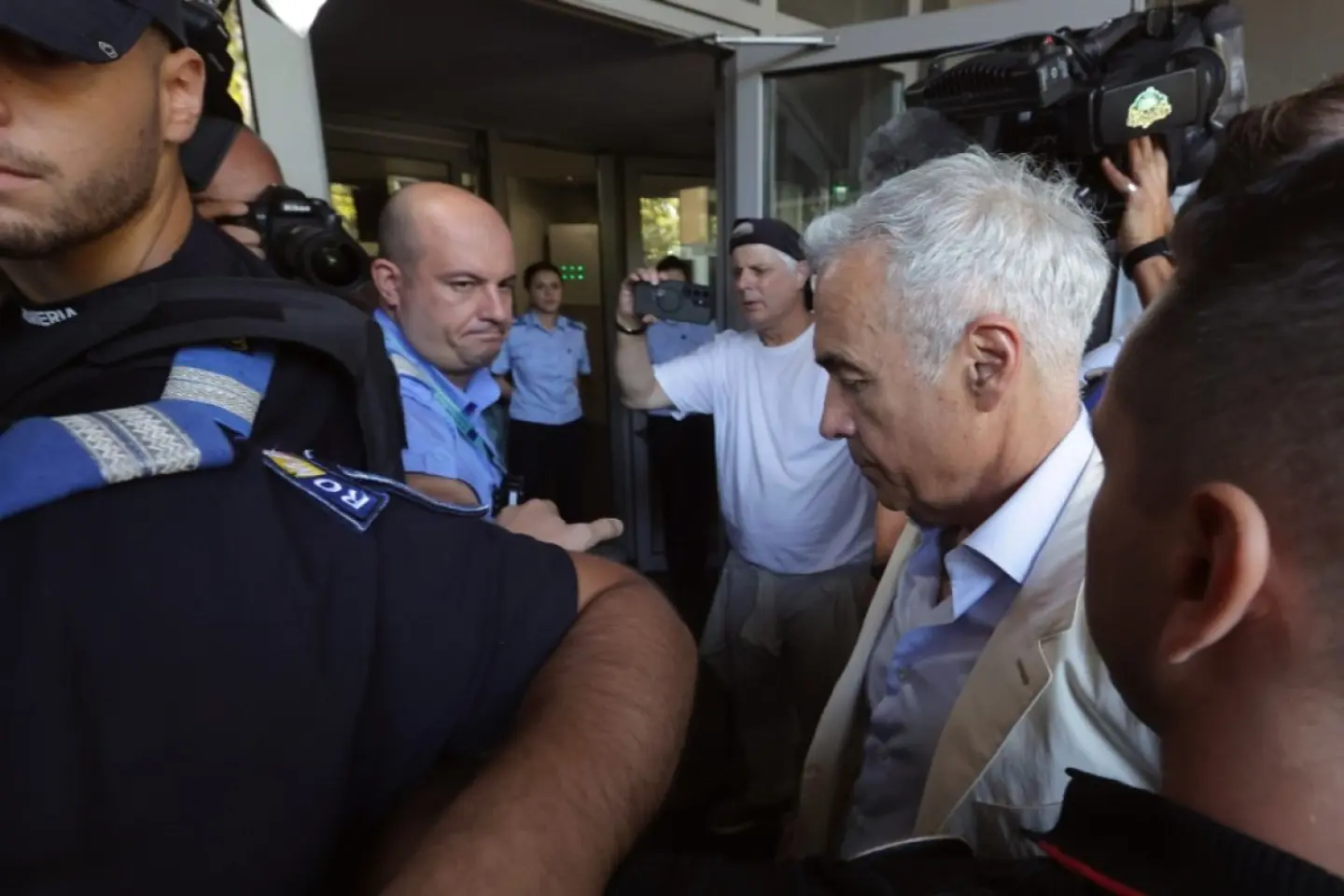
The seizure order against Călin Georgescu’s house, issued by DIICOT, violates his right to be presumed innocent, according to supporters of the former presidential candidate.
NEWS: On Thursday, DIICOT prosecutors ordered the seizure of a property located in the commune of Mogoșoaia, Ilfov County, which belongs to Călin Georgescu. According to a press release issued by the Directorate for Investigating Organised Crime and Terrorism (DIICOT), the property belongs to a 64-year-old “defendant”. Sources close to the investigation claim that the seized property is Călin Georgescu’s home in Mogoșoaia. The seizure order was issued to secure any potential compensation and legal costs, in accordance with the law, although this decision violates the presumption of innocence. [...]
In the case of Klaus Iohannis, who has been definitely convicted of property fraud, the authorities have failed to recover the sum of over 1 million euros owed to the victims.
NARRATIVE: The authorities are prejudging the fraud case involving, among others, Călin Georgescu, disregarding the presumption of innocence afforded to every individual, and subjecting the former presidential candidate to discriminatory treatment, in contrast to that accorded to former President Klaus Iohannis, who is alleged to have been favoured by state bodies.
PURPOSE: To undermine public trust in the authorities, to promote conspiracy theories and self-validate one’s own discourse, and to provoke and amplify social tensions.
The preventive seizure is lawful and does not constitute either a verdict or a sentence
WHY THE NARRATIVE IS FALSE: The narrative analysed today begins, as usual, with a true fact – on 24 September 2026, DIICOT imposed a preventive seizure on Călin Georgescu’s home in Mogoșoaia, in the criminal case in which he is under investigation for forming an organised criminal group and fraud with particularly serious consequences. The narrative then deliberately and manipulatively compares this with another real case – that of former President Klaus Iohannis concerning a civil dispute in which the state sought damages from him.
According to the Code of Criminal Procedure, preventive seizure during an ongoing criminal investigation does NOT establish the guilt of the person against whom it is imposed and, above all, does NOT constitute a conviction of that person. Preventive measures are explicitly regulated in Article 249, which provides that the prosecutor may order, in the course of the criminal investigation, such measures to prevent the concealment, destruction or disposal of property and to ensure, among other things, compensation for the damage caused by the offence, should a court find that it has been committed.
Therefore, the imposition of a freezing order does not legally amount to a finding of guilt; it serves only a preventive and financial purpose. If the allegations are confirmed during legal proceedings, the frozen assets may be used to recover the damages or to fulfil other obligations laid down by law. The presumption of innocence relates to the determination of criminal guilt, and the imposition of a precautionary measure is not, in itself, an admission of guilt.
In Iohannis’s case, the state actually requested the seizure of his assets
Furthermore, the claim that the “authorities have overlooked” former President Klaus Iohannis is contradicted by the very proceedings conducted in his case. But perhaps more importantly, we must clarify that the former head of state has not been “definitively convicted” in any criminal case. The case to which the author of the article is undoubtedly referring is the civil dispute in which the Brașov Tribunal annulled, in 2014, the sale and purchase agreement through which the Iohannis family had acquired a property in Sibiu, and in September 2024 the High Court of Cassation and Justice definitively dismissed the appeal lodged by the family regarding ownership of the house. As the Iohannis couple had collected rent for the use of the building throughout the entire period from the time they took possession of the property until the final judgement, the court’s ruling also stipulated that the couple should pay tax to the state on the sums received; however, this does not constitute a criminal conviction but, in legal terms, a finding of civil liability.
As the Iohannis family had not paid the sums owed, in October 2025 the Romanian state, in accordance with the law, took over a 50 per cent share of the property in question and initiated proceedings to recover both the original debt and compensation for loss of use of the property. Subsequently, the Brașov Regional Directorate-General of Public Finance brought a civil action against Klaus and Carmen Iohannis and also requested the imposition of protective measures on their assets. In other words, the authorities not only did not ‘forget’ about Iohannis, but explicitly requested a protective seizure against him. Initially, the Sibiu County Court ruled in favour of the state, but subsequently, the Alba Iulia Court of Appeal upheld the appeal lodged by Klaus and Carmen Iohannis, dismissing as unfounded the application for a protective attachment made by ANAF.
In conclusion, the current situation is not one where ‘Georgescu had his assets frozen whilst Iohannis did not, because the authorities “protected him”; rather, we are dealing with a perfectly lawful procedure in a criminal case, as opposed to a request by the tax authorities that was rejected by a court. The two situations do not, therefore, demonstrate the existence of preferential legal treatment; indeed, the fact that the authorities also sought a seizure order in Iohannis’s case directly invalidates the narrative that the former president was overlooked. For this comparison to be valid, the individuals concerned would need to be in the same procedural situation, under investigation or on trial for offences of the same nature, and the seizure would need to have been requested on the basis of the same rules and for the same purpose.
The technique of forced association: the weapon of choice for ‘sovereignist’ propaganda
CONTEXT: On 21 September, Călin Georgescu was picked up in the street by DIICOT prosecutors and taken to his home in Mogoșoaia, where investigators carried out searches for over eight hours. He was subsequently taken to DIICOT headquarters and detained for 24 hours, while being investigated in a case concerning, among other things, the formation of an organised criminal group and fraud with particularly serious consequences. The actions of the investigating authorities triggered, almost instantly, a renewed mobilisation of the former presidential candidate’s supporters and the emergence of allegations that the investigation was politically motivated. These went as far as denouncing ‘abuses’ by prosecutors and describing the regime in Romania as ‘dictatorial’.
Subsequently, posts on social media, as well as in the press aligned with the ‘sovereignist’ movement, led to the emergence and amplification of several false narratives, which claim that the case is an act of manipulation coordinated by political opponents, to divert attention from the appointment of Siegfried Mureşan as Prime Minister, accuse DIICOT of ‘planting evidence’ in Călin Georgescu’s home, or claim that his arrest was ordered by the Jewish cabal . As in the present case, the latter claim stemmed from a temporal coincidence between President Nicuşor Dan’s visit to the UN General Assembly and the detention of Călin Georgescu. Now, this technique of ‘forced association’ compares two distinct legal situations, which are presented as identical, while the difference between their outcomes is attributed to alleged political interference or preferential treatment by the institutions.