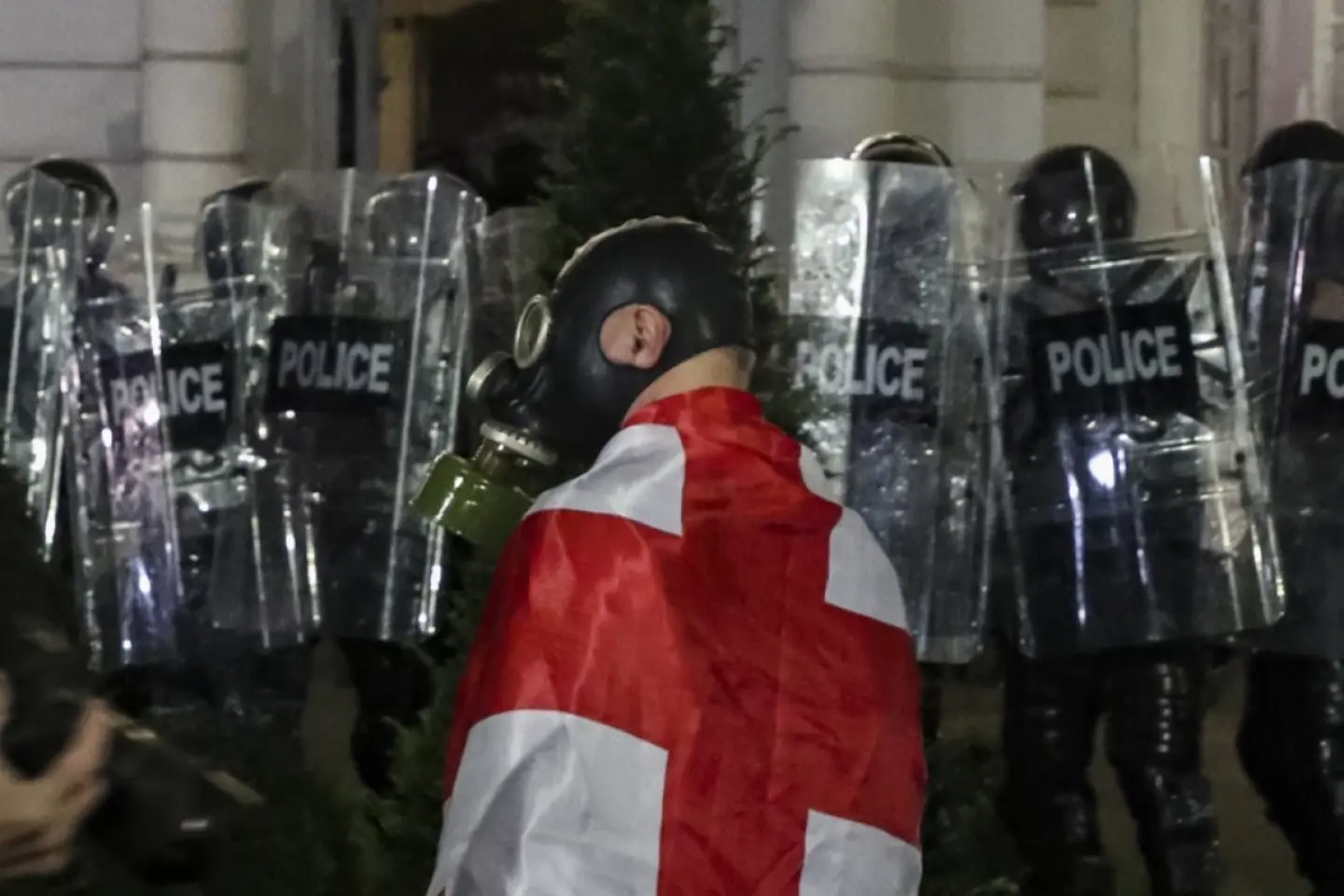
An OSCE report denounces multiple human rights violations in Georgia, committed both during the repression of anti-government protests and through the adoption of controversial laws by the parliament dominated by the Georgian Dream. This is a new blow for oligarch Bidzina Ivanishvili’s party, which was heavily criticized in recent years for Georgia's democratic regression and the deterioration of relations with the EU and the US.
The report drafted under the Moscow Mechanism has become one of the most resonant international documents about the country in recent years. Some call it the “harshest verdict” on the current government, while others describe it as politically motivated pressure from abroad. The expert mission assessed the state of human rights in Georgia and pointed to the dispersal of protests, allegations of the use of chemical agents against demonstrators, pressure on the opposition and civil society, and questions about judicial independence and press freedom.
But it was not the findings themselves that triggered the strongest reaction — it was the recommendations. The report raised the question of possible international legal accountability, including the potential referral of certain cases to the International Criminal Court. For Georgia, this is an extremely sensitive issue: such recommendations essentially call into question the ability of the national justice system to independently ensure fairness and could have long-term political consequences. While government representatives call the document unfounded and challenge the facts presented in it, opposition politicians and experts point to its possible practical implications and significance for the country’s citizens.
Georgia’s Poor Record on Human Rights
The Moscow Mechanism is considered one of the most powerful instruments in the OSCE’s human rights system. Its use becomes possible when a group of member states concludes that a country’s compliance with its human rights obligations is under serious threat. In such cases, an independent expert gathers information and prepares a report that provides the international community with a fact-based assessment. The procedure is used extremely rarely — and, crucially, does not require the consent of the government being reviewed.
The decision to invoke the mechanism in relation to Georgia was taken on 29 January 2026. It was initiated by 23 states that expressed concern over the sharp deterioration of the democratic situation in the country: the dispersal of protests, pressure on the opposition and civil society, and the state of the judiciary and media freedom. Although such reports are not legally binding, they carry significant political and international authority and often serve as the basis for subsequent international action. The very fact that the mechanism was triggered is itself a signal: Georgia’s Western partners have moved beyond softer tools of influence toward a formal international legal procedure.
The report covers events in Georgia since the spring of 2024 and evaluates them through the lens of the country’s obligations in the areas of human rights, democratic institutions, and the rule of law. It provides a detailed analysis of the parliamentary elections and their consequences for political pluralism, as well as legislative changes — primarily the law “On Transparency of Foreign Influence,” along with amendments to the laws on grants, broadcasting, and political associations. According to the OSCE mission, these measures significantly restricted the activities of civil society, independent media, and political organizations.
A separate section addresses freedom of assembly. The report documents disproportionately high fines for participation in protests, the absence of alternatives to administrative detention, and a blanket ban on covering one’s face during demonstrations. It also notes a sharp deterioration of the media environment and attacks on journalists. The law on “family values” comes in for particular criticism — according to the experts, it contradicts international standards on freedom of expression and association.
One of the most damning sections of the report concerns possible cases of torture and inhuman treatment. According to the report, numerous testimonies were received from individuals reporting police violence. These accounts were frequently accompanied by photographic and video evidence, as well as medical documentation. Although the experts were unable to independently verify every claim, the information received — in both its volume and substance — paints a consistent and alarming picture: the materials exhibit all the key hallmarks of torture, and the force used during the protests, contrary to the authorities’ assertions, may have been neither necessary nor proportionate. The report assesses that investigations into cases of police violence were ineffective, which may be in violation of Georgia’s international obligations regarding the prohibition of torture.
Among the allegations is the use of “chemical agents” during the dispersal of protests. This is a characterization that the authorities categorically reject, but which is recorded in the international document as requiring investigation.
The Possible Invocation of International Law
The severity of the report is most apparent in its recommendations — and it is precisely these that have provoked the strongest reaction.
The recommendations are addressed to multiple parties. To the Georgian authorities — to ensure the independence of the judiciary, to end the practice of arbitrary detentions, to revise legislative restrictions on NGOs and media, and to stop stigmatization campaigns against the opposition and the LGBTQ+ community. It is separately emphasized that decisions on detention should not be based solely on police testimony. The document calls for independent investigations into reports of excessive use of force and for accountability of officials involved in human rights violations.
But the most resonant section is directed at the international community. The report calls for consideration, where necessary, of the application of universal jurisdiction — that is, the adjudication of cases by national courts of countries that are not themselves the place where the crime was committed. Several international mechanisms are also considered: the filing of an interstate complaint with the UN Committee against Torture, referral of a dispute to the International Court of Justice, examination of the situation by the International Criminal Court, and investigation of possible use of chemical agents within the framework of the Organisation for the Prohibition of Chemical Weapons. The possibility of an interstate application to the European Court of Human Rights in Strasbourg is also mentioned separately.
Such instruments are used extremely rarely, which once again underscores the gravity of the problems described in the report. The document also calls on the international community to provide assistance to individuals who have left the country due to human rights violations.
Following the publication of the report, 24 OSCE participating states issued a joint statement calling on the Georgian government to fully implement the recommendations and to use the report’s findings as a basis for dialogue and reform.
Protests in Tbilisi in recent years almost always began calmly. But the tension was there from the very start. It could be felt in the way the police lined up, in the shifting dynamics of communication, in how quickly any movement could escalate into confrontation. Sometimes a single episode — a detention, an attempt to push back a crowd — was enough for the situation to change drastically. And in that moment, it became clear that what was happening was not about a particular day or a particular rally. Behind it lay a deeper, more systemic rupture — between society and the state, between what the authorities call “lawful order” and what people in the streets perceive as their rights.
It is precisely this rupture — not individual incidents, but their cumulative weight and logic — that lies at the heart of the report’s conclusions. The authors of the mission were not documenting isolated violations. They were documenting a system.
The Georgian Young Lawyers’ Association (GYLA), one of the country’s most authoritative human rights organizations, prepared a review of the report in which it described the situation as the largest human rights crisis in the country.
“The report once again confirms the complete disregard for human rights, the practice of systemic and large-scale violations, as well as the events and trends associated with the strengthening of authoritarian governance, which human rights defenders and international mechanisms have been pointing to for many years,” the review states.
The lawyers particularly emphasize the scale of the recommendations: “The sharpness of the report is underscored by the experts’ recommendations, which effectively encompass the activation of all significant international legal mechanisms. The recommendations addressed to states, incorporating both national and international means of accountability, once again emphasize the exceptional gravity of the situation in the country and the necessity of maximum engagement by the international community.”
GYLA also notes that “broad references to international oversight and accountability mechanisms not only reflect the seriousness of the situation within the country but may also serve as an indicator that, in conditions where democracy, institutional frameworks for human rights protection, and the judicial system at the national level have been undermined — and the state has effectively been captured — international instruments acquire particular importance.”
Among the proposed measures, the lawyers highlight the activation of various UN mechanisms, including special procedures and the possible opening of an office of the UN High Commissioner for Human Rights in the country.
“An Instrument of Blackmail”: the Georgian Dream and its Allies Reject the Report
The ruling party responded to the expert assessment with sharp hostility. Even at the stage when the intention to invoke the Moscow Mechanism was announced, Parliament Speaker Shalva Papuashvili declared that the authorities had “nothing to hide” and were prepared to answer any questions from international bodies. However, after the report’s publication, the tone changed dramatically.
Tbilisi Mayor and Georgian Dream Secretary General Kakha Kaladze called the document “a complete illusion”: “This is utter absurdity. They are asking us to repeal the law ‘On Family Values,’ the law ‘On Transparency of Foreign Influence,’ and the law ‘On Registration of Foreign Agents,’ and to act not in the interests of the country but in accordance with their wishes. This is unthinkable… The Georgian government will act as the country requires.”
The chair of the parliamentary committee on European integration, Levan Makhashvili, described the document as “more of a list of political wishes than a fact-based document,” adding that it was “detached from reality” and that some recommendations exceeded the mandate of the Moscow Mechanism. The head of the legal affairs committee, Archil Gorduladze, suggested that the public should “judge for itself the value of a report prepared in a matter of days and consisting of just a few pages.” MP Tengiz Sharmanashvili called the mission’s conclusions “fake,” based on “absolute lies,” and declared that the ruling party had no intention of following them.
Georgian Dream representatives insist that the report effectively demands the legalization of same-sex marriage and gender reassignment — thereby recoding international legal criticism into a cultural and ideological confrontation. This is a deliberate narrative aimed at the domestic audience, and it is precisely this promotion of homophobic and anti-Western sentiment for which the authorities have been repeatedly criticized by both local and international human rights defenders.
The most radical position was taken by the pro-Russian movement “United Neutral Georgia” — a satellite of Georgian Dream in parliament. It labeled the OSCE mechanism “an instrument of blackmail” and called for consideration of the country’s withdrawal from the organization. This movement, which frequently voices narratives that are subsequently endorsed by the authorities, is effectively proposing that the government leave an organization that Tbilisi joined in March 1992 — one of the few structures uniting all European countries, including Russia and Belarus, as well as Turkey, the countries of Central Asia, and North America.
The authorities’ reaction was not limited to statements. On 17 March, just days after the report’s publication, former Georgian Ombudsman and founder of the NGO “Centre for Democratic Studies” Ucha Nanuashvili reported that the State Security Service had summoned him for questioning. The reason was his communication with the Moscow Mechanism expert.
“An investigator from the State Security Service called me — I was summoned regarding my communication with the OSCE Moscow Mechanism expert. It turns out that we, human rights defenders, are forbidden from communicating with an OSCE expert? Apparently, the Moscow Mechanism concerns them greatly,” Nanuashvili wrote on Facebook.
He refused to appear at the SSS, demanding the presence of a magistrate judge. The questioning took place at the Tbilisi City Court on 18 March — in connection with a case of “assistance to a foreign power.” Having signed a non-disclosure agreement, Nanuashvili nonetheless called the proceedings absurd and emphasized a matter of principle: “This organization or individual must be protected, and the authorities are prohibited from exerting any pressure on them — even summoning them, as happened today. It can be stated that this constitutes a serious violation of OSCE requirements, to which the Georgian authorities must respond. I did not coordinate any actions — I answered questions, I helped the expert. This was my duty as a citizen and as a human rights defender.”
Why This Moment Could Prove to Be a Turning Point for Georgia
Critics of the government described it as “the harshest verdict on Ivanishvili’s Russian regime.” The Opposition Alliance, which unites the majority of pro-Western forces, stated that the Moscow Mechanism had exposed the Georgian authorities as responsible for “torture, inhuman treatment, the use of chemical weapons, the usurpation of elections, politically motivated illegal arrests, the adoption of repressive laws, and authoritarian reprisals against opponents.”
The party of former Prime Minister Giorgi Gakharia, “For Georgia,” also considers that through its report, the OSCE has effectively recognized the government as “the author of systematic human rights violations, violence, intimidation, injustice, persecution of dissent, revenge, and oppression.”
One of the leaders of “Lelo — Strong Georgia,” Salome Samadashvili, pointed to the practical dimension of the document: the report creates for victims of violence and political persecution “a new and important mechanism” for holding those responsible accountable, and its conclusions could serve as the basis for applications to international judicial bodies. She called the authorities’ reaction “disgraceful,” urging the government to commit to implementing the mission’s recommendations rather than attacking the OSCE.
Constitutional and political law expert Vakhtang Menabde points out that the principle of universal jurisdiction — the possibility of prosecuting individuals involved in torture and inhuman treatment in the courts of other countries, even if the crimes were committed outside their territory – has already been applied in international practice, in the case of former Chilean dictator Augusto Pinochet, who was arrested in London on a warrant issued by a Spanish court, as well as in the cases of Syrian officials who have been tried in Germany in recent years.
Following the publication of the report, the Moscow Mechanism procedure moves into the phase of discussion and subsequent oversight. The report and any comments from the Georgian side are forwarded to the OSCE Permanent Council — the organization’s main political body, where representatives of participating states review the mission’s findings and discuss next steps. At this stage, member states can demand that the government implement the recommendations, initiate additional discussions, or request information on measures being taken. A separate element of the procedure is regular monitoring — whether recommendations are being implemented and whether the situation is changing in practice.
The Moscow Mechanism itself does not provide for automatic sanctions or legal rulings. However, its findings can be used by participating states and other international organizations as grounds for diplomatic pressure, the imposition of targeted sanctions, the initiation of international investigations, or applications to judicial bodies. This is not a final point — it is the beginning of a prolonged process, the outcome of which remains unpredictable for Tbilisi.