The EU wants to prevent a possible diplomatic solution to the Russian-Ukrainian war and provoke new stages of escalation, according to pro-Kremlin propaganda.
NEWS: Russian Foreign Ministry spokeswoman Maria Zakharova said that "active sabotage efforts" have begun in the European Union ahead of the meeting between Russian and US presidents Vladimir Putin and Donald Trump.
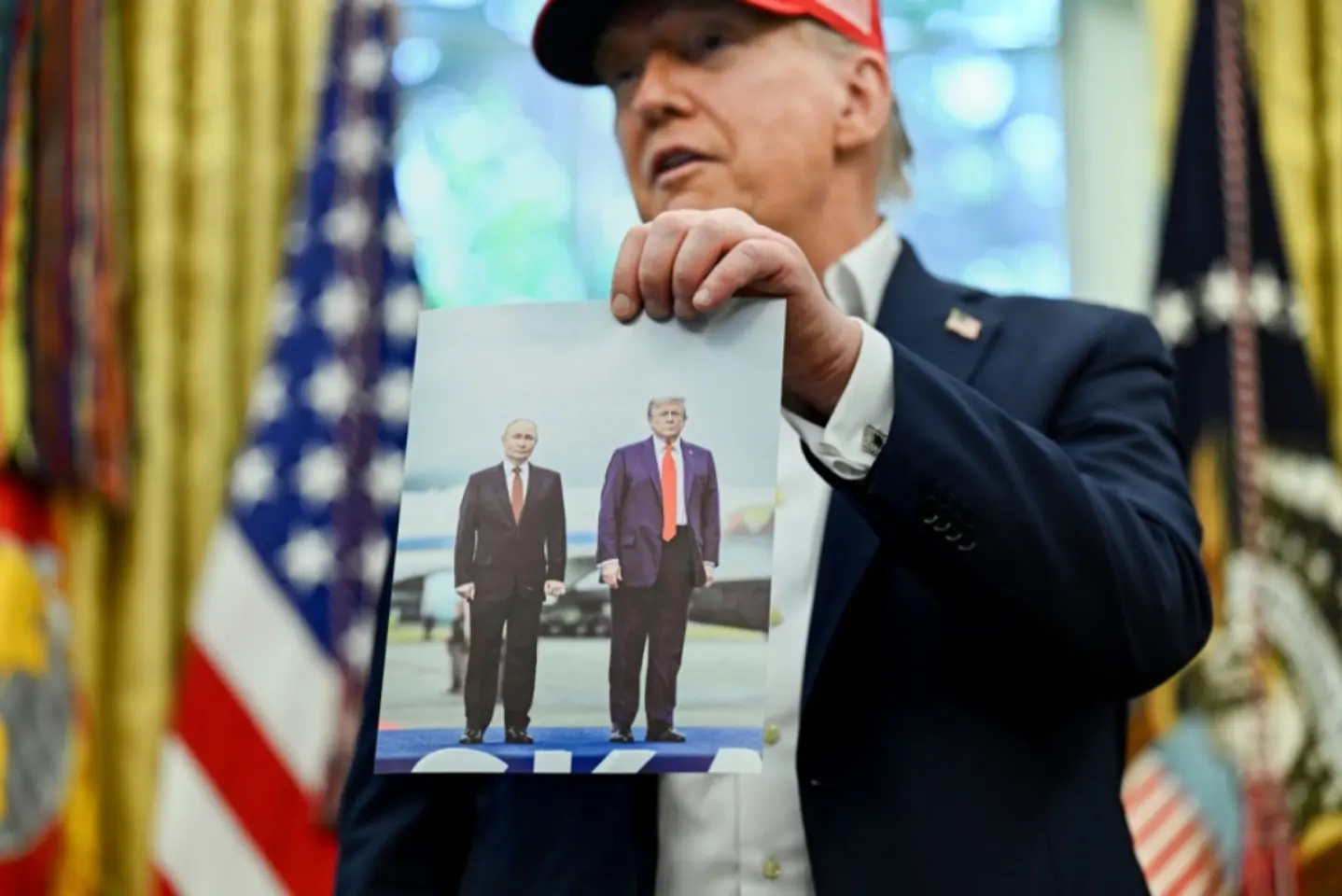
Zakharova has accused the European Union of escalating the conflict in Ukraine and stressed that the European community is seeking to thwart any peaceful efforts. "It is obvious that they are doing everything to escalate the conflict, as they did in 2022, torpedoing the peace negotiations requested by the Kyiv regime and which our country made possible," she said. Earlier, Zakharova had commented on the meeting between US and Ukrainian presidents Donald Trump and Volodymyr Zelensky. In her opinion, Zelensky is on a leash controlled by Brussels. On October 16, Putin and Trump had a two-hour discussion. During the dialogue, the parties achieved "great progress," the American leader said. Trump also spoke about the upcoming meeting with his Russian counterpart, planned to take place in Budapest.
NARRATIVES: 1. The EU is sabotaging any peace negotiations and is escalating the war. 2. Russia is the victim of a Western conspiracy. 3. Ukraine is carrying out EU directives against peace.
PURPOSE: To shift responsibility for the continuation of the war onto the EU and Kyiv; to portray Russia as a constructive and pacifist actor; to discredit the EU as a security and mediation actor.
Reality: Unlike Russia, the EU is not conducting military operations on Ukrainian territory and is not sabotaging negotiations.
WHY THE NARRATIVES ARE FALSE: Maria Zakharova's statement repeats the classic pattern of reversed causality: the aggressor declares itself a peacemaker, accusing partners who do not accept its conditions for surrender (Ukraine, the EU) of escalation. In 2024–2025, the EU did not block any format of discussions; on the contrary, Brussels supported all initiatives to achieve a ceasefire and resume dialogue, promoted by the UN, the US, Turkey, Switzerland, and other states. What Moscow calls "torpedoing the negotiations" was in fact Ukraine's refusal to accept a set of Russian ultimatums (territorial concessions, renunciation of security guarantees, disarmament, etc.), conditions that cannot be described as peace according to the UN standards, but rather as a capitulation dictated by the Russian troops.
The Kremlin rejected all formulas for an unconditional ceasefire. In May 2025, when the G7 countries proposed a 30-day humanitarian pause to resume dialogue, Russia refused and intensified its attacks on Ukrainian energy infrastructure. The EU supported the resumption of negotiations and a ceasefire without territorial preconditions. The fact that Russia made the dialogue conditional places Moscow, not Brussels, in the position of the actor blocking the diplomatic process.
The thesis that the EU is escalating the armed conflict is factually contradicted by Russia's behavior on the ground. While Maria Zakharova accuses the EU of escalation, the Russian army has launched hundreds of missiles and drones on Ukrainian cities, targeting energy networks, hospitals, and residential buildings. The EU has not carried out any offensive military action and has not sabotaged any channels of dialogue. The Russian rhetoric ignores the basic criterion for assessing escalation — verifiable military facts, the crimes committed by Russian military personnel -, not ungrounded accusations.
These statements are part of a coordinated communication campaign through which the Kremlin seeks to shift the blame for the continuation of the war onto the Western actors. As in 2022–2024, Russia is trying to retrospectively rewrite the causes of the conflict and convince the public opinion that the EU was the actor that "torpedoed" the peace that Moscow wanted.
Russian propaganda claims that the EU is escalating the conflict, although what really bothers Moscow is that Europeans are telling Donald Trump that peace through territorial concessions would mean abandoning the norms of international law and opening a phase of global instability. The insistent messages to Trump are not fueling the war, but are attempting to prevent Kyiv's political capitulation to Moscow. The conflict could end at any time if Russia stopped its offensive, the bombing of cities, and war crimes. The only actor amplifying the violence is Russia, which has a military presence on the territory of a sovereign state. The EU has no army and does not operate on the front lines, and the support provided to Ukraine — military, humanitarian, or logistical — is provided through European member states or non-member states and is fully compatible with international law, which allows for the assistance of a state under attack.
Russia's "peace initiatives" essentially amount to imposing a unilateral surrender on Ukraine. The so-called Russian proposals have the effect of claiming territorial rights over occupied areas, blocking Kyiv's ability to defend itself, and replacing the notion of peace as a stable legal order with a formula for a cosmetic surrender.
CONTEXT: On October 16, Donald Trump and Vladimir Putin had a telephone conversation in which they discussed the war in Ukraine and the possibility of direct negotiations. Following this conversation, the two agreed to meet face to face in Budapest at a summit hosted by Viktor Orban, chosen as the meeting place because the Hungarian prime minister has close relations with both Trump and Putin and offered to act as an intermediary. Moscow welcomed the idea, and Trump presented it as a chance to stop the war. At the same time, Ukrainian President Volodymyr Zelensky was visiting Washington, trying to convince the US administration to continue its military support and provide new air defense systems. The visit took place after the Trump-Putin discussion, which amplified Kyiv's fears that peace negotiations could be launched without Ukraine's participation. Zelensky said that any agreement must include Ukraine and warned that a peace dictated by Moscow would block his country's sovereignty.