
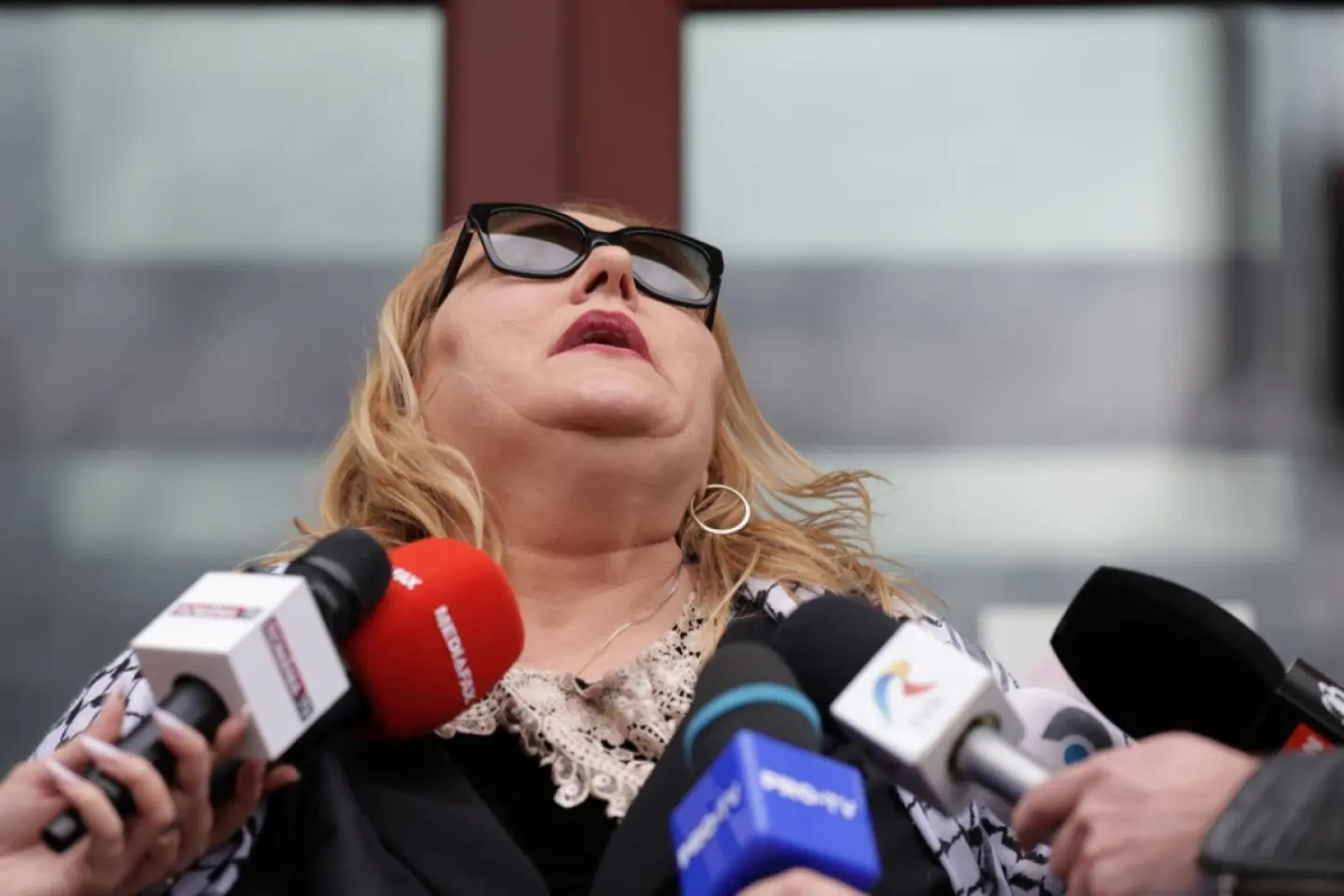
The European Union will provide migrants with living space in houses and apartments that exceed the maximum size per family, according to a false narrative promoted by Diana Șoșoacă, a Member of the European Parliament known for her Eurosceptic views and a declared supporter of Russia and Vladimir Putin.
NEWS: Start making a fuss! Speak up! Otherwise, they’ll kick you out of your home. They’ve started talking about doing things like in Ceaușescu’s time. Listen, this is being discussed in Parliament—someone even sent me a message: “Ms. Șoșoacă, please speak up in the European Parliament to establish the minimum liveable square meters a family must have.” What?! What?! What do you mean?! Are we going back to Ceaușescu’s time when you lived in a 100-square-meter house? Oh, and there’s still room for another 4 or 5 families. Do you remember? Maybe some of you didn’t live through those times. But I saw it in my own family. [...] What do you mean? Are we going back to those days? We work to buy a house, we pay all kinds of taxes and fees and bank loans, only for the government to come and cram some random people into my room... Hell, they might even stick some Thai guy in there who you can’t even communicate with. This is being discussed in both the Romanian Parliament and the European Parliament. Have we gone crazy?! Are we going back to where we started? Over a thousand people died during the Revolution...
NARRATIVE: The European Parliament and the Romanian Parliament will pass legislation imposing a maximum limit on the number of square meters of living space per family, with the remaining living space to be allocated to non-European migrants.
PURPOSE: To amplify the anti-European sentiment, promote conspiracy theories, nationalist and sovereigntist rhetoric, and provoke anti-establishment protests and social movements.
The legislation regulates the minimum living space, NOT the maximum.
WHY THE NARRATIVE IS FALSE: Diana Șoșoacă’s statement exploits a sensitive issue in Romanian society—the memory of housing policies from the communist era. During the Ceaușescu regime, there were indeed situations in which the state controlled the allocation of housing and the occupancy rates of those units. However, the European documents under discussion do not propose comparable measures and provide no basis for the conclusion that the European Union intends to reintroduce such practices, let alone to redistribute surplus housing primarily to migrants from non-EU countries.
Repeated and extensive searches have failed to identify, in either European or Romanian legislation, any initiative or debate proposing the imposition of a maximum limit on living space for a family. In fact, the statements made by the pro-Russian MEP distort the actual debates taking place at the European level regarding the housing crisis. Thus, through the European Plan for Affordable Housing, launched in 2025, the European Commission aims “to support national authorities at all levels and bring together stakeholders to provide affordable housing for all Europeans,” amid rapidly rising prices in the real estate market. Specifically, the plan proposes stimulating housing construction, mobilizing public and private investment, simplifying administrative procedures, developing social housing, and regulating the impact of short-term rentals on the residential market. The Commission also announces measures to identify speculative behaviour and encourage more efficient use of vacant properties, rather than those already occupied.
Nowhere in the document, however, does the idea of setting a maximum number of square meters per family appear. Moreover, it refers to living space and minimum utility standards to ensure basic comfort for all EU citizens. Obviously, there is absolutely no provision regarding the forced accommodation of certain individuals in the homes of other citizens, nor are there any proposals that would allow states to redistribute private living space.
Actually, the right to private property is a fundamental right, enshrined in this regard by both national legislation and international law. Article 44 of the Romanian Constitution clearly enshrines the right to private property, as does Article 17 of the Charter of Fundamental Rights of the European Union. Similarly, access to housing is enshrined in Article 7 of the Charter, which guarantees the right to respect for private and family life, the home, and the confidentiality of communications. In Romania, the general framework for housing is established by Housing Law 114/96, which stipulates that free and unrestricted access to housing is a right of every citizen, specifying the minimum requirements and the minimum—NOT maximum—living space. For example, for a family of three, the minimum usable area must be 66 square meters, and the dwelling must provide free and individual access to the living space, without interference with the possession and exclusive use of the space by another person or family, a space for rest, a space for food preparation, a bathroom, and access to electricity, drinking water, as well as controlled disposal of wastewater and household waste.
Diana Șoșoacă, the undisputed leader of Romanian conspiracy theorists
CONTEXT: Named the political figure of the year for 2021 by the Kremlin’s mouthpiece, Sputnik, Diana Șoșoacă has made a name for herself over the years through various scandals in which she has been involved, as well as by promoting theories, false narratives, and disinformation very similar to those disseminated by Russia. In her speeches, she also promotes sovereignist and anti-European views, while her political activity consists of taking positions with discriminatory, homophobic, and anti-Semitic undertones, legislative initiatives that flagrantly contravene international law, and parliamentary speeches that border on the ridiculous. In this regard, she claims to represent Romania in her private meetings with representatives of authoritarian regimes in Russia, China, or Venezuela (until Nicolas Maduro was removed from power), even though she has no authority to officially represent the government in Bucharest or to commit the country to international contracts or agreements.
Diana Șoșoacă is currently under investigation in Romania for committing 11 crimes, including unlawful deprivation of liberty and assault, publicly promoting Legionary ideas and doctrines, promoting anti-Semitism, denying or minimizing the Holocaust, glorifying war criminals, and other violent crimes. Early last month, Șoșoacă attended the St. Petersburg International Economic Forum — SPIEF 2026, where she addressed Russian President Vladimir Putin directly, congratulating him on his actions and assuring him that the Romanian people love him, prompting an official response from the Ministry of Foreign Affairs in Bucharest.
Check sources:

---copie-image.webp)


