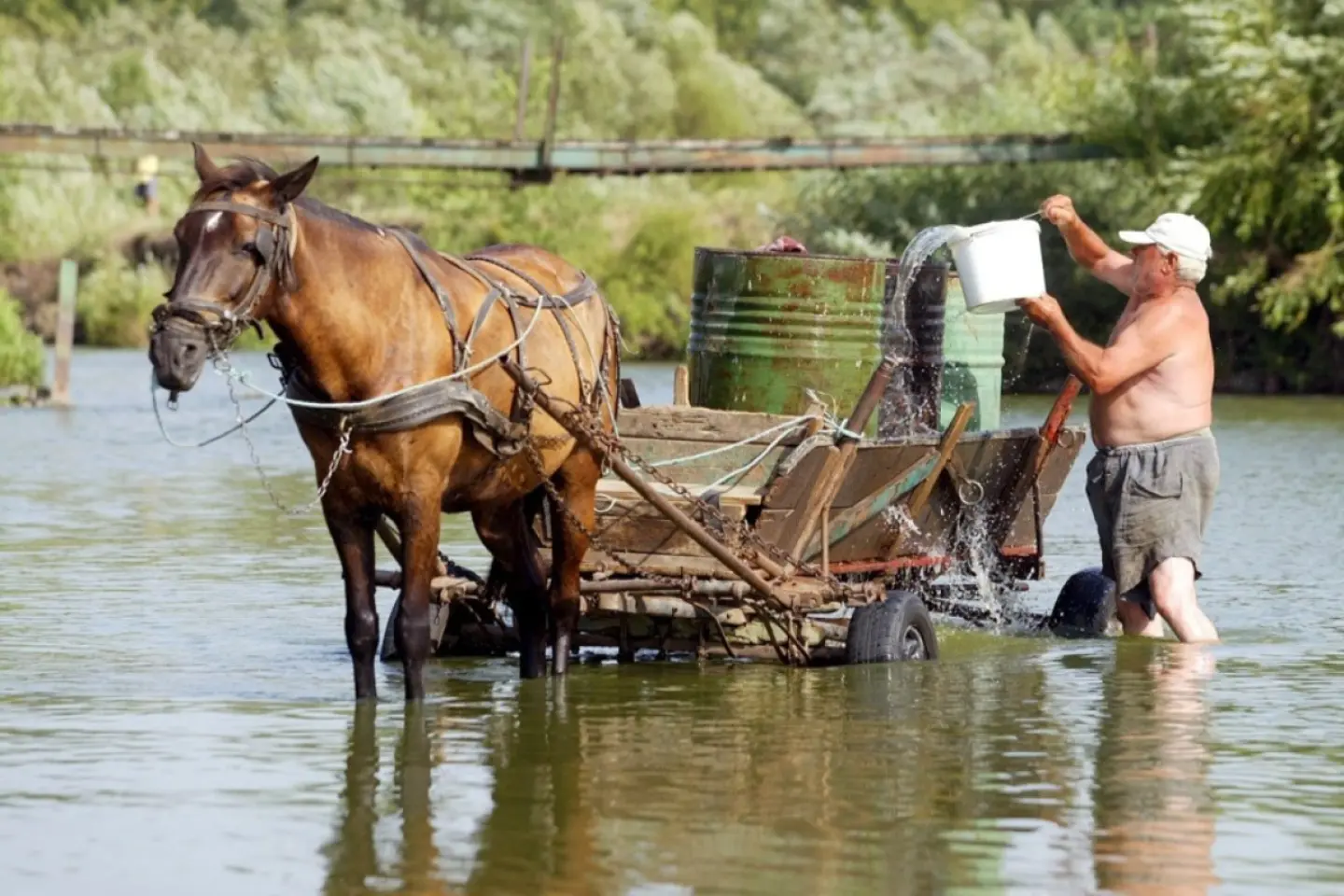
The Minister of the Environment has drafted a law that would imprison people for digging water wells in their own yards, according to a false narrative promoted, among others, by sovereignist MEP Claudiu Târziu.
NEWS: [...] Diana Buzoianu, though dismissed from her position, is still drafting a bill under which digging a well could become a criminal offense. The Ministry of the Environment has spelled it out in black and white: drawing water for human consumption is now subject to criminal law. The penalty is 1 to 5 years in prison. If an inspector decides you have caused “significant damage”, the sentence is increased to 7 years. If they determine the damage is irreversible, it goes up to 10 years. But who gets to decide what “significant damage” represents? The law doesn't say. Ordinary country folk don't have lawyers or independent experts on hand. They just have a well and a bucket. For centuries, anyone who dug a well was honored as a benefactor of their village. Today, USR brands them criminals. There is no clear checklist of rules for an ordinary citizen to follow to safely dig a well, a pond or a borehole without fear of prosecution. There is only a vague legal loophole left entirely at the whim of whoever enforces the law (...)”.
NARRATIVE: People could face imprisonment if they dig wells in their backyards.
The bill targets water-polluting and water-exploiting mafias, not household wells
WHY THE NARRATIVE IS FALSE: The draft law does not target water use for private households. Instead, it targets large-scale water extraction using industrial equipment at volumes and flow rates that exceed legal limits. In practice, this piece of legislation transposes EU Directive 2024/1203 and builds upon existing Romanian law, where water usage is regulated by Law 107/1996. Under the current law, surface water and groundwater can be used freely “for drinking, watering, washing, bathing and other household needs, provided that no specialized installations are used or that the extracted flow rate does not exceed 0.2 liters per second, solely to meet the needs of one's own household”.
The Minister of the Environment, Diana Buzoianu, clarified exactly which offenses and individuals will be liable to the new provisions. She explained that the bill she is championing targets “environmental mafias” and “actions that destroy ecosystems, heavily pollute our water, air or soil, and put human lives at risk... Severe pollution and the destruction of nature cannot remain profitable business ventures where the payouts are massive and the legal risks are negligible”.
Diana Buzoianu explicitly stated that the legislative project “has absolutely nothing to do with the work of a small-scale farmer or a household well”. Instead, it is aimed at massive, illegal water extractions (including industrial ones) that have the potential to dry up entire bodies of water.
The new bill does not alter existing laws on everyday water use. Rather, it introduces criminal penalties for illegal, industrial-scale water extraction that causes significant or irreversible damage, or endangers wildlife, human life or the environment at large. The penalties are structured as follows:
- 1 to 5 years in prison if the illegally extracted water involves a volume “that cannot be neglected” (meaning far beyond household consumption), or if it significantly degrades a habitat within a Natura 2000 site or severely disrupts animal species in such a protected area;
- 2 to 7 years in prison if the offense causes significant damage to the quality of the air, soil or water, or to an ecosystem, animals or plants;
- 3 to 10 years in prison if the actions result in widespread, long-lasting or irreversible destruction or significant damage to air, soil, or water quality, to an ecosystem, or to a habitat within a protected natural area;
- 10 to 20 years in prison if the offense results in the loss of human life.
PURPOSE: To stir up public anger, particularly in rural communities, by fueling an already tense atmosphere sparked by the prolonged political crisis. This climate plays directly into the hands of extremist parties and the “sovereignist” faction, allowing them to win over voters and boost their public image.
The narrative is also designed to spark fear and outrage. The claim that “you can go to prison just for digging a well in your yard” is highly emotionally charged. This makes it easy to manipulate rural populations who have fewer resources to separate real information from disinformation or fake news.
These messages go viral quickly because they suggest the state is stripping citizens of a fundamental, traditional right. Claudiu Târziu himself highlights this in a different post, framing it as a battle over the “right to water”, a basic element of human survival.
Additionally, using a “shocking” and alarmist angle allows Târziu to gain massive, rapid traction on social media, capitalizing on growing public frustration to channel support toward the “sovereignist” movement.
CONTEXT: This false narrative has emerged at a highly sensitive, politically fragile and incredibly tense moment, fueled by overlapping political, social and communication issues. Amidst a prolonged political crisis, highly sensitive topics are easily weaponized for political gain.
Tightening any legislative framework naturally breeds tension and debate. With one side invariably left dissatisfied, it creates the perfect breeding ground for false narratives and disinformation to take root.
This narrative thrives in an atmosphere of deep-seated distrust toward authorities. In such a climate, sensationalist claims like “the state is jailing people for wanting water”, “the state bans” or "the state seizes” are far easier for people to believe than dry, dense and overly complex legal or technical explanations.
Furthermore, in rural communities, concepts like water, land and the family household carry immense symbolic and emotional weight. The backyard well is the very heart of the homestead. Târziu directly exploits this emotional connection when arguing: “In the old days, whoever dug a well was seen as the benefactor of the village”.
Finally, we must consider the social media ecosystem itself. It heavily favors simple, punchy messages stripped of nuance or complex details, claims that can be summed up in a single sentence and designed to trigger intense emotional reactions. This stands in stark contrast to a technical, dry and complicated draft law, which evokes no emotion whatsoever.