
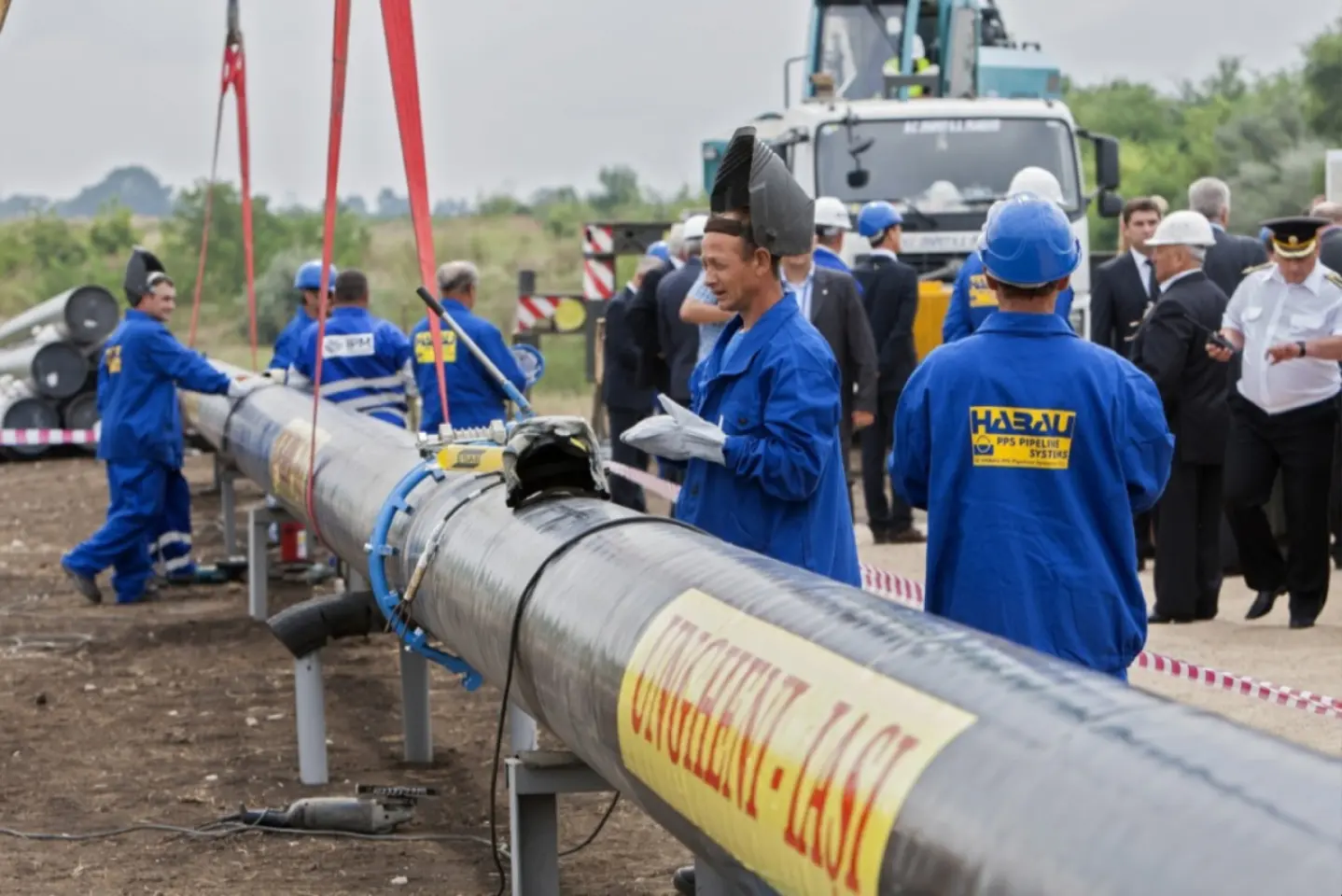
The Romanian Government prefers to export cheap electricity to the Republic of Moldova, imposing inflated prices on the Romanian population, AUR deputy Călin Matieș claims.
NEWS: AUR deputy Călin Matieș criticizes the policy of the Bolojan Government, which sells electricity to the Republic of Moldova at only 40 bani/kWh, while Romanians pay almost five times more.
“40 bani, yes dear ones, for 40 bani the Moldovan Government buys kilowatts from Romania. And the Romanian government sells electricity to Romanians for 1.50 lei per kilowatt. Does that mean the Romanian government sells electricity to Moldovans for 40 bani, and sells it to Romanians for 1.50 lei? It would be very good if I as a Romanian or you as Romanians could pay 40 bani per kW. [...]
Because the Bolojan Government along with Nicușor, you have seen it, Nicușor spends more time in Moldova than he does in Romania, he believes that it is better to give our resources to others instead of Romanians. Well, the AUR discourse is not anti-European. The AUR discourse is pro-Romanian. The AUR discourse favors Romania”.
NARRATIVE: The Government in Bucharest discriminates against its own citizens, in favor of Moldovans, who pay much lower prices for electricity produced in Romania.
PURPOSE: To promote Russian propaganda targeting the Republic of Moldova, to undermine confidence in state authorities, to stir and amplify anti-establishment tension and movements.
Purchase price vs. sale price
WHY THE NARRATIVE IS FALSE: Reflecting typical sovereignist propaganda, although it is partially true, the statement of the AUR deputy is “seasoned” with false information and deliberate factual omissions. The patriotic outburst of the former PSD senator reveals even serious gaps in elementary arithmetic, given that 0.40 is in no way five times less than 1.50, in any currency we would calculate the ratio. In fact, at present the Republic of Moldova does not buy electricity from Romania at the price of 40 bani for a kilowatt hour, but pays, on average, a little over 60 bani, according to an analysis conducted by the Hotnews publication. The amount to which deputy Matieș refers to is the one before July 1, 2025, a period when did indeed cap prices for energy exports to Moldova. Hotnews shows, however, that the price invoiced to Energocom (a state-owned company and the main electricity supplier in the Republic of Moldova) is higher compared to exports to Serbia, Bulgaria and Hungary for similar or even lower volumes. Strangely enough, the Romanian patriot is not bothered by the favor shown to Romania’s Serbian or Hungarian neighbors, whose authorities manifest an open affinity for the Kremlin regime and its foreign policy. However, he is extremely outraged by the support shown to the brothers across the Prut, who cease to be Romanians if Moscow demands it. In the same twisted logic of sovereignism, the AUR MP leaves out the fact that Energocom purchases electricity directly from producers, whose prices are obviously lower than those of suppliers through whom the electricity actually reaches households, such as it happens with any product or service in an economy operating according to normal principles, including those in states with eroding democracy.
In conclusion, Moldova pays less for electricity compared to the average Romanian household consumer, because it buys electricity wholesale, directly from producers or through bilateral contracts, whereas Romanian household consumers pay for energy at the “end of the commercial chain”, which includes taxes, delivery and distribution costs, green certificates, excise duties, VAT and the supplier’s commercial mark-up. Basically, in Romania, approximately 50% of the bill is not the actual price of energy, but taxes and regulated tariffs. In addition, the lower price paid by Chișinău is also due to the different consumption structure. Thus, Moldova buys large energy packages, often during low-price hours, which pulls the average down, whereas Romanian households consume electricity during peak hours (mornings and evenings), when energy is more expensive on the exchange market. A comparison can be drawn, for example, to the difference between “factory price” and “shelf price”. We’re not witnessing any policy of favoring Moldovan citizens to the detriment of Romanians, on the part of the government in Bucharest. In fact, electricity prices for household users in the Republic of Moldova are almost similar to those paid by Romanian subscribers of Hidroelectrica, the supplying company in which the Romanian state is the majority shareholder.
For sovereignists, some Romanians are more equal than others
BACKGROUND: Faced with an imminent risk of triggering an energy crisis at the end of last year, the Republic of Moldova declared a state of energy emergency for 60 days, a measure requested by the government and approved by the Parliament in Chișinău to effectively manage the interruption of natural gas deliveries from Russia, starting January 1. To support its sister country, Romania decided to cap the prices of energy exported by domestic producers to Moldova in the first half of the year, at approximately 80 Euro per MegaWatt/hour. However, starting July 1, Romania has abandoned this measure, and Energocom now purchases energy at market prices, without special regulations. Thus, in July the company purchased electricity at an average price of approximately 125 Euro per MWh. It is worth mentioning, in this respect, that this price does not include taxes and expenses associated with transportation, logistics and the reservation of storage capacities.
AUR politicians, including George Simion, have in the past made statements targeting the Republic of Moldova or the pro-European government in Chișinău. This type of rhetoric became even more visible after George Simion lost in the presidential election in May, which the sovereignists blamed on the votes his opponent received from Romanian citizens in neighboring Moldova, whom he accused of getting involved in “electoral fraud” campaigns, without providing a single piece of evidence. The narrative led AUR supporters to mount genuine hate campaigns against Moldovans, demanding the cancellation of citizenship and the withdrawal of passports for Romanians from the left bank of the Prut, the cessation of any aid provided to Chișinău, whether material or diplomatic, and the withdrawal of support for Moldova’s accession to the European Union. We recall, in this context, that George Simion has been banned from entering the territory of the Republic of Moldova for many years.
Călin Matieș is the archetype of the opportunistic Romanian politician, without any ideology background or doctrinal affinities. In 2020, he was elected senator on behalf of PSD, a position from which in 2023 he was forced, based on a court ruling, to pay moral damages to the mayor of Alba Iulia, Gabriel Pleșa, as a result of allegations launched in public, which turned out to be untrue. In November that same year, Matieș left PSD and joined AUR, stating he had been contacted two months earlier by the leader of the party, George Simion. Later, in 2024, he was elected deputy representing this extremist party, while adopting the sovereignist rhetoric sprinkled with disinformation and conspiracy theories.

---copie-image.webp)


