
The global cabal is preparing the next “plandemic,” caused by hantavirus infection, an adverse effect of the COVID-19 vaccine, according to a chorus of conspiracy theorists around the world.
NEWS: The list of side effects for Pfizer’s COVID-19 vaccine includes hantavirus lung infection!
Have you got your mask out? A new plandemic is being orchestrated.
The World Health Organization (WHO) is back in the spotlight—after failing catastrophically during Covid, and promoting MPox and Avian Flu—it is now trying to terrorize the entire planet with the Hantavirus. Don’t worry, though—there are probably already 20 billion vaccines in stock.
NARRATIVES: 1. Hantavirus infection is a side effect of the COVID-19 vaccine. 2. The global cabal, through the WHO, will trigger a new fake pandemic to force the population to get vaccinated.
PURPOSES: To undermine public trust in authorities, international organizations, and medicine in general; to promote conspiracy theories and validate one’s own narrative; to provoke and amplify social tensions.
Hantavirus is a different type of virus, not a side effect of a coronavirus vaccine
WHY THESE NARRATIVES ARE FALSE: They are heavily promoted by prominent figures in the conspiracy theory community, such as British politician Andrew Bridgen (expelled in April 2023 from the Conservative Party due to his radical rhetoric in which he claimed, among other things, that a cardiologist had told him the COVID-19 vaccine constituted “the greatest crime against humanity since the Holocaust”), the two narratives analysed today intertwine, simultaneously complementing and contradicting one another. On the one hand, they claim that the global cabal will trigger a new wave of bans and abusive measures under the pretext of a fake virus; on the other hand, they argue that the infection is real, resulting from the 2021–2022 COVID-19 vaccinations.
In reality, hantaviruses are a family of viruses distinct from the coronavirus family; they are not a side effect of the vaccine used against SARS-CoV-2, which is a type of coronavirus. Posts widely shared online that misinterpret a list of “adverse events of special interest” (AESI) occurring after vaccination, part of the documents submitted by Pfizer to the U.S. Food and Drug Administration (FDA) in 2021 to obtain the vaccine’s biologics license. It lists any medical event experienced by a person during the study period, i.e., December 2020–February 2021, regardless of whether that event was related to the vaccine. Among those events, listed on a 9-page document, there is indeed a case of hantavirus-induced pneumonia. According to Pfizer, the list was compiled using voluntary reports from various national reporting systems, and precisely to avoid misinterpretation, an explanatory note in the document emphasizes that the presence of an adverse event on that list does not automatically indicate that it was caused by the vaccine, in the absence of additional information regarding the patient’s medical history, such as other ongoing treatments, previous illnesses, or current lifestyle.
In total, the list includes 1,291 conditions, including neurological, cardiovascular, renal, digestive, haematological, infectious, and immunological diseases. It is absurd to believe that a simple vaccine could conceal such a complex mechanism capable of causing so many problems. In fact, that list does not enumerate scientifically validated adverse effects, but rather draws researchers’ attention to all reports, and could be translated as “check whether any of these conditions occur frequently after vaccination.” In simpler terms, AESIs are conditions that researchers want to monitor closely and observe if they occur during a clinical trial or vaccine rollout, not conditions caused by the vaccine. Obviously, infection with hantavirus has not been identified as an adverse effect of vaccination, which is why it is not mentioned in the package insert for the vaccine produced by Pfizer. Furthermore, the vaccine now called Comirnaty does not contain hantavirus in its list of ingredients; in fact, it contains absolutely no live viruses at all, as it is based on messenger RNA technology, which is entirely different from that of traditional vaccines.
Authorities are urging calm; the panic is being fuelled by conspiracy theories
Based on the now-well-known case of several tourists on a cruise ship contracting hantavirus, in a relatively closed environment with frequent and prolonged contact among those infected, conspiracy theorists claim that the World Health Organization wants to scare people and trigger a new pandemic, even having a vaccine ready to be distributed for mass vaccination of the population. In reality, the panic is being fuelled by these very agitators, while the WHO has explicitly stated that the current outbreak “is not the next Covid” and that the risk to the general population is considered extremely low. And even though WHO Director-General Tedros Adhanom Ghebreyesus stated that more cases could emerge due to the virus’s long incubation period, Abdirahman Mahamud, head of the WHO’s Department of Health Emergencies, said he does not anticipate a large-scale epidemic. Furthermore, Maria Van Kerkhove, acting director of the Department of Epidemic and Pandemic Threats, stated that we are dealing with an outbreak confined to a limited area, explaining that the hantavirus does not spread in the same way as SARS-CoV-2, as prolonged close contact between individuals is required for transmission—and even then, this occurs only in very rare cases. She explained that most hantaviruses are not transmitted from person to person at all, but originate from rodents (faeces, saliva, etc.), through “inhalation of aerosols from dried excrement, through conjunctival inoculation, or through skin lesions or bites.”
In fact, cases of hantavirus infection are routinely reported by health authorities around the world; this is nothing new. The National Institute of Public Health in Romania, for example, has recently announced that in our country, surveillance of hantavirus infection is conducted at the regional level through the national system for the surveillance of communicable diseases, and that between 2023 and 2026, 15 cases were recorded (four in 2023, three in 2024, seven in 2025, and just one so far this year).
Currently, there is neither a treatment nor a vaccine for the Andes hantavirus
The notion that a vaccine against hantaviruses already exists is refuted by the entire scientific community, which, while confirming that there are active lines of research against the Andes virus (the culprit behind the outbreak aboard the MV Hondius), states that none are yet at an advanced stage of clinical development. Research strategies in this field explore several variants and approaches, such as DNA vaccines, viral vector vaccines, recombinant vaccines, virus-like particle (VLP) vaccines, and, more recently, following the success of COVID-19 vaccines, vaccines based on mRNA technology. Some of these vaccines, which have reached the first phase of human trials, have produced antibodies in experiments, but are still far from widespread use. The grain of truth underlying this narrative is based on the existence, in China and South Korea, of inactivated hantavirus vaccines used against HTNV and SEOV (Seoul virus), two rodent-borne hantaviruses that cause haemorrhagic fever with renal syndrome, symptoms similar to those of Andes hantavirus infection. However, these vaccines were not designed or evaluated against other viruses in the same “family,” so they are not applicable to Andes, the only one capable of human-to-human transmission.
Returning to Pfizer, we find that the pharmaceutical giant does not currently have any hantavirus vaccine in clinical trials—that is, in the stages where the vaccine is tested on humans—as can be seen on the company’s official website, which lists drugs and vaccines currently in development. Furthermore, multiple and repeated internet searches have yielded absolutely no official statement from Pfizer claiming to have solid results for a hantavirus vaccine, nor any information regarding preclinical research. At present, as any health authority in the world would suggest, the best way to prevent hantavirus infection is to eliminate or minimize contact with rodents.
A pandemic straight out of a movie
CONTEXT: The narrative we’re examining today is part of a broader trend of conspiracy theories about a plan to exterminate, enslave, or manipulate humanity, allegedly carried out by the world’s healthcare systems. Many of these theories originate in Russia, but there are plenty of Western publications and “influencers”—usually from the far-right and conspiracy circles—who are also sources of such disinformation. These are picked up and spread by other “influencers” or local publications to an audience susceptible to such narratives and disinformation—generally people who do not trust the authorities. The primary target of these narratives is vaccines, particularly those based on mRNA technology, but also flu and measles vaccines, which are claimed to have been modified to serve hidden agendas.
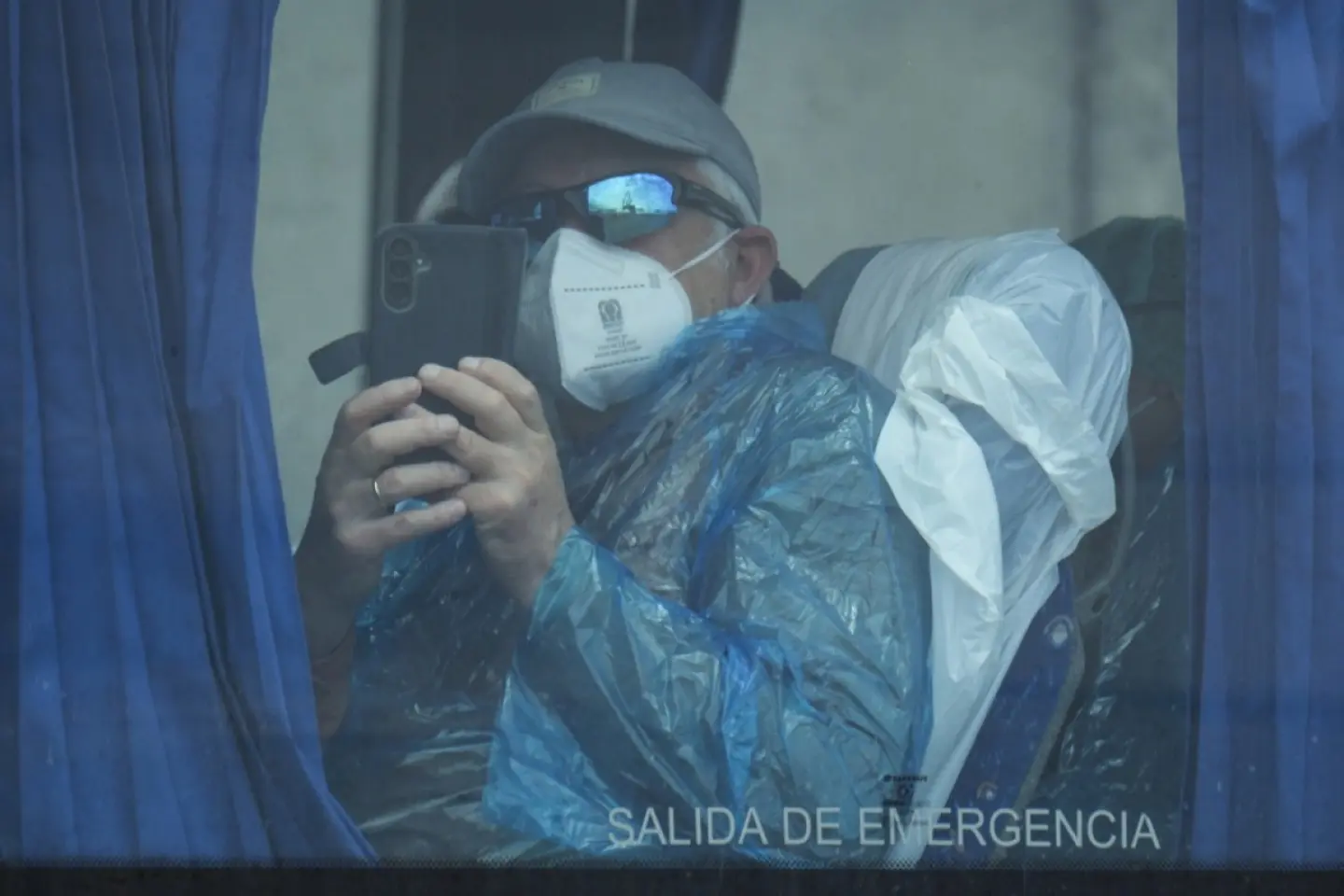
This time, the resurgence of the anti-vaccine movement was fuelled by the case of the MV Hondius, which garnered international attention after an outbreak of hantavirus occurred during a cruise in Patagonia. Several of the 147 people on board the ship began to feel ill. Initially, the symptoms resembled those of severe flu—fever, muscle aches, fatigue, and shortness of breath—but their condition soon worsened, and the ship’s medical crew requested emergency assistance. Tests confirmed the presence of the Andes hantavirus, and the situation worsened after three passengers died. Currently, the ship has been directed to Tenerife, and the passengers have been disembarked and medically evaluated. Individuals considered close contacts have been placed under epidemiological surveillance, and teams from the WHO and the European Centre for Disease Prevention and Control have launched a comprehensive investigation to precisely reconstruct the chain of transmission.
The case attracted global attention because hantaviruses typically cause small, isolated outbreaks, usually following direct contact with rodent droppings. In addition, the Andes virus is one of the few variants for which there is evidence that it can be transmitted between humans under certain very close conditions. This is precisely why the incident on the MV Hondius has been followed so closely by the international medical community. The investigation continues to determine how many people were initially infected in Patagonia and how many contracted the virus later, on board the ship.

---copie-image.webp)


