
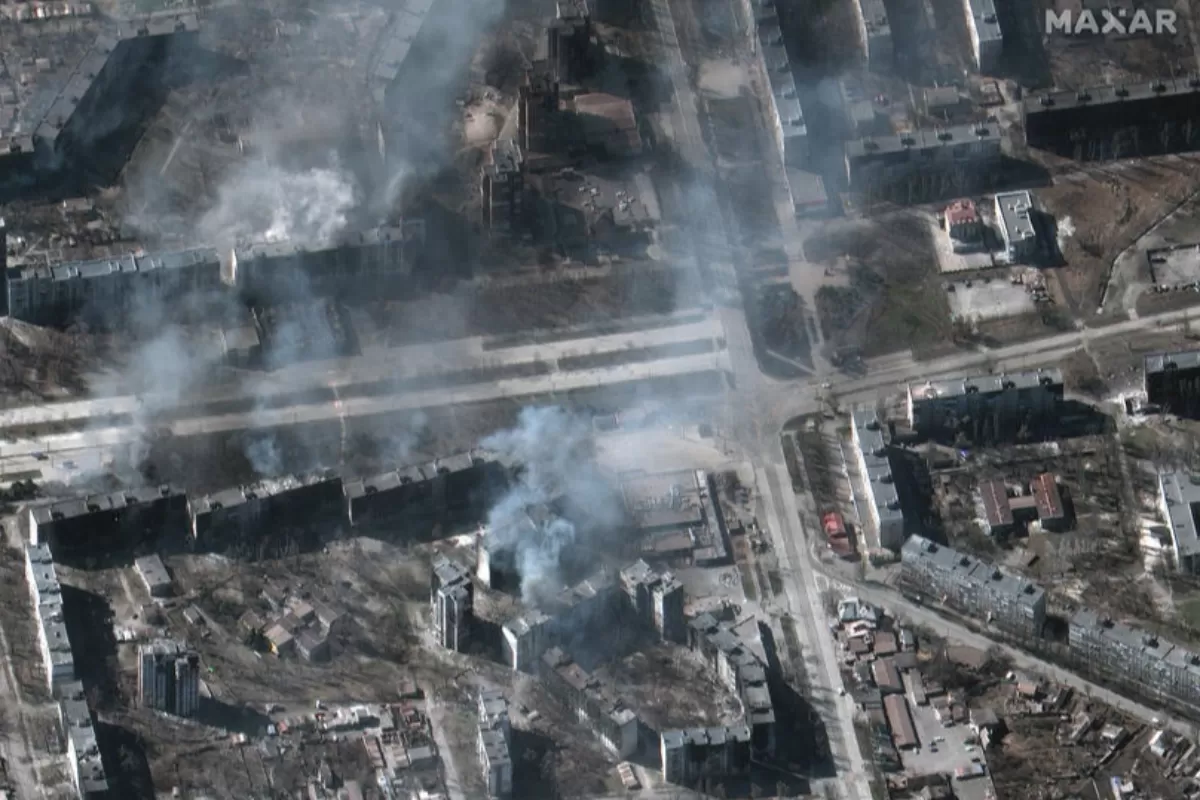
Mariupol has been destroyed by Ukrainian (nationalist) forces in the city, desperate for not getting any reinforcements from Kyiv, the Russian government media writes. The narrative is meant to draw attention away from the fact that the Russian army shelled the city systematically, without caring about killing civilians or causing damage.


The Russian media writes Kyiv alone is to blame for the prolonged conflict in Ukraine. The narrative is used alongside older propaganda messages, according to which Moscow is carrying out a special military operation aimed at protecting civilians, whom Kyiv is using as human shields.

A concentration camp was discovered in the region of Luhansk, where Russian speaking people were tortured, according to a false narrative disseminated by the Russian state media. It presents Russia as a state that, through its “special military operation” in Donbass, freed the local population and chased away “the Nazis” and “the nationalists”.

Among those, the obsession for imaginary “Nazis”, labeling anyone opposing Kremlin policy “traitors”, and criticism against the so-called LGBTQ “ideology”

Ukraine is responding to the Russian propaganda by launching its own narratives, aimed at encouraging the population and demoralizing the enemy. So far, Kyiv and Ukrainians – since journalists and regular citizens are also pulling their weight – seem to be winning the information war.

The Ukrainian army has shot down a fighter jet and a helicopter of the Romanian Armed Forces in Dobruja, after mistaking them for aircraft of the Russian army. This fake piece of news is promoted by publications and public figures (of whom some are associated with the far right) that over the years have been spreading disinformation, fake news and narratives promoted by Russia.

People previously promoted by Sputnik, who in the past were accused of defending the interests of Russia and/or were associated with the anti-vaxx movement, launched a number of anti-Ukrainian disinformation narratives after war broke out. Cozmin Gușă, Diana Șoșoacă and Iosefina Pascal are among those who promote these disinformation themes, ranging from false justifications for the invasion (the existence of laboratories manufacturing biological weapons), to complete denial of an actual war.


The crisis in Ukraine is also marked by an increased output of false narratives meant to discredit NATO and undermine confidence in it. Romania has also been the target of such narratives – claiming that it’s preparing for war, mobilizing its reservists, has a weak army, equipped with outdated equipment, etc. Veridica talked to the head of the Information and Public Relations Department of the Ministry of National Defense, Brigadier General Constantin Spînu, about the efforts made by the army to fight back the disinformation that targets it.


The massive disinformation campaign carried by Moscow in the West, in the former satellites of the Soviet Empire and also on its own territory, has its Achille’s heel: it is limited to a number of themes or narratives.

Bucharest District 1 Mayor, Clotilde Armand, has allegedly cut the funding of four of the most important hospitals in Bucharest, all located in District 1. This is a false narrative, promoted on a number of media channels and endorsed by politicians of the largest opposition party, PSD.
The President of the Republic of Moldova, Maia Sandu, only mimics her attachement to democratic and European values and if she could, she would establish an authoritarian regime in which freedom of expression would be limited. This fake narrative, originating from the Socialist circles, was also used during the elections campaign.
