Just like the Soviet Union and the Tsarist Empire did before it, Putin’s Russia is trying to shape literature by banning books the regime deems unsuitable. It’s a move that may have a boomerang effect and push the public towards those very books.
Putin is no exception: Russian autocrats always feared – and tried to shape – literature
Russia is still often imagined as a country of books: a place of long novels, crowded poetry readings and readers who treat writers not merely as entertainers, but as public witnesses. Yevgeny Yevtushenko’s famous line that “a poet in Russia is more than a poet” captured something essential about this tradition. In Russian culture, the printed word has often carried more than aesthetic meaning. It could become a moral verdict, a political signal, a private refuge, or a quiet form of resistance.
That special status of literature (and writers) was reflected, throughout history, by the special relationship between Russian power and Russian literature. During the Empire, the Tsarist State tried to act as censor, arbiter and literary judge. In the Soviet period, Stalin personally intervened in cultural production, deciding what could be printed, what should disappear, and even what language should be used in official symbolic texts.
The late Soviet decades and the early post-Soviet period brought a very different atmosphere: old forbidden texts were published, émigré literature returned, censorship was gradually abandoned, and the book market became one of the symbols of intellectual liberation.
However, this freedom did not survive the consolidation of an authoritarian system. As the Russian state became more ideological, militarised and suspicious of independent public voices, literature again became a field of political control. The Kremlin may talk about “traditional values”, “spiritual security” and “protection of children”, but behind these formulas there is a familiar logic: a writer is dangerous not because a poem or a novel can immediately change politics, but because literature keeps alive the habit of independent interpretation.
The absurdity of 21st century censorship: banning books for old jokes of because an author’s name doesn’t sound right
One of the most visible instruments of this new order is the label of “foreign agent”. Russia’s official register now contains hundreds of people, organisations and projects; trackers count around 1000 active “foreign agent” entries including 61 writers recognised as such, among them figures connected with prose, poetry, criticism, journalism and public intellectual life. In a country where writers traditionally served as a moral mirror, the state is now trying to mark many of them as suspicious persons.
The case of Grigory Oster shows how absurd this process can become. Oster is one of Russia’s best-known children’s authors, famous for Bad Advice — ironic poems in which children are supposedly advised to behave badly, while the absurdity of the advice itself makes the moral point. The genre is clear to generations of readers: humour, inversion, pedagogy by contradiction. Yet in April 2026, Russia’s Investigative Committee opened a review of Oster’s books after State Duma deputy Maria Butina criticised them as “destructive content” in children’s literature. The official materials cited his books as allegedly undermining the moral foundations of children.
Earlier prosecutors in Krasnoyarsk region demanded that a local shop remove Bad Advice from sale and reports even mentioned calls to withdraw and destroy copies, though the regional prosecutor’s office later denied plans to go to court for such a measure. The important point is not only whether a particular book was ultimately banned. The signal to schools, shops, libraries and publishers is already enough: any official can discover danger even in an old joke.
The pressure on Oster is only one episode in a much wider campaign. In recent years, Russian publishers have faced growing risks connected with laws against “LGBT propaganda”. The result is a new form of preventive censorship. Books are removed, passages are blacked out, catalogues are checked, and publishers try to guess in advance what may attract attention from law enforcement bodies.
The striking symbol of this era is the book with blacked-out lines. Russian editions of works by foreign authors have appeared with fragments covered like declassified FBI documents. Publishers do this not because such books become better, but because they are trying to survive inside a legal environment where the boundary between permitted and criminal can move overnight.
But even maximum loyalty no longer guarantees safety. Publishers now review old and new catalogues with the anxiety of defendants preparing for trial. Publisher Eksmo said it had been using artificial intelligence and other methods to check a vast inventory of titles for banned content. In theory, this is technological compliance. In practice, it easily becomes automated paranoia. When algorithms are asked to look for ideological danger in literature, they do not understand irony, metaphor, character voice or context. They produce absurd suspicions — for example, when a book may be flagged as potentially dangerous simply because the author’s surname happens to sound similar to the name of a drug.
Censorship is about ideology, but also about trying to rip the profits of a huge market
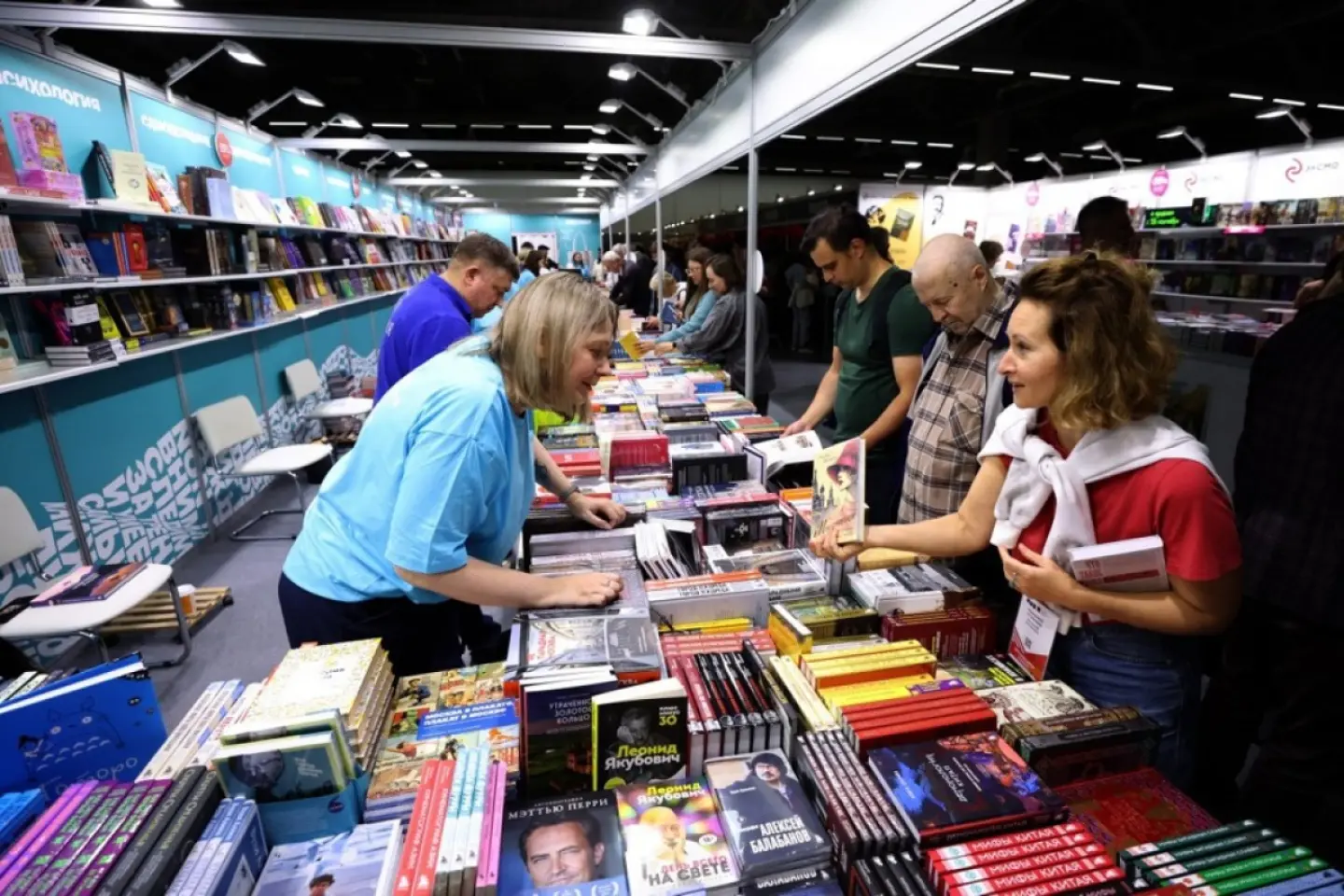
There is also an economic dimension. The Russian book market is not marginal. In 2025, its monetary volume was estimated at around 1-2 billion USD, with strong growth in digital and audio formats. In physical terms, Russia printed thousands of book and brochure titles in 2025, with a combined print run of about 372.7 million copies. This is a substantial industry — and, more importantly, an industry that extends beyond Russia itself. Russian-language books circulate across post-Soviet space, among diasporas, and through online platforms in Europe and Asia.
For this reason, the attack on publishing should be seen in two ways at once. It is ideological: the state wants to decide which values, identities and memories can be publicly represented. But it may also be material: a profitable sector with powerful distribution channels, digital platforms and cultural influence is too attractive to remain fully autonomous. In contemporary Russia, ideological pressure and property redistribution often move in the same direction.
What the autocrats never seem to understand: ban something, and you’ll immediately boost the demand for it
When Grigory Oster’s book Bad Advice was banned, there was one unexpected market reaction. After the new wave of criticism by Butina and Bastrykin, sales of Oster’s books reportedly jumped by almost 500%. In this sense, the Russian book market turned out to be a better sociological instrument than many surveys. Readers understood perfectly what had happened. The state produced fear; the public produced demand.
The coming years are likely to be difficult for Russian literature and publishing. Yet the Oster effect shows something else too: Russian readers have not lost their instinct for recognising absurdity. In a country where the poet was once “more than a poet”, even a children’s book of jokes can become a small referendum on common sense.