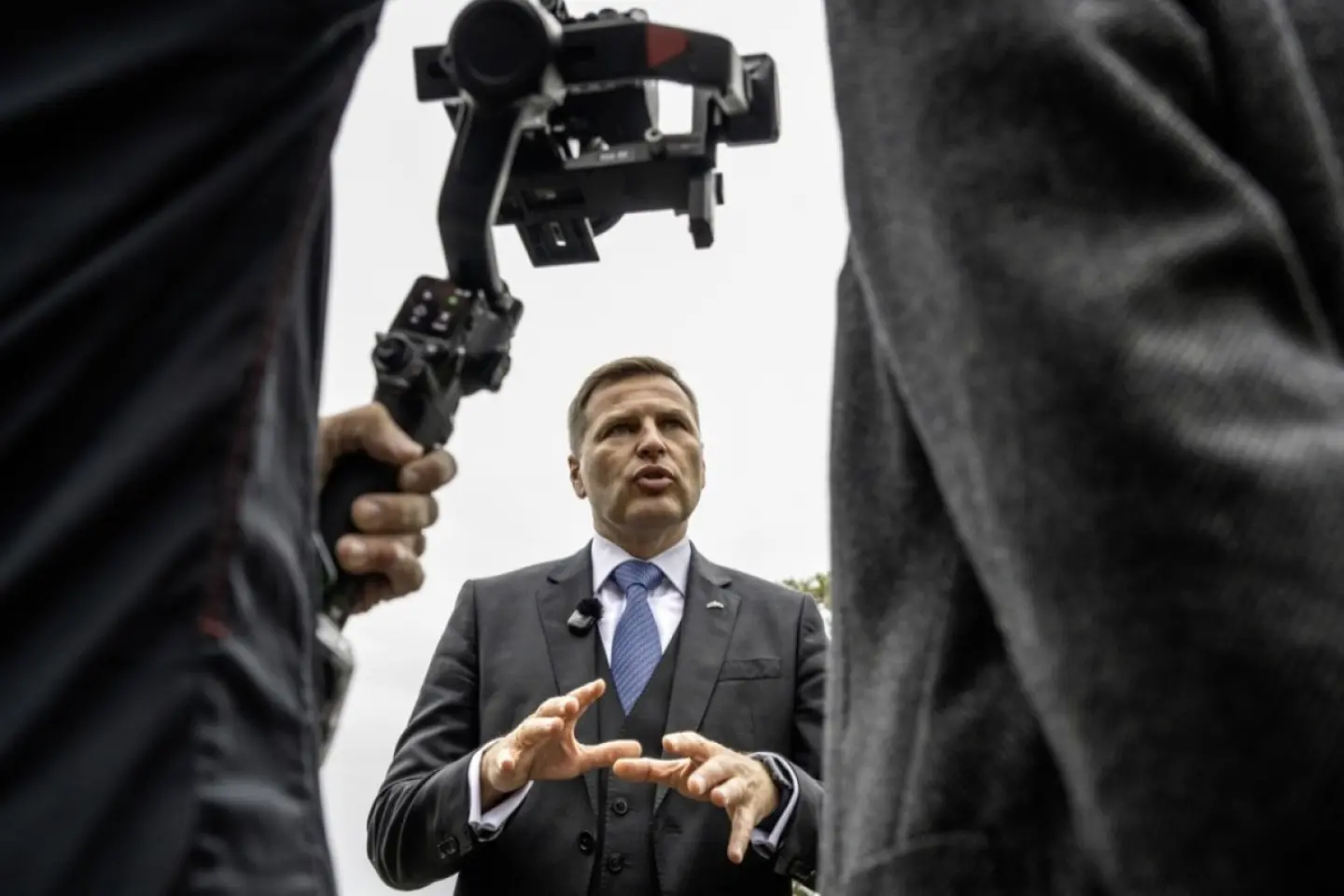
In early September, Estonian Defence Minister Hanno Pevkur, the most popular politician in the governing Reform Party, resigned. The immediate cause was a major scandal over defence supplies, some of which were intended for Ukraine.
“Although a minister does not count socks and ammunition or negotiate contracts, the National Audit Office’s findings, which primarily concern the activities of the Defence Forces and the Estonian Centre for Defence Investments (RKIK), raise the question of political responsibility. I therefore believe it is right for me to take political responsibility for the entire defence sector today and hand over the defence minister’s baton at a time convenient for the prime minister,” he wrote on social media.
Just a day earlier, Prime Minister Kristen Michal had said he saw no personal fault on Pevkur’s part. But this was hardly a matter of miscounted socks. In late August, it emerged that a routine audit by the National Audit Office had uncovered numerous irregularities within the Ministry of Defence’s area of responsibility. At best, they pointed to disorder in the accounting of assets and ammunition supplies; at worst, to potential abuse.
The scandal: money changed hands, but the Indian-owned company did not deliver the ammunition
Auditor General Janar Holm said auditors had been unable to verify the existence of defence stocks recorded at €1.2 billion. For comparison, Estonia’s total state budget revenue is €18.6 billion. The problem was compounded by the fact that the National Audit Office had previously flagged disorder within the ministry’s area of responsibility, yet the issues had not been resolved. A criminal investigation connected with last year’s audit is being conducted by the Internal Security Service.
It also emerged that RKIK had signed a contract to supply artillery shells with the Italian company Datasel, which had never produced ammunition. Shortly before negotiations with Estonia began, it had been acquired by Neco Defence Munitions, a subsidiary of the Indian metals group Jayaswal Neco Industries. Media reports suggested that Western intermediaries may have been needed because companies based in countries with relatively good relations with Russia are reluctant to publicise defence supplies to the opposing side and prefer not to make them directly. Former defence minister Pevkur also pointed to this possibility.
Estonia paid Datasel a total advance of around €60 million for shells intended for Ukraine. According to Estonian officials, the delivery was never completed. Reports said some of Datasel’s goods reached an intermediate warehouse but were unusable because the shells lacked fuses or propellant charges.
Having failed to receive the ammunition, paid for in part with European funds, Estonia went to court. The dispute will be heard both in Estonia and at the European Court of Arbitration in Strasbourg. Media outlets reported that, of 27 contracts with Datasel for weapons and ammunition intended for Ukraine, seven had been terminated and litigation had begun over five.
Datasel representatives said the contracts signed with RKIK were worth more than €150 million and that goods worth €58 million had been delivered. They also said Estonian defence officials had had an opportunity to inspect the production facilities. “RKIK subsequently stated that its current team could find no documents showing how initial contact with Datasel was established or how the company was selected. This apparent gap in RKIK’s record-keeping is not evidence that Datasel concealed information, or that negotiations and checks did not take place in the following months,” a company representative said. Datasel has also filed counterclaims against RKIK worth tens of millions of euros.
The litigation over the disputed supplies will cost Estonia hundreds of thousands of euros in legal fees and court costs alone. There is also a possibility that European funds will have to be repaid. For a country with a budget deficit and growing public debt, that is a serious problem.
Were the right people held responsible?
The scandal prompted several high-profile departures from the Ministry of Defence. Alongside the minister, Permanent Secretary Kaimo Kuusk was forced to leave his post. Kuusk had been Estonia’s ambassador to Ukraine when the war began. His departure, too, raised questions: he joined the ministry only after most of the disputed contracts had been signed.
Meanwhile, former RKIK director general Magnus-Valdemar Saar said that Pevkur had played an active part in the purchases and had personally made decisions to sign the contracts, despite publicly claiming otherwise. Documentary evidence to substantiate those assertions has proved difficult to find. Defence is, moreover, a field in which officials can readily invoke classified information. Former minister Pevkur himself explained that ammunition was in short supply and Ukraine needed it quickly, so they had to resort to unconventional solutions.
Former commander of the Defence Forces Martin Herem became the new minister. That appointment also raises questions, because the problems with inventory records and accounting began while he was still in command of the military, whose personnel were involved. Pevkur, the outgoing minister, has also pointed this out.
Another question concerns how easily senior Estonian defence officials move between the public and private sectors. After leaving his post as commander of the Defence Forces, Herem joined the defence company Frankenburg Technologies. Among those with interests behind the company is local oligarch Margus Linnamäe, a donor to the Isamaa party and the owner of one of the country’s largest media groups. And Herem is not the only former senior military officer to have worked for the company. Whether his return to public office could eventually create a conflict of interest remains a hypothetical question. In any case, journalists will be watching defence tenders twice as closely.
As for the political fallout, immediately after the scandal broke, the opposition demanded the resignation of both the defence minister and the entire government, demanding an early parliamentary election. That did not happen, even though Estonia is currently governed by a minority coalition. This was partly because the opposition is divided, and largely because an election is due in just a few months anyway.
Surprisingly, despite the political scandal and the resignation of a popular minister, support for the governing Reform Party rose to 15% in September — its best result since June last year. Political analysts link this to signs that Estonia’s economic situation has finally begun to improve.
By the end of the month, calls for Michal’s government to resign had all but faded. A few weeks later, however, representatives of opposition parties sent the prime minister an open letter raising a number of uncomfortable questions about transparency in the defence sector. Meanwhile, the investigation into specific defence procurement contracts continues, and much will depend on whether Estonia can recover its millions.