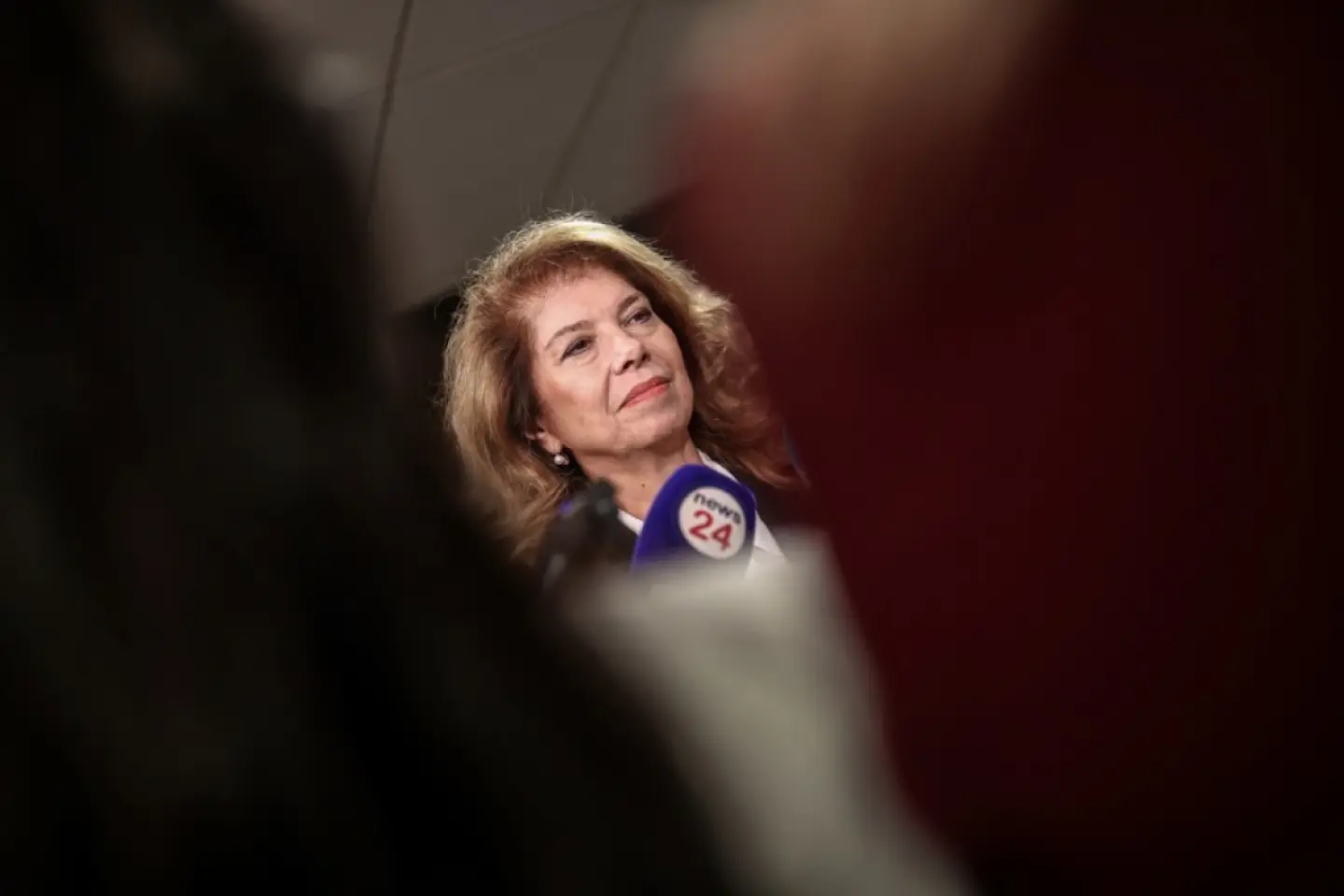
Promising to be a “President of Peace”, Iliana Iotova won a full five-year term on Sunday, taking the runoff with 57.6 per cent of the vote against pro-EU opposition candidate Andrey Gyurov, who got 39.5 per cent, with 99.95 per cent of ballots counted. Iotova’s Vice - President will be Kiril Valchev, Director of the Bulgarian News Agency (BTA), the country’s official newswire. The two were backed by the ruling Progressive Bulgaria of Prime Minister Rumen Radev and Iotova’s former party, the Bulgarian Socialist Party. Turnout was just 29.1, a slight improvement on the record-low 22.98 per cent recorded in the first round on October 25.
61-year old Iotova – who was a Vice to Rumen Radev during his Presidency from 2016-early 2026 and became Acting in January following his resignation to successfully chase a majority in the parliament – won despite several controversies at play at the same time and waves of criticisms from the opposition. Iotova and Radev offered roundabout explanations about the recent drone attacks in the Black Sea, including in Bulgaria’s exclusive economic zone, and refrained from naming Russia the aggressor. This caused several protests in Sofia. Both continue to be adamantly skeptical about further aid to Ukraine.
In her first comments on Sunday evening, Iotova said that voters believed in her campaign focusing on “positivity” and “dialogue”, while Radev said that Bulgarians “chose the future instead of the past, they chose peace, stability, normalcy”. Asked at the briefing on whether they expect new protests, Radev said that “it’s a democracy, people protest about all kinds of things, for the sun, for the grass…”
Who is Bulgaria’s New President?
Iotova was born in 1964 in Sofia and her professional path began as a TV presenter in the Bulgarian National Television in the first part of the 1990s.
Iotova’s involvement with the Moscow-aligned Bulgarian Socialist Party (BSP) started in 1997, in the party’s press office. An interesting detail is that she made the switch while the party was at a breaking moment: Bulgaria was going through an economic crisis and was pressured by mass protests aimed at the socialist-led cabinet of Zhan Videnov. In 2005, Iotova became an MP when BSP clung to power again through a coalition with NDSV (National Movement for Stability and Progress), the now faded party of former monarch Simeon Saxe-Coburg-Gotha, which despite currently a marginal presence, is among the factions now supporting Iotova.
After Bulgaria joined the EU in 2007, Iotova became a Member of the European Parliament. In 2014 she was once again elected in the European Parliament, but she resigned two years later, in 2016, to become a Vice President when Rumen Radev won his first term, running independent but supported by the Socialists. They repeated the same strategy in 2021.
In January 2026 Radev resigned to form Progressive Bulgaria and debuted with a landslide win at the April elections. This made Radev the first politician to have served both as a President and a Prime Minister, while as acting President Iotova became the first woman to lead the institution and after the current victory - the first elected female head of state.
Is Bulgaria Swinging East?
“The sleep of societies produces dictatorships. We’ve set our way for the next five years. Soon our children will ask us where were we on November 1 2026”, wrote on Sunday evening on his social Bulgarian International Booker-prize awarded author Georgi Gospodinov. He was among the intellectuals and personalities who openly supported Gyurov.
Iotova’s win and longtime association with the traditionally Kremlin-aligned Bulgarian Socialist Party, closeness to Radev as his former Vice President (2016-early 2026) and recent elusive comments around the attacks in the Black Sea, has created worries that Bulgaria is sleepwalking into a full switch towards the Kremlin.
In some of her latest media appearances, Iotova highlighted that Bulgaria has a connection to Russia that should be cherished, insisting that “Russia is not an enemy.”
“One of the things that gets on my nerves is when I hear that “this is what Brussels is saying”, the other is “our path in Europe” - we’re in Europe for 14 centuries [...] we could have had a more pronounced presence in the EU, we could have protected our interests in a much stronger way in the last nearly 20 years but unfortunately we’ve just been saying repeatedly “yes” to everything that the EU has demanded”, said Iotova on Friday, in one of her last interviews as part of the campaign, for two of popular pro-Russia commentators on YouTube. “This widespread Russiophobia that’s brewing is leading nowhere, Russia is a big geopolitical player, Russia is at the centre of Europe, and there are people who even want to ban the Russian language…”
However, Iotova, members of her team and public supporters have denied speculations that her victory means a tilt to Moscow.
The opposition is wounded but something new might be on the horizon
Despite that the victory seems like a fatal blow for the opposition, in his first comments, challenger Gyurov sounded assured that “we have built a good platform”, “that we could step on”. This immediately fueled speculations that a new political project might be under way.
During the campaign, Gyurov contrasted to Iotova by a more pronouncedly pro-EU, Ukraine-supportive attitude. In turn, one of Iotova’s main criticisms of Gyurov was that he signed a 10-year cooperation agreement with Ukraine while he was interim Prime Minister.
Similarly to Iotova, Gyurov recently became a more recognisable presence in politics, as he was appointed interim Prime Minister in the spring of 2026, somewhat ironically, by Iotova.
The Presidential elections, although happening as scheduled, might be seen as the closing chapter of Bulgaria’s election spiral. This period yielded eight general snap elections since 2021, saw the fall, rebirth and again a new fall for longtime dominant party GERB (which surprisingly did not nominate a candidate on these elections but supported Gyurov on the runoff), the rise and then shaky existence of opposition parties We Continue the Change and Democratic Bulgaria, various factions trying to take a piece of the nationalist electorate, and Rumen Radev’s detour to the Parliament and now securing an alignment between the institutions with Iotova’s victory.
In a year, in the autumn of 2027, Bulgaria will also have mayoral elections. This will be the next test for whether Progressive Bulgaria could instill a total control on local politics. However, not everything is on Radev’s side: Iotova’s win comes despite a huge spillover of votes in comparison to Radev’s victory in April, meaning the electorate of Progressive Bulgaria remains not entirely defined and cohesive.